Eltz Castle
Fairytale castle in the forest that was never destroyed
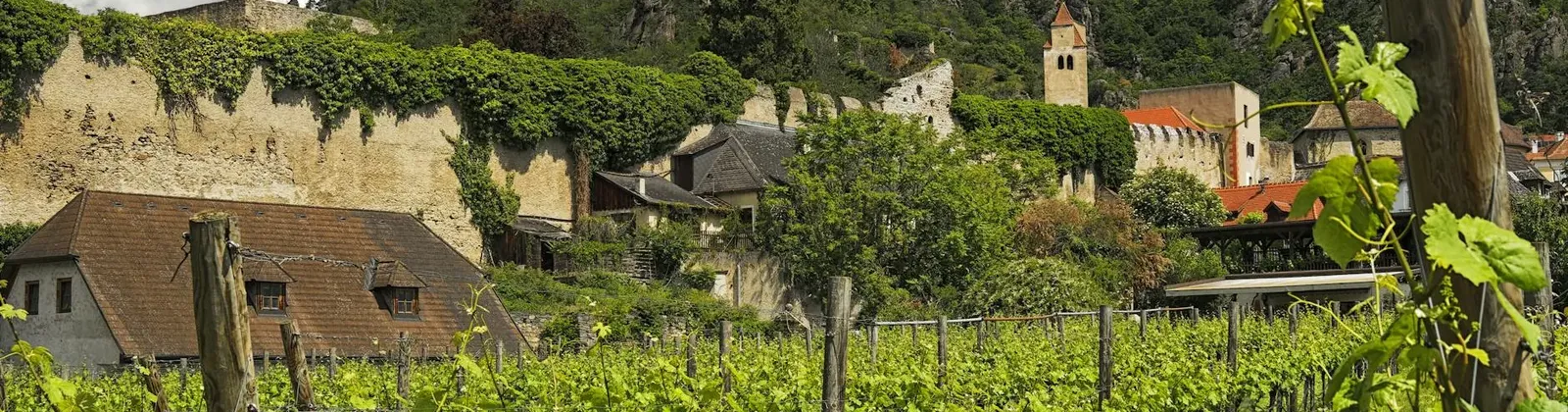
Rhineland-Palatinate, the land of castles, rivers and vineyards, is characterized by the idyllic landscape of the Rhine Valley, the historical treasures of cities such as Trier - the oldest city in Germany - and Speyer with its imposing imperial cathedral, as well as the culinary delights of the Palatinate region
Picturesque villages, steep vineyards, and the legendary Loreley Rock along the Rhine attract many hiking enthusiasts. Other highlights
include Eltz Castle, one of the best-preserved medieval structures in Europe; the Deutsches Eck in Koblenz, where the Rhine and Moselle rivers meet; and the UNESCO-protected cultural landscape of the Middle Rhine Valley between Mainz and Koblenz.
Along the German Wine Route, there are numerous beautiful towns, such as the spa town of Bad Dürkheim with the world’s largest wine barrel and great hiking trails through the Palatinate Forest (the largest forest area in Germany). The Gemstone Route is also popular.
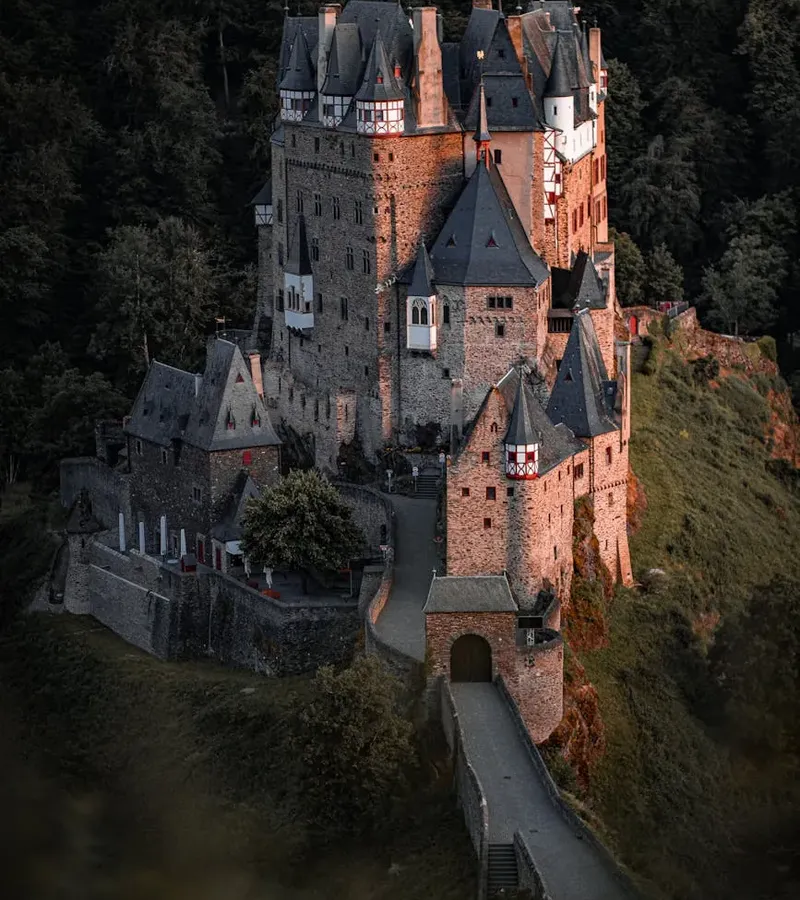
Fairytale castle in the forest that was never destroyed
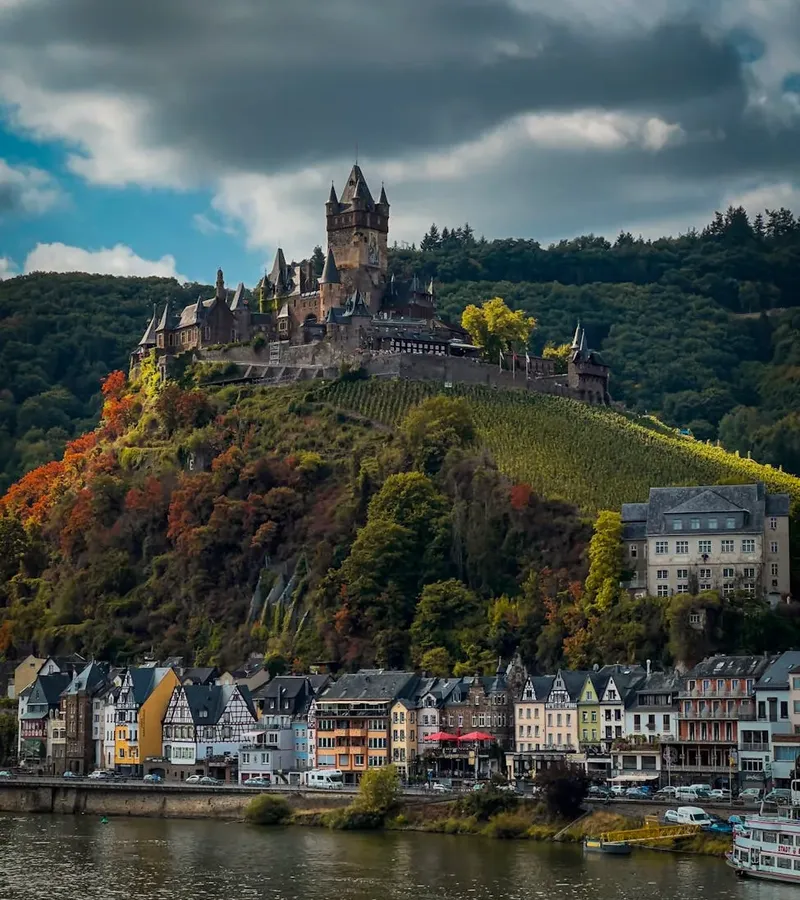
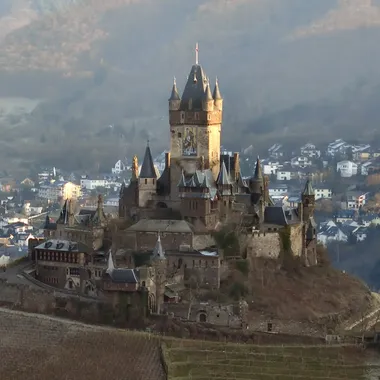
The medieval Reichsburg Cochem castle offers a spectacular view of the Moselle valley, while the Bundesbank Bunker Cochem provides an insight into the history of the Cold War.
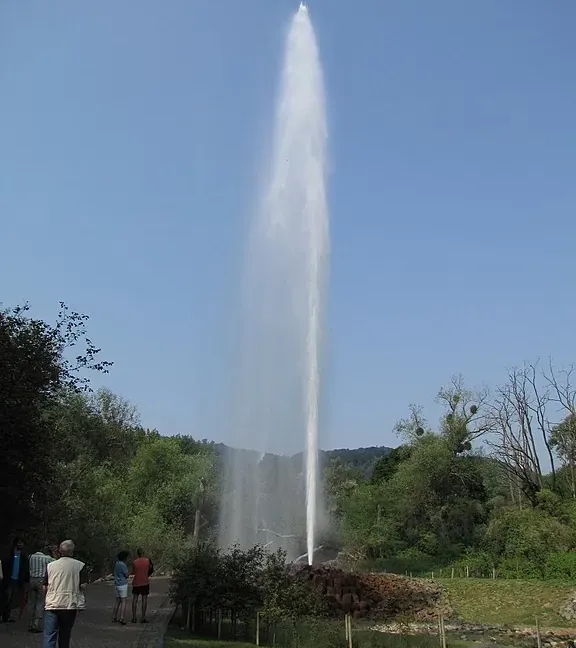
The cold-water geyser in Andernach is the highest of its kind in Europe and erupts regularly, making it a fascinating natural phenomenon.
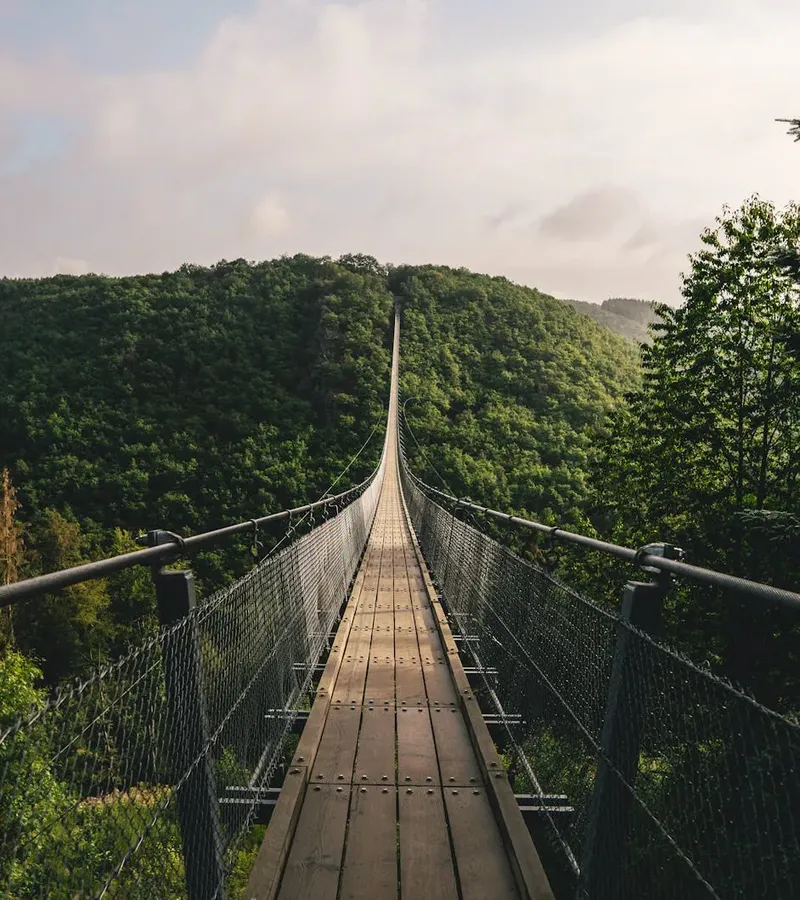
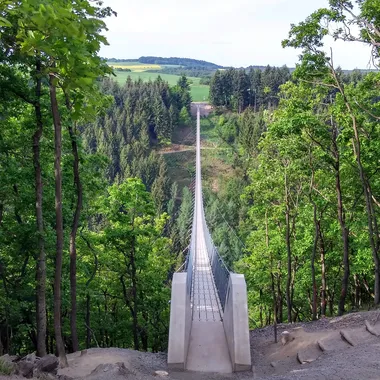
At 360 meters, the Geierlay suspension rope bridge in the Hunsrück is one of the longest and most spectacular pedestrian bridges in Germany.
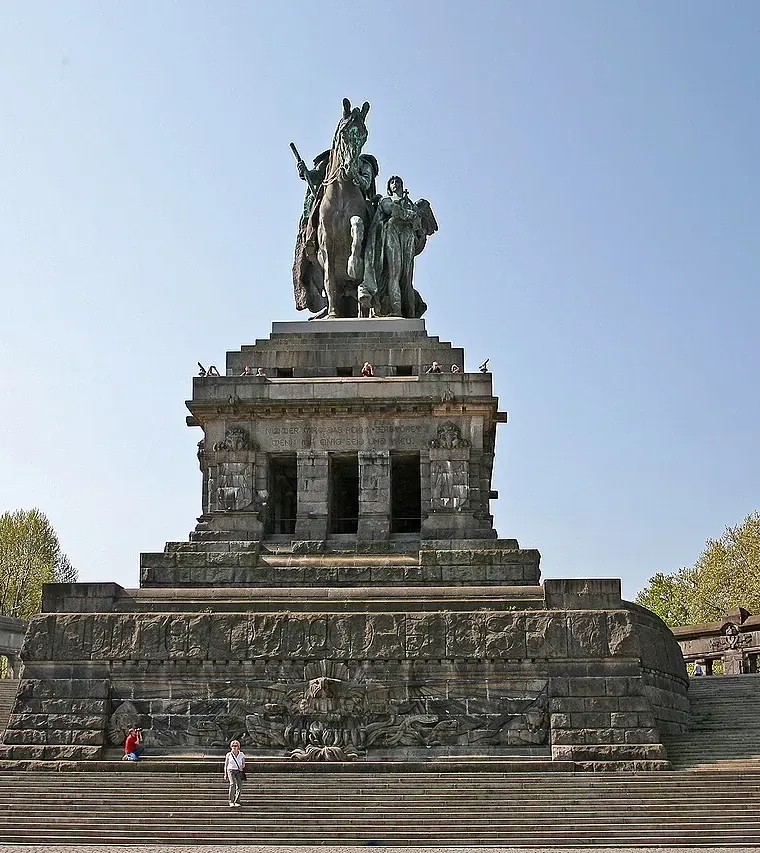
Koblenz is a real treasure trove with the Deutsches Eck, where the Rhine meets the Moselle, and the Ehrenbreitstein Fortress, which offers a fantastic view.
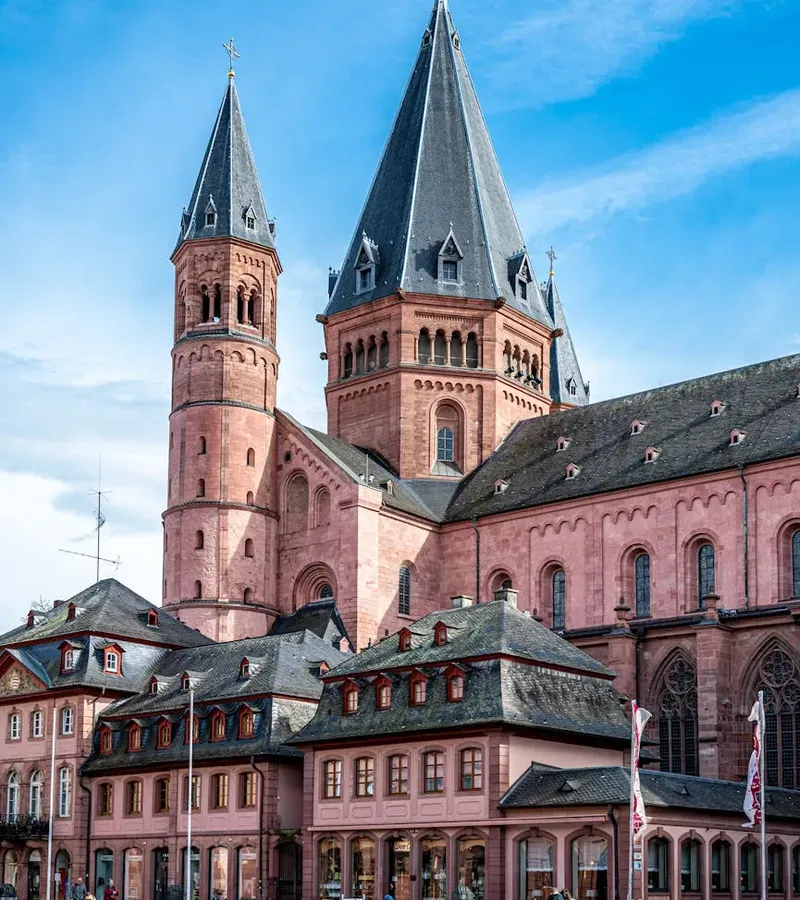
The state capital Mainz is home to the imposing Mainz Cathedral and the Gutenberg Museum
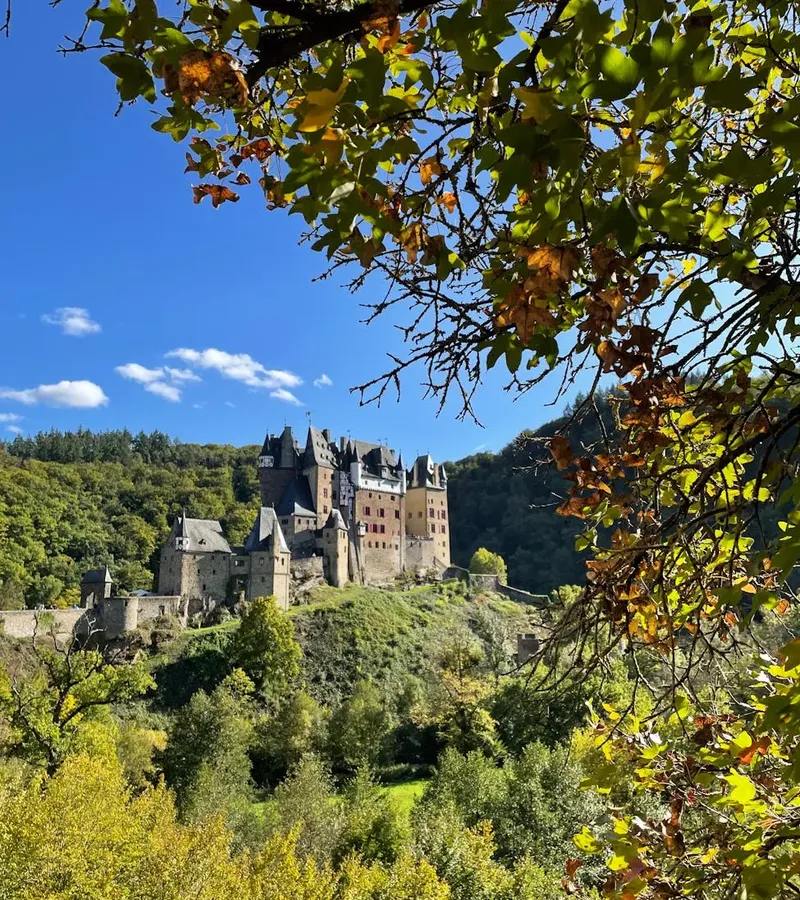
Castle landscape, wine villages and medieval towns.
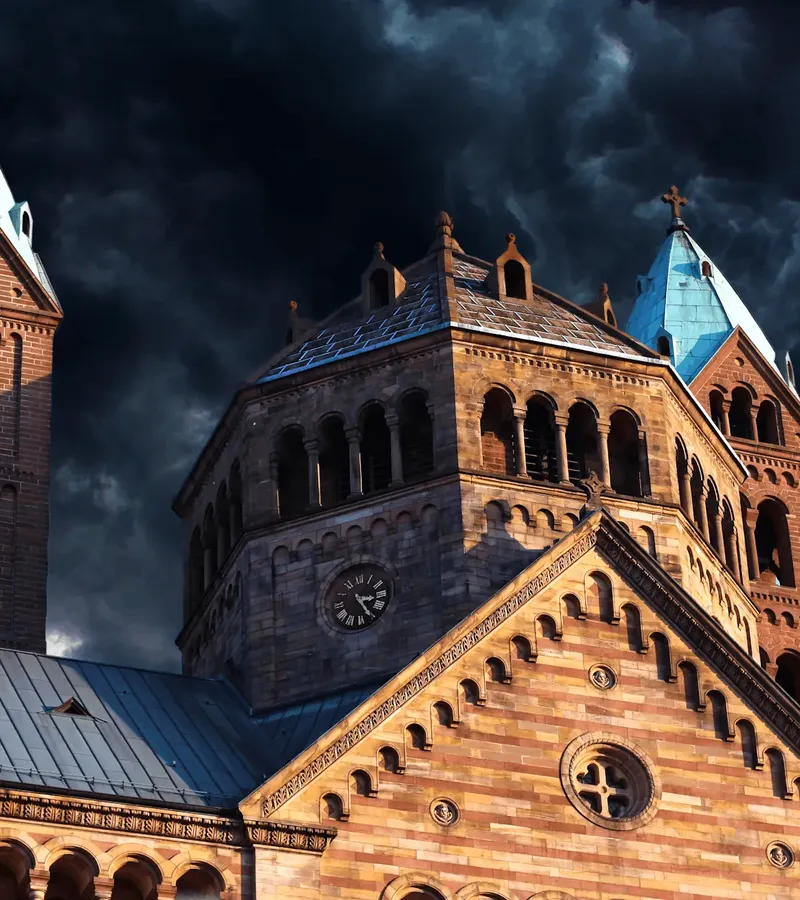
Speyer is known for its large museum of technology, which houses a variety of historic airplanes, cars and ships, as well as the cathedral, a UNESCO World Heritage Site.
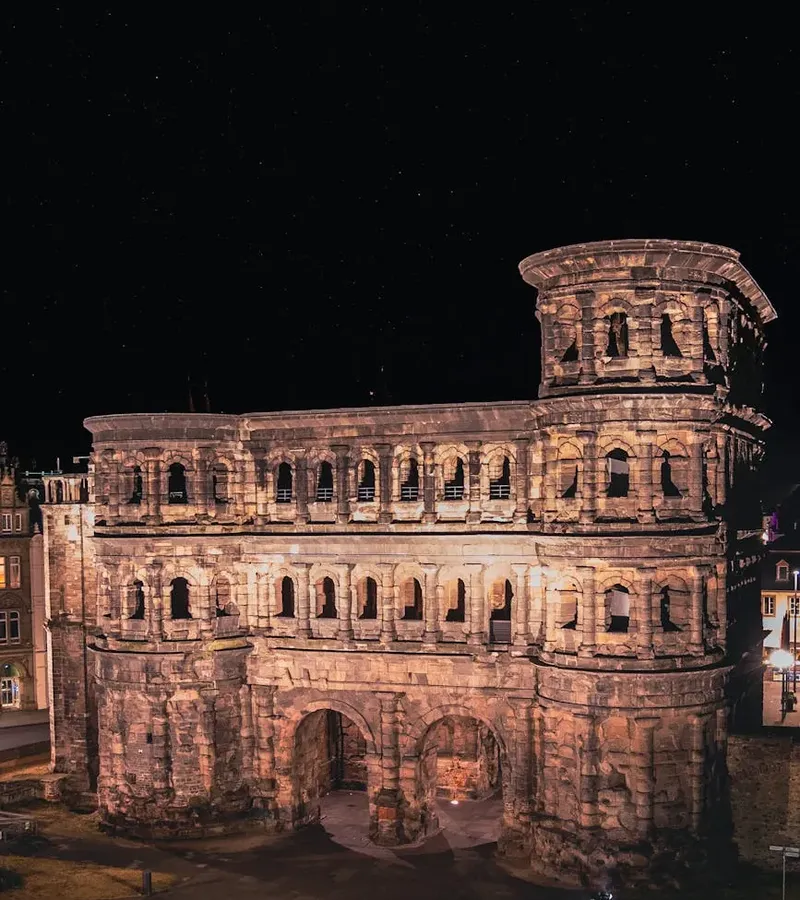
Roman buildings and one of the oldest cities in Germany.
Fairytale castle in the forest that was never destroyed
The medieval Reichsburg Cochem castle offers a spectacular view of the Moselle valley, while the Bundesbank Bunker Cochem provides an insight into the history of the Cold War.
The cold-water geyser in Andernach is the highest of its kind in Europe and erupts regularly, making it a fascinating natural phenomenon.
At 360 meters, the Geierlay suspension rope bridge in the Hunsrück is one of the longest and most spectacular pedestrian bridges in Germany.
Koblenz is a real treasure trove with the Deutsches Eck, where the Rhine meets the Moselle, and the Ehrenbreitstein Fortress, which offers a fantastic view.
The state capital Mainz is home to the imposing Mainz Cathedral and the Gutenberg Museum
Castle landscape, wine villages and medieval towns.
Speyer is known for its large museum of technology, which houses a variety of historic airplanes, cars and ships, as well as the cathedral, a UNESCO World Heritage Site.
Roman buildings and one of the oldest cities in Germany.
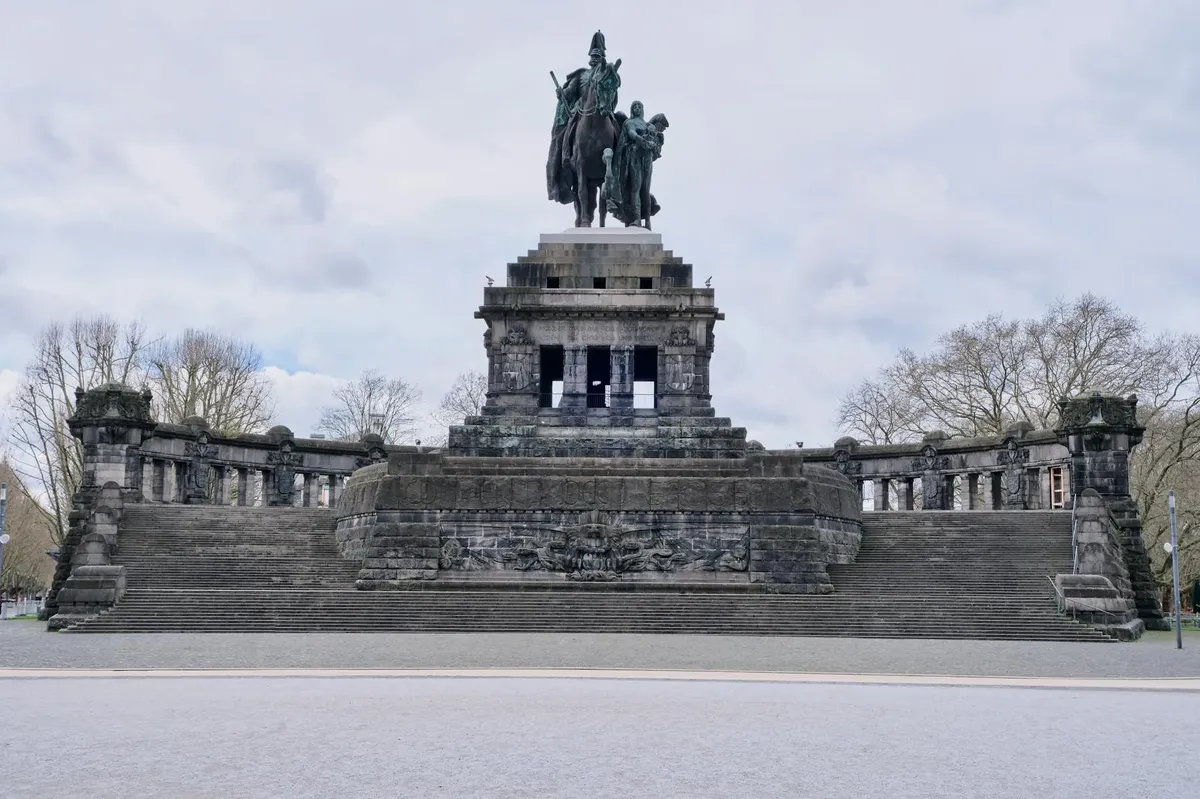
Koblenz combines Roman history, impressive river landscapes and the Rhineland way of life to create one of the most attractive destinations in the Middle Rhine Valley.
Koblenz, one of Germany’s oldest cities, is picturesquely situated at the confluence of the Rhine and Moselle rivers. With over 2,000 years of history, the city offers a blend of cultural highlights, romantic landscapes, and a lively atmosphere.
Koblenz is best known for the Deutsches Eck, a historic monument marking the confluence of the two rivers and a popular spot for visitors. The area surrounding Koblenz is characterized by romantic vineyards and picturesque villages. Places like Winningen and Spay invite visitors to wine tastings where they can sample the region’s excellent wines.
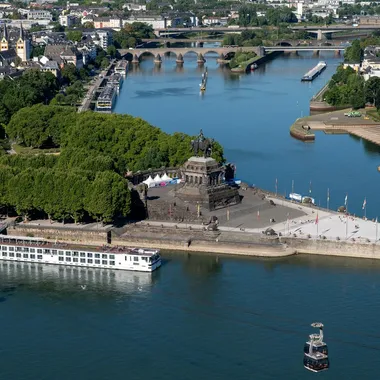
The famous Deutsches Eck is the landmark of Koblenz. The monumental Kaiser Wilhelm Monument, which commemorates the founding of the German Empire, is enthroned here. The vantage point offers a spectacular view of the confluence of the Rhine and Moselle rivers and the surrounding countryside.
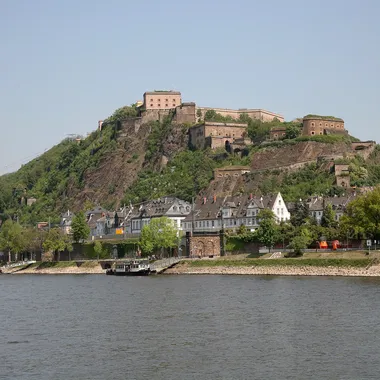
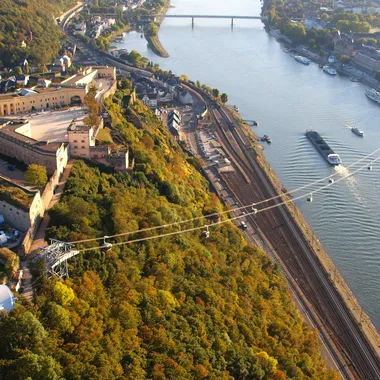
The imposing Ehrenbreitstein Fortress rises majestically above the Rhine and is the second largest preserved fortress in Europe. Visitors can easily reach it by cable car, which offers breathtaking panoramic views of Koblenz and the Rhine Valley during the journey. The fortress is home to several museums and is an ideal place for history buffs.
The House of Photography at Ehrenbreitstein Fortress is dedicated to contemporary photography. Changing exhibitions present works by international photographers.
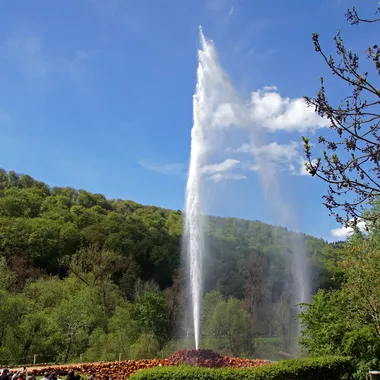
The Andernach geyser, the highest cold-water geyser in the world, is located 17 km north of Koblenz and is an impressive natural phenomenon in the Eifel region. It is a cold-water geyser created by a natural geological process. Its activity is not driven by heat, as is the case with hot geysers, but by carbon dioxide (CO₂). With a water fountain up to 60 meters high, it is a unique experience for visitors. The associated geyser center offers exciting insights into the geology and workings of this natural wonder. A boat trip on the Rhine takes guests from the town of Andernach to the geyser, where they can experience the impressive fountain up close.
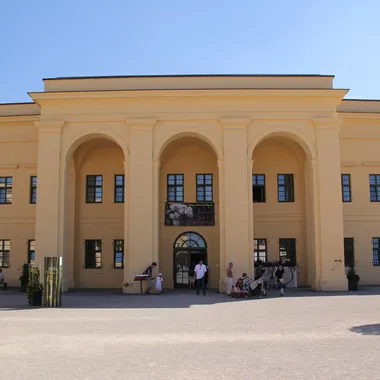
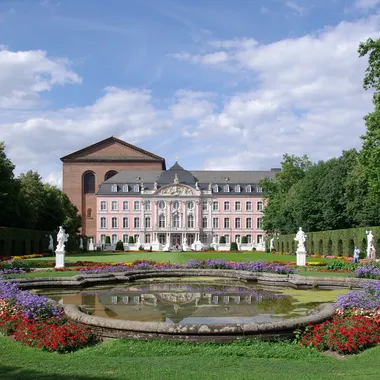
The Electoral Palace is a magnificent late Baroque building and is one of the most important residential palaces on the Rhine. It was built in the 18th century and served as the city residence of the electors of Trier. Today it is a venue for events and is surrounded by a magnificent palace garden that invites you to linger.
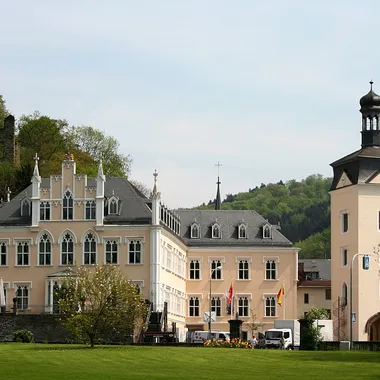
The butterfly garden is located in a greenhouse near Sayn Castle. Tropical plants and free-flying butterflies create a special atmosphere. Visitors can experience exotic nature in the middle of the region.
The modern Koblenz cable car connects the old town with Ehrenbreitstein Fortress and is one of the largest cable car systems in Europe. During the ride, visitors can enjoy breathtaking views of the Deutsches Eck, the Rhine and the city. A ride at sunset is particularly impressive.
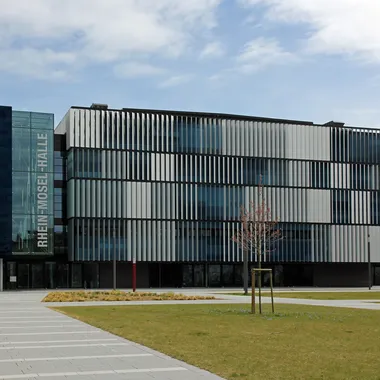
The Rhine promenade invites you to take a relaxing stroll along the river. From here you can enjoy a magnificent view of the passing ships, the cable car and Ehrenbreitstein Fortress. The Rhein-Mosel-Halle is a central venue for concerts, theater and congresses.
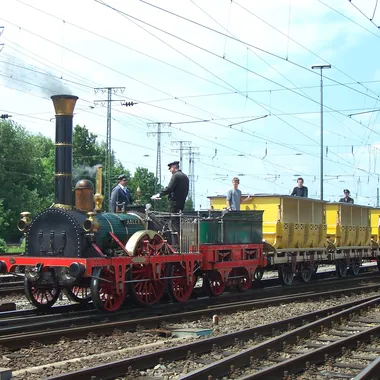
The DB Museum Koblenz is a branch of the Nuremberg Transport Museum and delights visitors with its historic locomotives, carriages and interactive exhibitions. Railroad fans can experience the development of the railroad up close here.
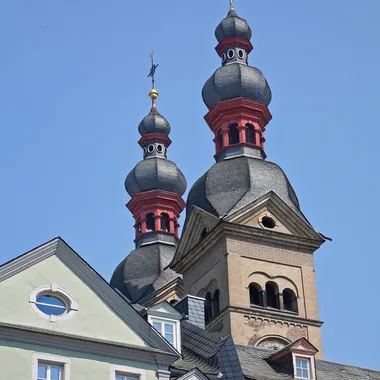
The Romanesque Church of Our Lady is one of the oldest places of worship in the city and impresses with its striking towers and simple yet elegant architecture. It offers a quiet place of contemplation in the middle of the lively old town.
The Defense Technology Study Collection displays an impressive collection of historical and modern military technology. From tanks and aircraft to uniforms and equipment, the development of military technology is vividly documented here. A must for those interested in technology and history.
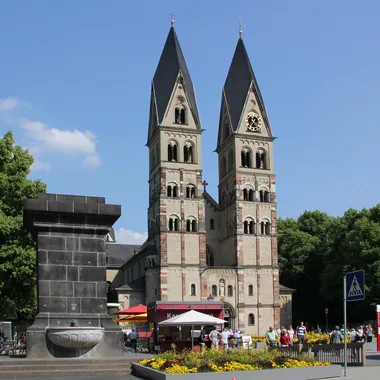
The oldest church in the city, the Basilica of St. Castor, dates back to the 9th century and is an impressive example of Romanesque architecture. It was the scene of important historical events, including negotiations on the division of the Frankish Empire in 842.
The interactive Mosellum is dedicated to the topics of fishing, water ecology and the Moselle locks. It offers educational insights into the nature of the region, especially for families.
The Kunstgässchen is a little gem in the old town of Koblenz. With charming galleries, small artisan stores and cozy cafés, it invites you to stroll and discover.
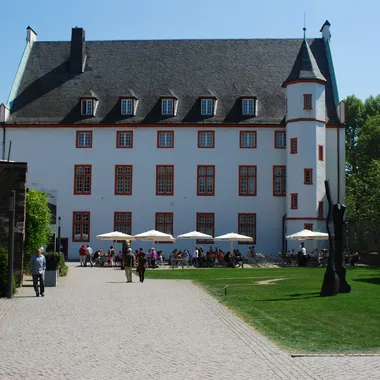
The Ludwig Museum, housed in the Deutschherrenhaus, exhibits modern art and regularly hosts special exhibitions by international artists. The historic building is idyllically situated on the Rhine and is well worth a visit in its own right.
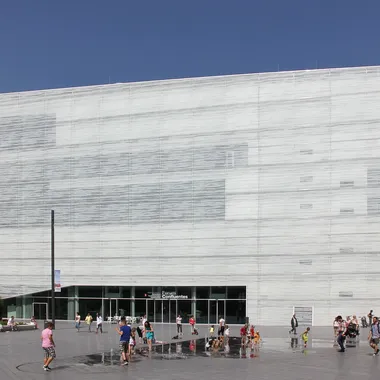
At the Middle Rhine Museum in the Forum Confluentes, visitors can experience the art and cultural history of the Middle Rhine. The collection includes paintings, sculptures and historical exhibits that bring the history of the region to life.
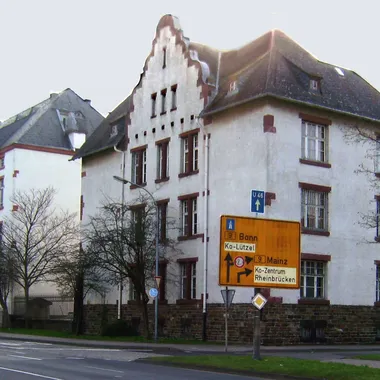
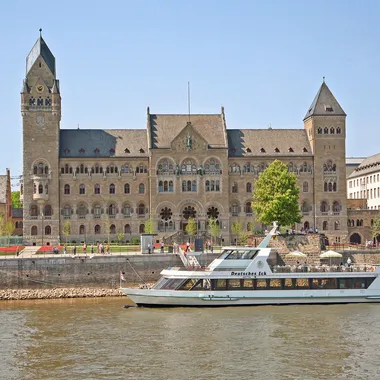
The Prussian government building, an imposing structure from the Wilhelmine era, bears witness to the city's Prussian past. Today it houses offices, but is an impressive photo motif from the outside.
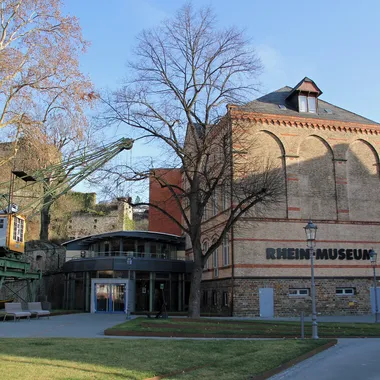
At the Rhine Museum, visitors can learn all about the culture, nature and history of the Rhine. Models, maps and interactive exhibitions make the visit educational and exciting.
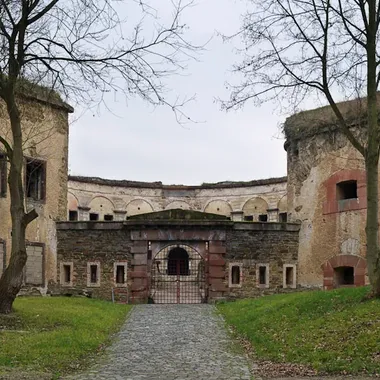
The historic Fort Asterstein is part of the Prussian fortifications of Koblenz and offers exciting insights into the military architecture of the 19th century.
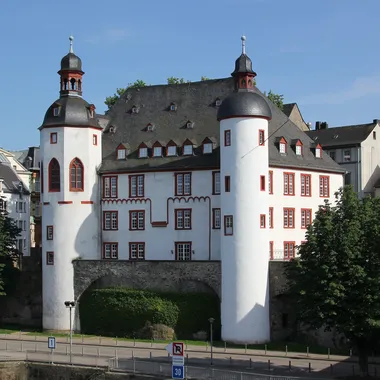
The Alte Burg, a medieval moated castle, is picturesquely situated on the Moselle and today houses the town archives. The area around the castle with its small park is ideal for a walk.
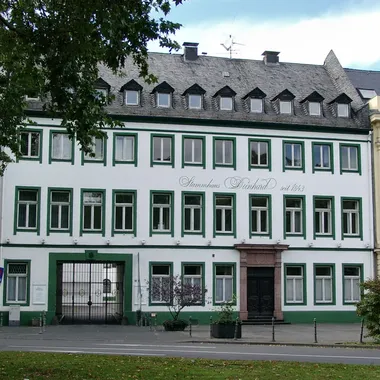
The Deinhard Cellar Museum introduces visitors to the world of sparkling wine production. In addition to historical information, guests can taste different types of sparkling wine during guided tours.
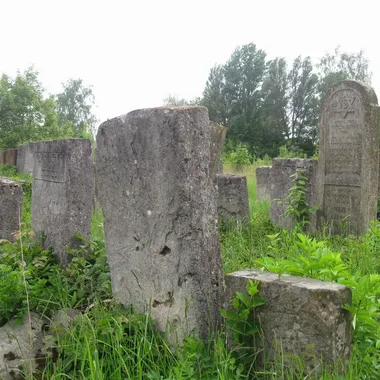
The Jewish cemetery in Koblenz bears witness to the long history of the Jewish community in the city. The well-preserved gravestones tell of the fates of the people buried here and offer a place of remembrance.
The old town of Koblenz enchants visitors with its narrow alleyways, historic buildings and cozy squares. Particularly worth seeing are the Jesuitenplatz, the Schängelbrunnen monument at the town hall and the Liebfrauenkirche with its striking towers. Numerous restaurants and cafés invite you to take a break.
The modern Forum Confluentes, an architectural highlight, houses the Middle Rhine Museum, which displays an impressive collection of works of art and historical exhibits. The city library and the interactive Koblenz-Touristik exhibition are also housed here.
After the flood disaster, the valley is now a symbol of resilience, characterized by steep red vineyards and warm hospitality
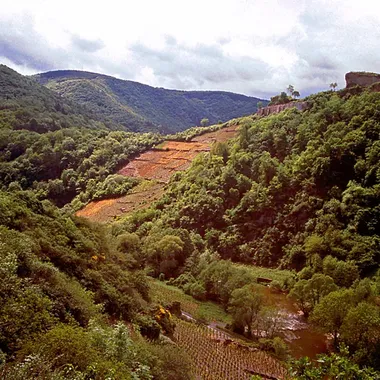
This region is known for its red wine, narrow river valleys, and historic sites. It is particularly famous for its wine-making tradition, castles, and hiking trails. Visitors can enjoy a blend of nature, culinary delights, and history here. In 2021, heavy rains caused flooding in the Ahr Valley, resulting in numerous deaths.
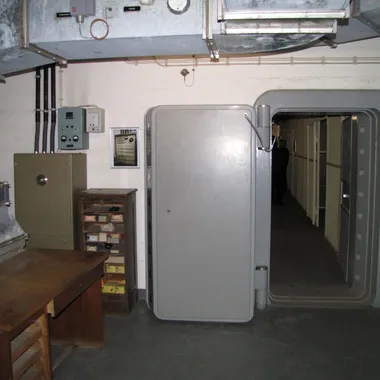
During the Cold War, the facility was intended as a protective bunker for the German government (the federal capital at the time was Bonn). Parts of it are now accessible as a museum. Visitors can gain an insight into the Cold War era.
The remains of a Roman villa show how wealthy Romans lived in the region. Excavations and reconstructions bring the site to life. Visitors can experience ancient history here.
The hiking trail leads through the vineyards of the Ahr Valley and combines nature with wine culture. Viewpoints offer sweeping views over the valley. Visitors experience enjoyment and exercise here.
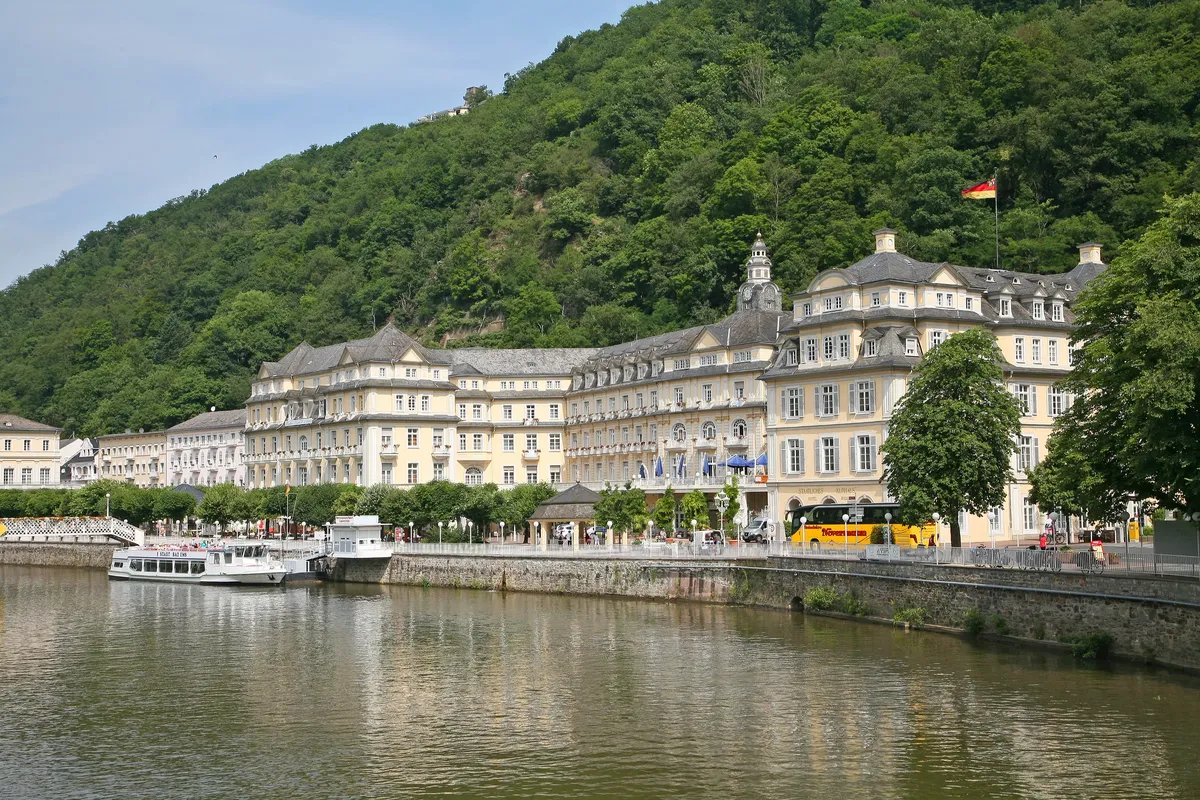
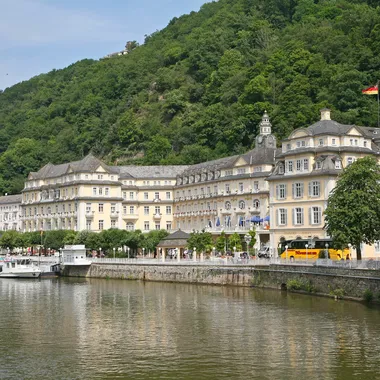
As part of the "Great Spa Towns of Europe", the imperial spa shines with magnificent spa architecture directly on the banks of the Lahn.
As early as the 19th century, the town attracted European aristocratic families, artists, and politicians who came to enjoy the mineral-rich thermal springs. The magnificent spa architecture along the Lahn River still bears witness to this golden age today. Economically, Bad Ems was strongly influenced by the spa industry, which has evolved over time into modern wellness and health offerings. As part of the UNESCO World Heritage Site “Great Spa Towns of Europe,” Bad Ems today embodies the European spa tradition and combines historic elegance with relaxation and nature.
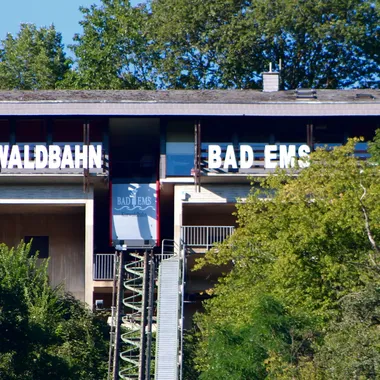
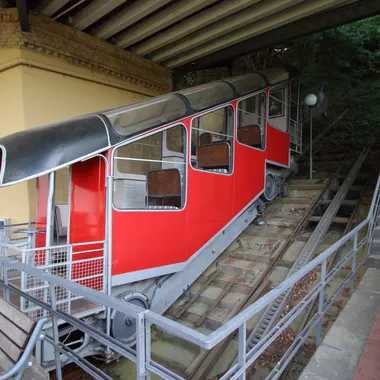
The Kurwaldbahn Bad Ems is a small funicular railroad that takes visitors from the spa district up to the spa forest. The historic funicular covers a significant difference in altitude over a short distance and offers beautiful views of the town and the Lahn Valley. Once at the top, walking paths and vantage points invite you to linger.
The Malbergbahn is a historic funicular railroad that leads to the viewpoint on the Malberg. The ride combines technical history with impressive views over the Lahn Valley. Once at the top, visitors can enjoy a sweeping view of the spa town and the surrounding countryside.
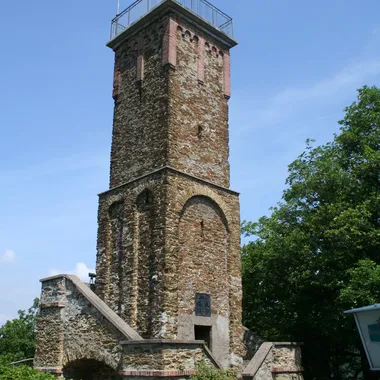
The Concordia Tower is a lookout tower above Bad Ems. From here, there is a wide view over the Lahn, the town and the wooded hills. Visitors can reach the tower via hiking trails and enjoy the combination of nature and panoramic views.
The Bad Ems casino is one of the most traditional casinos in Germany. Visitors can experience the flair of past spa times in elegant historic rooms, when European aristocratic houses and celebrities were guests here.
The Russian Orthodox Church in Bad Ems with its golden domes is a striking eye-catcher in the townscape. It was built in the 19th century for Russian spa guests and bears witness to the international importance of the spa town. Visitors can experience Orthodox sacred art and a special architectural atmosphere here.
The Heinzelmann Caves are small, man-made grottoes in the spa forest. They were designed in the 19th century as part of the spa facilities and were used for the recreation and entertainment of spa guests. Visitors can discover a rather hidden, playful element of the historical park design here.
With its striking tower, the Catholic parish church of St. Martin dominates the townscape of Bad Ems. The neo-Gothic building from the 19th century reflects the religious development of the growing spa town. Visitors will find a peaceful place here and can also discover an example of historicist church architecture.
The Roman spring is one of Bad Ems' traditional healing springs. Even in ancient times, the Romans used the mineral-rich water, which is still used for drinking cures today.
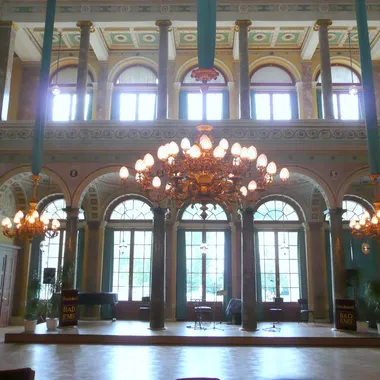
The Kursaal Bad Ems - especially the Marble Hall - is one of the most magnificent rooms in the town. With its columns, decorations and generous dimensions, it was a central meeting place for social events during the heyday of the spa town. Visitors can experience the elegant world of historic spa culture here.
The state spa Bad Ems forms the historical center of the spa town. Magnificent buildings, promenades and spa facilities reflect the heyday of the 19th century. Visitors can experience classic European spa architecture and the combination of health, society and culture.
The Bad Ems Museum conveys the history of the spa town from Roman times to modern times. Exhibitions on spa life, medicine and urban development give visitors a comprehensive insight into the importance of Bad Ems as an international spa.
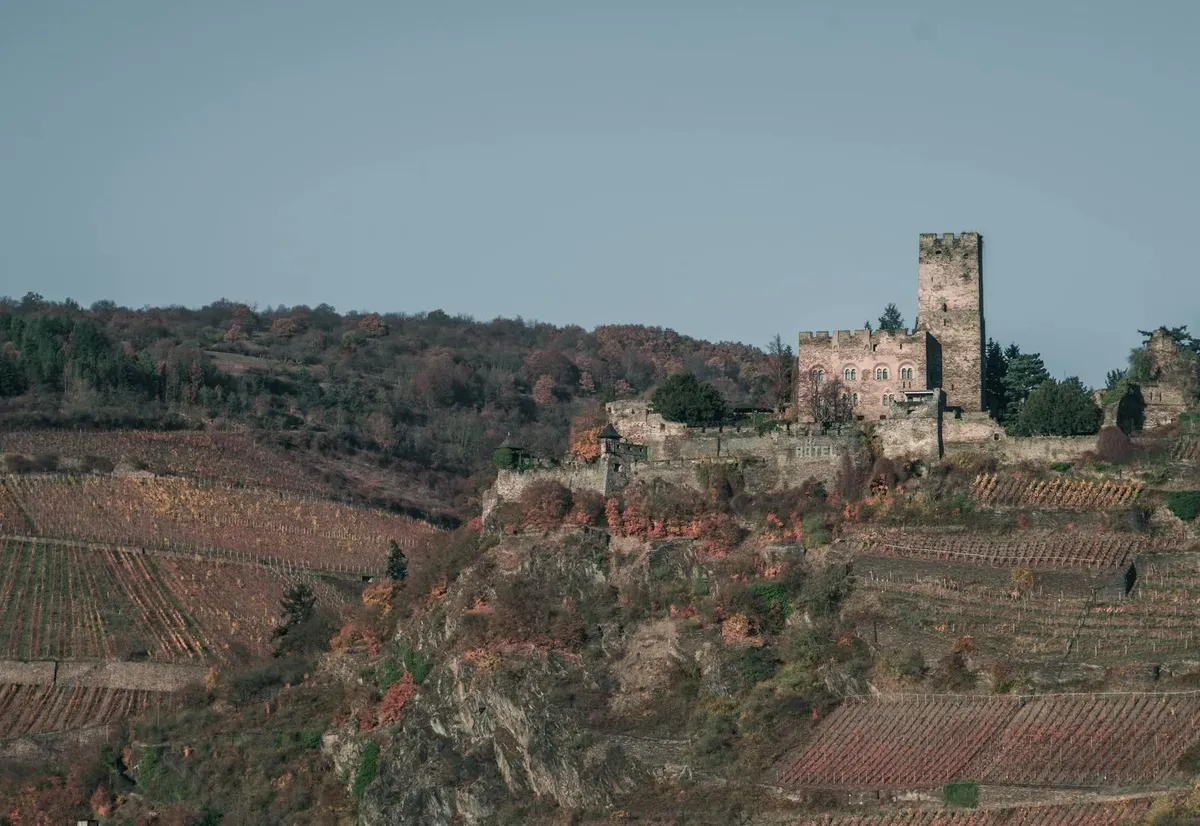
The Rhine Valley is one of the most scenically impressive regions in Germany and stands for the romance of castles like no other landscape
In the Middle Ages, the region served as a border area between various centers of power. Numerous castles and fortresses were built to secure and control trade routes, territories, and spheres of political influence. Between Bonn, Koblenz, and Wiesbaden or Mainz, imposing castles, striking rock formations, vineyards, and historic sites still line the Rhine today. Together with other castles north of Koblenz, they form the UNESCO World Heritage Site “Upper Middle Rhine Valley Cultural Landscape.”
The region is best explored on a hike along the Rheinsteig. This premium hiking trail stretches approximately 320 kilometers from Bonn through Koblenz to Wiesbaden and offers spectacular views of the Rhine, the castle landscape, and the surrounding vineyards.
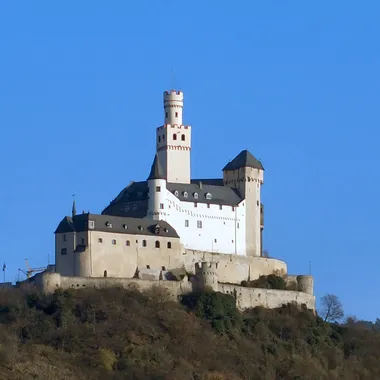
Marksburg Castle is the only hilltop castle on the Middle Rhine that has never been destroyed. The castle can be visited as part of a guided tour. There is a castle museum inside.
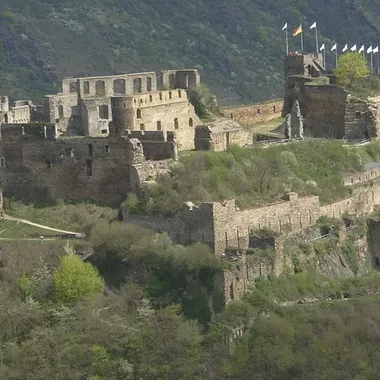
Rheinfels Castle in St. Goar is one of the largest castle ruins on the Rhine. Today it is partly a museum and offers guided tours through the old vaults and fortifications. There is also a hotel with a restaurant in part of the castle.
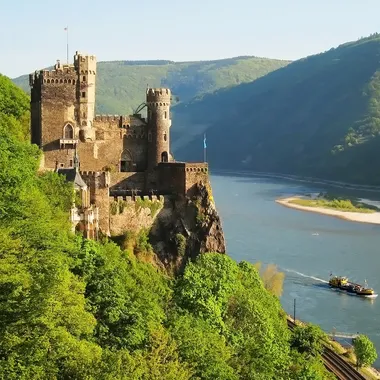
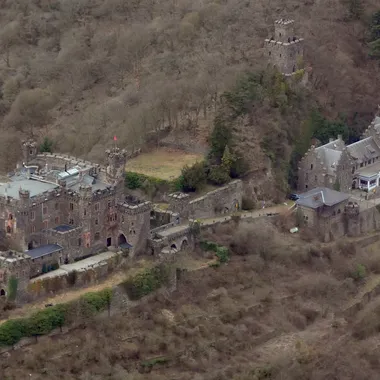
Rheinstein Castle sits majestically on a rock above the Rhine and is one of the most impressive castles in the Middle Rhine Valley. Originally built in the 14th century, it served as a customs castle to control trade on the river. In the 19th century, it was restored in the Rhine Romantic style and is now one of the finest examples of neo-Gothic architecture. Visitors can climb the keep, stroll through the historic chambers and admire the well-preserved murals and the Knights' Hall. The viewing terrace with a view of the Rhine Valley is particularly impressive. You can also spend the night at the castle.
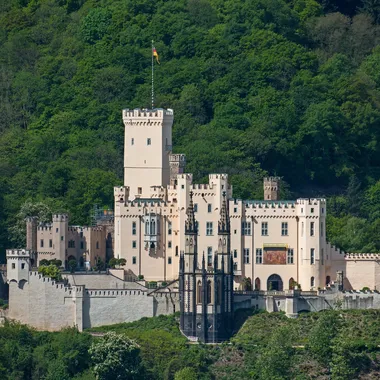
Stolzenfels Castle is located south of Koblenz and is one of the most beautiful examples of Rhine Romanticism. The original castle was built in the 13th century, but was later destroyed and rebuilt as a romantic castle in the 19th century. Today it is an impressive building with filigree towers, magnificent interiors and beautiful gardens. The Knights' Hall with its murals and the castle chapel are particularly worth seeing. The castle gardens offer a wonderful view of the Rhine, and the climb up the forest path is particularly worthwhile in spring and fall.
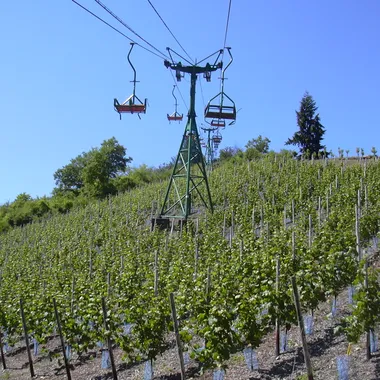
The chairlift takes you up to the heights above the Rhine. Visitors enjoy sweeping views over the valley during the ride.
Reichenstein Castle near Trechtingshausen is now a multi-purpose property. In addition to a museum showing the history of the castle, there is also an upscale hotel and a restaurant serving regional cuisine. The historic atmosphere makes the castle a popular destination for overnight stays and celebrations.
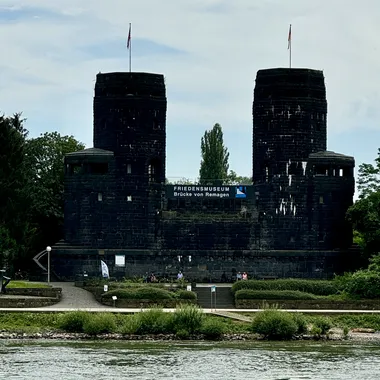
The museum commemorates the events of the Second World War around the Remagen Bridge. Visitors gain an insight into a significant historical event.
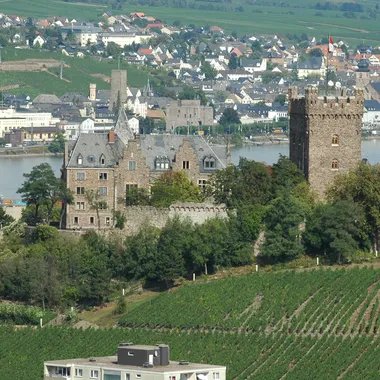
Stahleck Castle near Bacharach is one of the few castles to have been completely preserved. Today it serves as a youth hostel and offers one of the most beautiful overnight stays in the Rhine Valley. Visitors can enjoy the imposing walls and the view.
The visitor center provides information about geology, history and the Loreley legend. Visitors can gain background knowledge about the site here.
The museum combines modern architecture with historical buildings. It displays works of modern art and offers a view of the Rhine. Visitors can experience art in a special location.
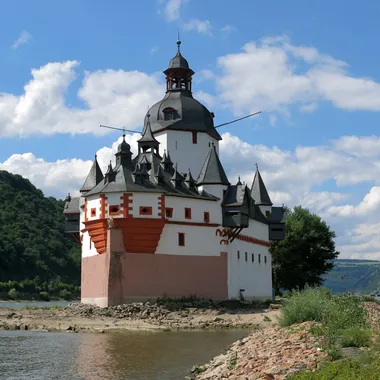
Pfalzgrafenstein Castle is located in the middle of the Rhine, on a small island near Kaub. Its exceptional location makes it one of the most striking landmarks of the Middle Rhine. The castle was built in the 14th century as a customs station and has survived the centuries almost unscathed. It can only be reached by boat, which makes the visit particularly exciting. Inside, you can see the old battlements and guardrooms. The castle is a rare example of a moated castle and was of great importance for controlling trade traffic on the Rhine.
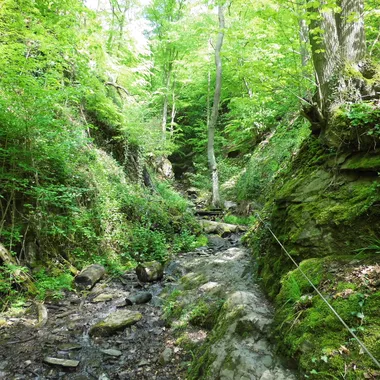
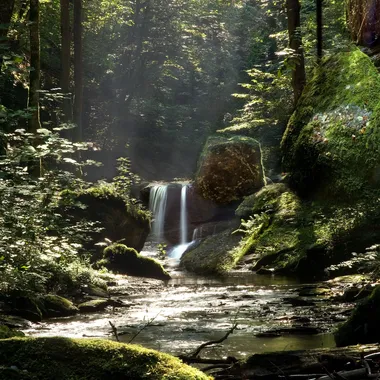
The Ruppertsklamm is an impressive 1.5 km long gorge near Lahnstein on the Rhine. It leads through a wild and romantic landscape with steep rock faces, small waterfalls and moss-covered stones. The hiking trail through the gorge is challenging and requires sure-footedness and sturdy footwear, as it leads over narrow paths, wooden bridges and even climbing sections with rope safety devices. The hike takes around 1 to 1.5 hours and offers a real sense of adventure.
The gorge is part of the Rheinsteig, one of the most famous long-distance hiking trails in Germany.
Lahneck Castle towers over Lahnstein at the confluence of the Lahn and Rhine rivers and dates back to the 13th century. Today it is privately owned, but can be visited as part of a guided tour. Visitors can explore the medieval chambers, the armory and the keep. The castle also offers a magnificent panoramic view of the Lahn Valley. There is a campsite right next to it.
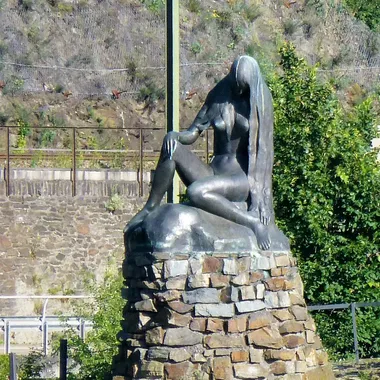
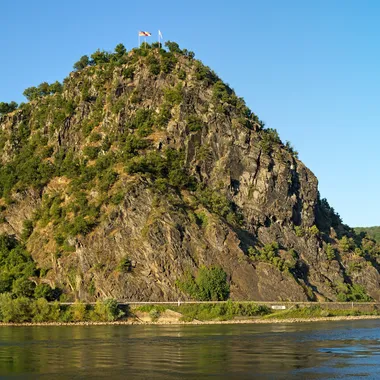
The Loreley is a famous rock on the Rhine that is associated with a legend. A figure is said to have lured ships into disaster with her singing. Visitors can experience one of the most famous places in the Rhine Valley here.
The farm shows ostriches and imparts knowledge about their husbandry. Visitors can experience the animals up close.
The old town is characterized by well-preserved city walls and towers. Visitors can experience a complete medieval townscape here.
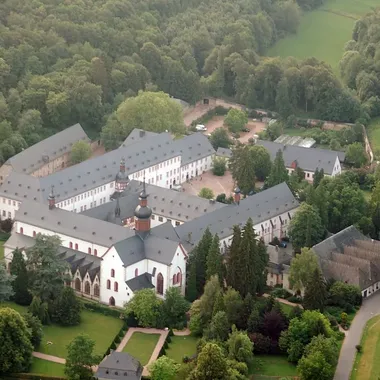
The monastery is an important former Cistercian abbey and an important place of viticulture. The complex impresses with its architecture and history. Visitors can experience culture and wine tradition here.
The castle towers over the town and offers a view of the Rhine. It is a striking landmark of Bingen. Visitors can experience history and views here.
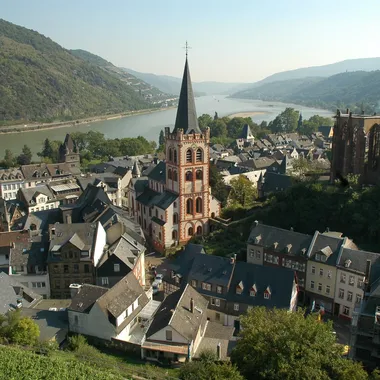
Bacharach is considered one of the most beautiful towns on the Rhine with half-timbered houses and narrow alleyways. Visitors experience a particularly picturesque townscape here.
The legendary Loreley rock towers some 132 meters above the Rhine and offers a spectacular view of the narrow river valley. The Loreley is particularly famous for the legend of the beautiful mermaid who beguiled the boatmen with her song and led them to their doom on the dangerous rapids. Today there are several viewpoints from which you can enjoy the Rhine and the impressive panorama. A visitor center provides information about the history and geology of the region, and hiking trails lead around the rock.
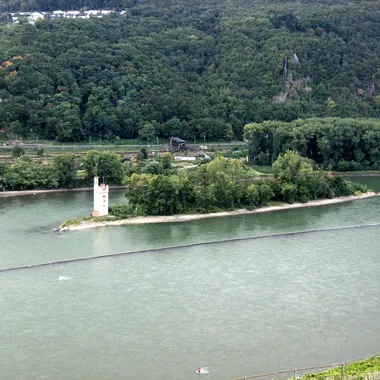
The tower stands on a small island in the Rhine and is surrounded by legends. It used to serve as a customs tower. Visitors can see a well-known motif of the Rhine Valley here.
The Mäuseturm tower near Bingen is surrounded by a well-known legend. Legend has it that a cruel archbishop had starving people turned away or even killed. As punishment, he was pursued by countless mice. He fled to the tower in the Rhine, but the mice swam after him, entered and ate him.
Historically, the tower was a customs and signal tower: customs duties were levied here on passing ships.
The museum is located at the beginning of the Upper German-Raetian Limes. Exhibitions show the life of the Romans on the border of the empire. Visitors can vividly experience ancient history here.
The Ehrbachklamm is a narrow gorge with streams and rocks. Hiking trails lead through the varied nature. Visitors can experience one of the wildest landscapes in the region here.
The museum shows the history of Bingen, the region and famous personalities such as Hildegard von Bingen. Visitors gain an insight into the culture and development of the Rhine Valley.
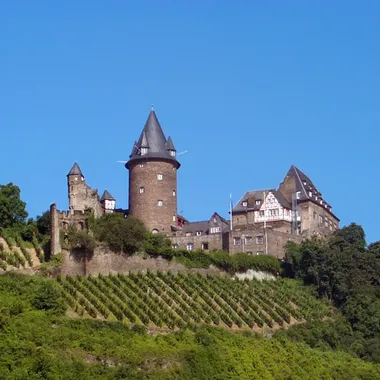
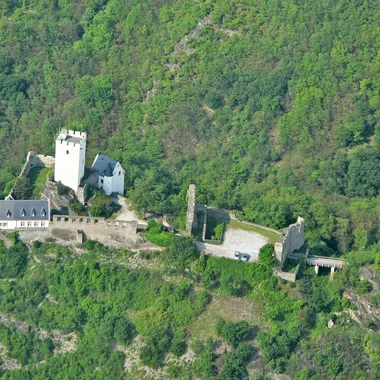
Sterrenberg Castle is one of the oldest castles in the Middle Rhine Valley. It can be visited and today houses a café with a magnificent view of the Rhine. Weddings are also celebrated there.
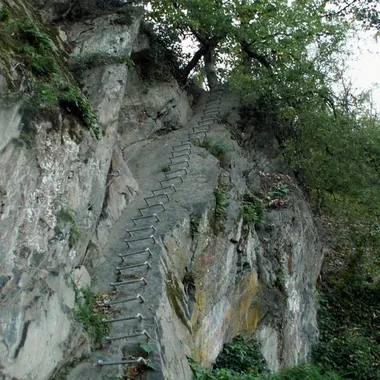
For the adventurous, the Middle Rhine via ferrata is one of the most exciting attractions in the Rhine Valley. It leads over steep cliffs, through vineyards and offers spectacular views of the Rhine. The via ferrata consists of various routes with different levels of difficulty, so that both beginners and experienced climbers get their money's worth. There are iron ladders and steps at numerous points to make the ascent easier. The via ferrata is particularly worthwhile in autumn, when the vineyards glow in golden colors.
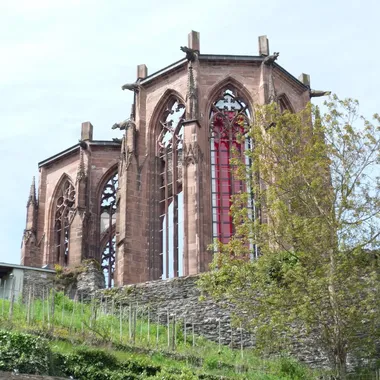
The chapel is a Gothic ruin above Bacharach. It conveys a special atmosphere and is closely linked to the history of the region. Visitors can experience a historic place with a view.
The castle is located above the Rhine and is one of the many castles in the region. It offers sweeping views of the valley. Visitors can experience medieval architecture in a scenic setting.
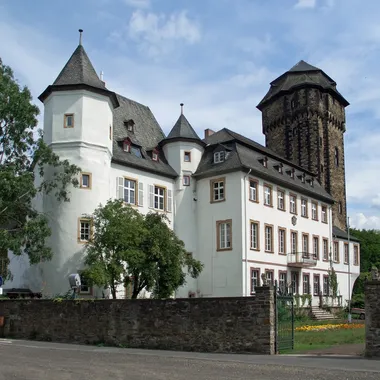
Martinsburg Castle in Lahnstein was built in the 14th century as a customs castle. Today, the castle is privately owned and can usually only be viewed from the outside. It is partly used as a residential building and houses event rooms.
The hiking trail leads along numerous castles through the Middle Rhine Valley. Viewpoints offer sweeping views across the river. Visitors experience a combination of history and nature here.
The Rheinsteig is a well-known hiking trail with challenging via ferrata stages. Don't forget the right equipment!
The Kulturhaus serves as a venue for exhibitions and events. Visitors can experience the region's cultural offerings here.
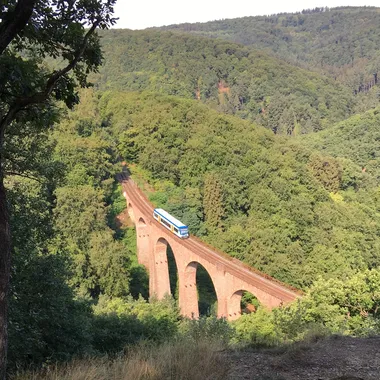
The viaduct is a prominent railroad structure and part of the Rhine Valley's infrastructure.
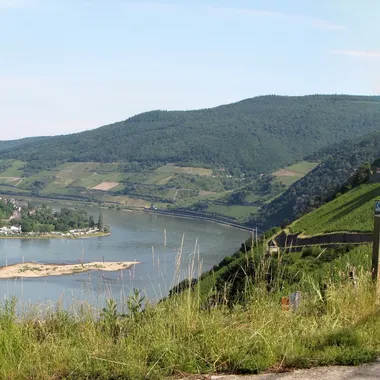
The vantage point above the Rhine offers a sweeping view of the towns of Rüdesheim and Bingen as well as the river valley. Visitors can experience one of the region's most famous panoramas here.
The market square forms the center of the city with cafés and historic buildings. Visitors can experience urban life here.
The Rhine Cycle Route runs along the river through several countries. In the Rhine Valley, it offers particularly beautiful sections with views of castles and vineyards. Visitors can actively explore the landscape here.
The Moselle cycle path follows the river through vineyards and small villages. The route is particularly popular due to its scenic beauty. Visitors can combine enjoyment and exercise here.
The cycle path connects various river valleys and leads through varied landscapes. Visitors can experience nature and rural regions off the beaten track.
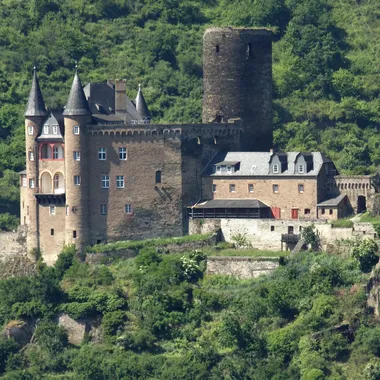
Katz Castle is located above St. Goarshausen and is privately owned. It is not possible to visit the castle, but it can be viewed from the outside. Today it serves as an exclusive residence. Maus Castle is also located nearby.
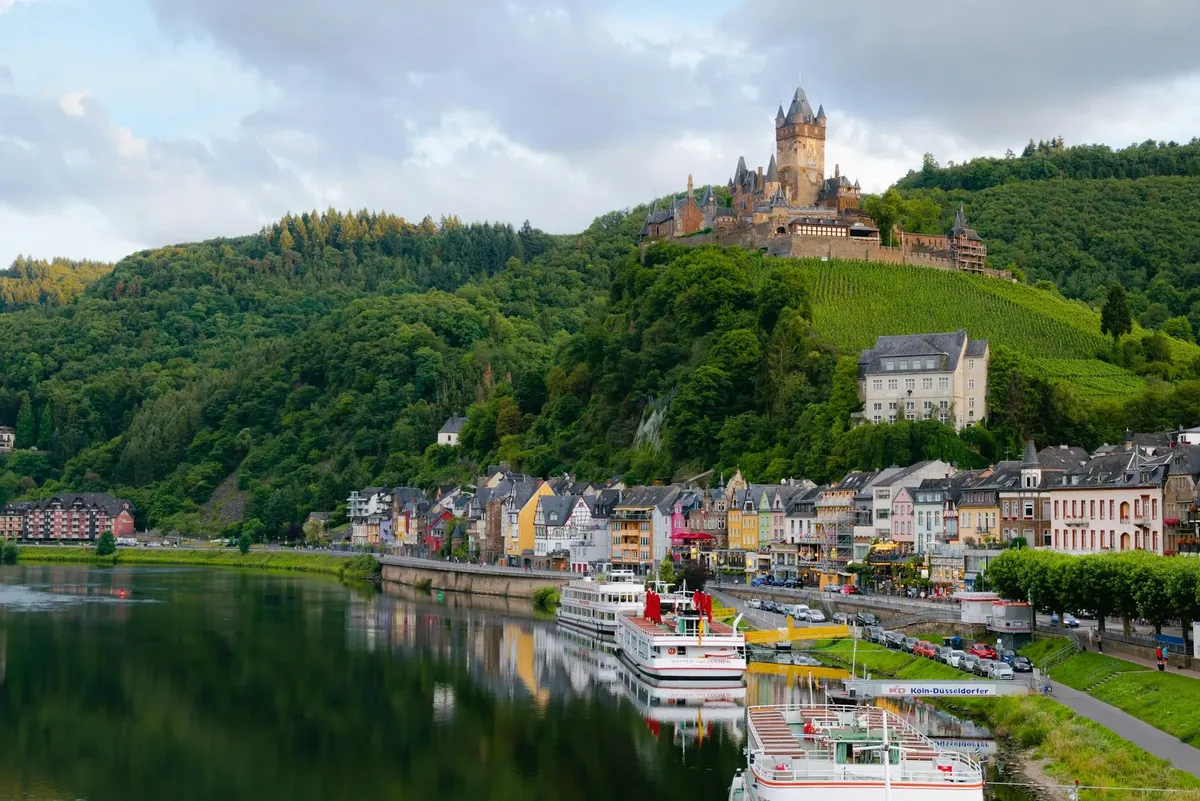
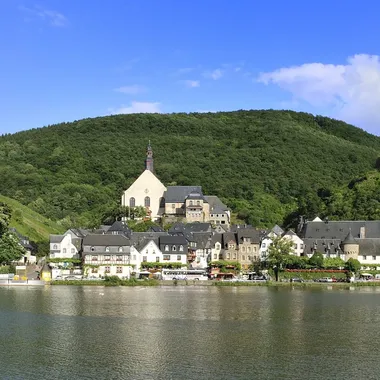
Cochem is one of the most famous and picturesque towns on the Moselle
With its impressive imperial castle, idyllic half-timbered houses, and the Moselle promenade, the city offers a blend of history, nature, and wine.
The Reichsburg Cochem is the town's landmark and sits majestically on a hill above the Moselle. The castle was built in the 11th century, destroyed in the 17th century and rebuilt in the 19th century in neo-Gothic style. Today, it can be visited on guided tours and you can enjoy a breathtaking view of the Moselle valley from the castle terrace.
The Geierlay suspension rope bridge in the Hunsrück region is one of the most impressive pedestrian bridges in Germany. With a length of 360 meters and a height of up to 100 meters, it spans the Mörsdorfer Bachtal valley and offers spectacular views of the surrounding nature. The bridge, which was opened in 2015, is a popular excursion destination for hikers and adventure-seekers. It is part of a well-developed network of hiking trails and can be reached from the villages of Mörsdorf and Sosberg. However, many visitors complain about high parking fees at the nearby parking lots.
For gourmets, a visit to the historic mustard mill is well worthwhile. Mustard has been produced here according to old recipes for over 200 years. In the small factory, you can taste different varieties and learn more about the artisanal production process.
A rather unusual highlight is the former Bundesbank bunker. This underground shelter was kept secret during the Cold War and was intended to house large amounts of spare money in the event of an emergency. Today, you can explore the bunker as part of an exciting guided tour and learn more about the history of Germany's currency reserves.
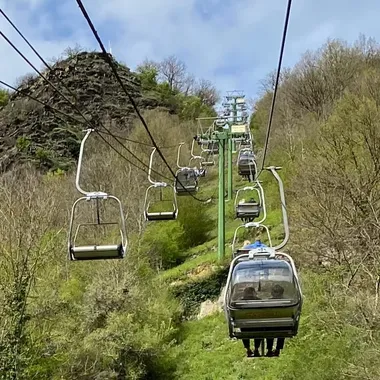
The Cochem chairlift takes you from the town to the Pinnerkreuz, a vantage point with spectacular views of Cochem, the Moselle and the surrounding vineyards. From here, you can go on hikes or simply enjoy the panoramic view.
The Moselland Museum provides an insight into the traditional life of the Moselle region. Historical agricultural equipment, vintage tractors, furniture and everyday objects are exhibited on several floors. Of particular interest are the depictions of viticulture and the old petrol station from the 1950s.
Cochem's historic market square is the heart of the old town. Surrounded by picturesque half-timbered houses, it is home to the baroque town hall from the 18th century and the Martinsbrunnen fountain. Markets, wine festivals and events regularly take place here, creating a lively atmosphere.
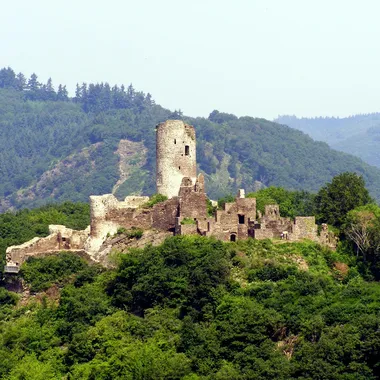
The ruins of Winneburg Castle are located just outside Cochem and can be reached via a hike. It was built in the 14th century and destroyed in 1689. The ruins offer a fantastic view of the Moselle valley and are a popular destination for hikers and history buffs.
The adventure trail through the Wilde Endert valley is one of the most beautiful hiking trails in the region, just behind the Winneburg castle ruins. The trail is around 20 kilometers long and leads through a wild and romantic valley with dense forests, small waterfalls and old mills.
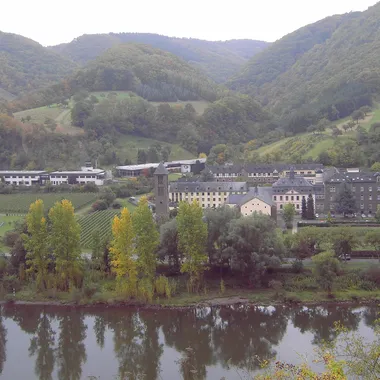
The former monastery is now a winery. There are informative guided tours of the winery including wine tastings.
The Gemstone Museum displays an impressive collection of minerals and gemstones from all over the world. Visitors can learn exciting facts about the formation of gemstones and how they are processed. A special attraction is the opportunity to cut stones yourself.
The Maria Martental monastery is a beautifully situated pilgrimage church in the Eifel region, not far from Cochem. The history of the monastery goes back over 800 years and today it is a spiritual place with an impressive church and regular church services.

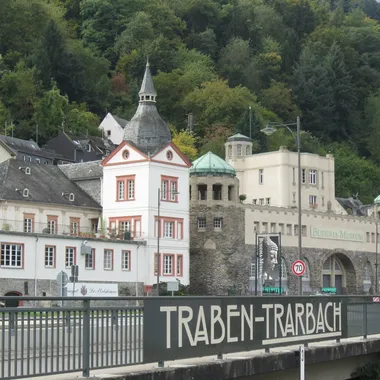
Traben-Trarbach is a charming town on the Moselle known for its viticulture, Art Nouveau architecture and fascinating history
The town stretches along both banks of the Moselle and is connected by a bridge. Traben-Trarbach was a major center of the wine trade, particularly in the 19th and early 20th centuries—at times even the second-largest in the world after Bordeaux.
Even today, the numerous wineries and underground wine cellars remain a major attraction for visitors.
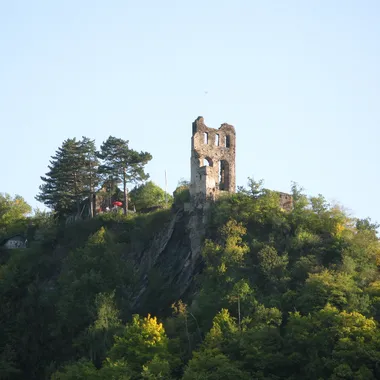
The Grevenburg, a ruined castle built by the Counts of Sponheim in the 14th century, towers above the town. Today, the remains of the castle offer a breathtaking view over the Moselle valley. A hiking trail leads up to the ruins, where there is a small restaurant - the perfect place to enjoy the view with a glass of Moselle wine.
An extraordinary cultural highlight is the Buddha Museum, which houses one of the largest collections of its kind in Europe with over 2,000 Buddha statues and works of art. The exhibits come from various Asian countries and provide a fascinating insight into Buddhist philosophy and art. The museum is located in a former wine cellar, creating a very special atmosphere.
The Middle Moselle Museum is located in a baroque aristocratic palace and offers an impressive collection on the history of the region. Visitors can find out about the development of viticulture, life on the Moselle and the cultural influences in Traben-Trarbach.
Another winery with a long winegrowing tradition on the Moselle. Riesling wines characterize the range. Visitors can experience typical Moselle culture and winemaking here.
Anyone interested in technology and history should visit the Time Travel Museum. There is a diverse exhibition of historical devices, including old radios, typewriters, clocks and technology from past decades. The interactive design makes it particularly exciting for visitors of all ages.
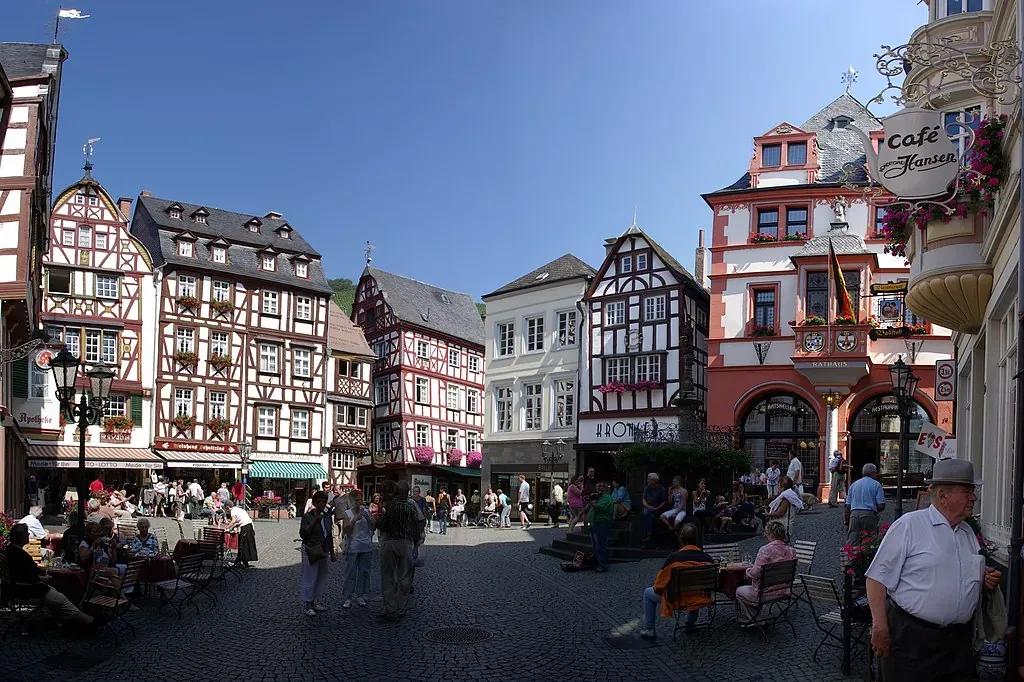
Bernkastel-Kues is one of the most beautiful towns on the Moselle and a true paradise for wine lovers and nature enthusiasts
The winding alleys lined with half-timbered houses are perfect for a leisurely stroll, while the Moselsteig, with its many hiking trails, offers stunning views of the vineyards.
The Landshut castle ruins are enthroned high above Bernkastel-Kues and offer a breathtaking view over the Moselle and the surrounding vineyards. The former electoral residence dates back to the 9th century and was reduced to ruins after a fire in 1692. Today, the castle invites visitors to linger with its modern gastronomy and viewing platform.
The Zylinderhaus is a must for car enthusiasts. It houses an impressive collection of historic vehicles from the pre-war period to the 1980s. In addition to vintage cars, the museum also displays nostalgic everyday objects that bring the lifestyle of past decades back to life.
Moselle wine shop
The Mosel-Vinothek is located in a historic vaulted cellar and offers a selection of over 150 different Mosel wines. Visitors can sample the diversity of the region and get advice from experts. The Vinothek is the perfect place to go if you want to find the right wine to take home.
The small but idyllic Bernkastel-Kues waterfall is somewhat hidden in a quiet wooded area. This natural highlight is a beautiful place for a short hike and offers pleasant refreshment on hot days. The waterfall is particularly beautiful after rainfall.
The Moselle Valley is one of the most famous wine-growing regions in Germany and stretches from Trier to the mouth of the Rhine near Koblenz
The region is characterized by winding river bends, steep vineyards, and small, often very picturesque villages along the riverbanks. Highlights include the old towns of Alken and Beilstein and the Calmont via ferrata.
In addition to wine (Riesling is the primary variety grown here), the Moselle Valley also boasts a long history: the Romans already used the region for viticulture and trade, as evidenced today by buildings and archaeological sites.
The Moselle Valley is rich in castles—there are over 30 major castle complexes along the Moselle, as well as numerous smaller ruins.
In the Middle Ages, these castles secured trade routes along the river, collected tolls from passing ships, or were used by nobles as residences and administrative centers.
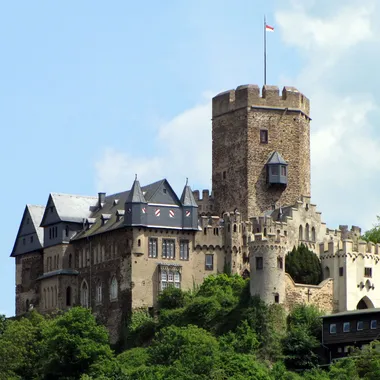
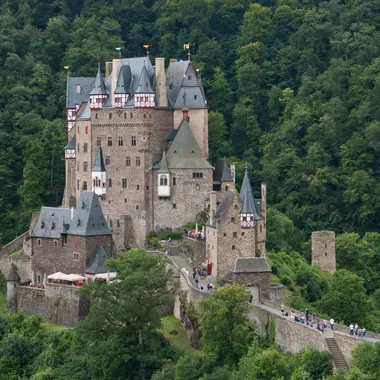
Eltz Castle is one of the best-known and best-preserved castles in Germany. It is located 20 km north-east of Cochem, surrounded by forests, and was built in the 12th century. The architecture of the castle, which consists of several towers and a central residential building, is particularly fascinating. Over 30 generations of the Eltz family have lived in the castle to this day, and it is still managed by descendants. Visitors can explore the castle on a guided tour, which takes them through magnificent rooms, armories and a treasure chamber. The path to the castle leads through an idyllic valley, which makes a visit particularly charming.
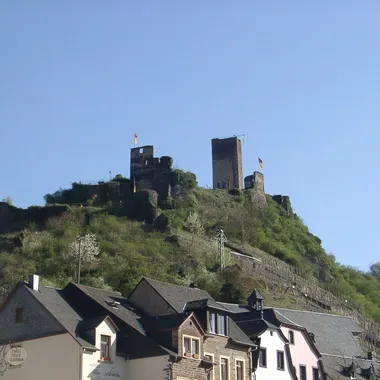
Metternich Castle towers above the small Moselle village of Beilstein, 10 km south-east of Cochem, and offers an impressive view of the Moselle valley. Originally built in the 13th century, the hilltop castle was destroyed in 1689 during the Palatinate War of Succession, but is still well preserved as a ruin. Visitors can climb the castle tower and enjoy the panoramic view. There is also a small castle tavern where you can fortify yourself with regional dishes and a glass of Moselle wine after the climb. The castle can be reached from Beilstein via a short but steep footpath and is particularly popular with hikers and photographers.
The old town of Alken is located directly on the Moselle and is characterized by half-timbered houses. Visitors can experience a small, traditional wine village here.
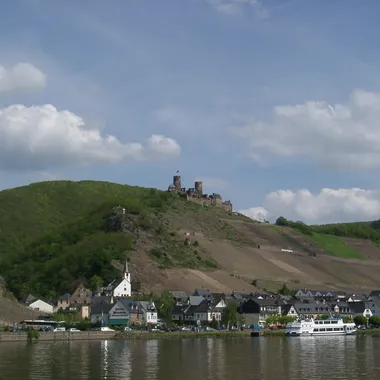
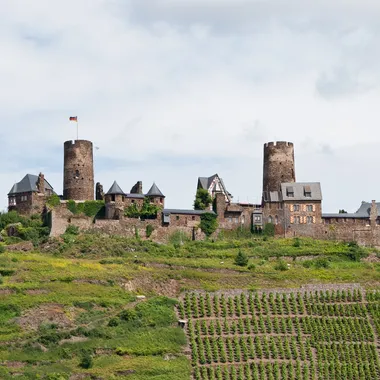
Thurant Castle is located above the Moselle, between Cochem and Koblenz, and was built in the 12th century. The castle was built as a fortification and offers a magnificent view of the Moselle and the surrounding countryside. The well-preserved towers, the battlements and the moat are particularly impressive. During the Middle Ages, Thurant Castle was an important point of defense for the Moselle valley. Today, visitors can tour the castle, take a walk on the towers and look out over the Moselle from one of the two towers. Thurant Castle is also used for events and hosts concerts and medieval markets in summer.
The via ferrata runs along the steepest vineyard in Europe. Secured passages lead through rocks and vineyards. Visitors experience a combination of sport and landscape here.
Beilstein is often described as one of the most beautiful villages on the Moselle. Narrow alleyways and historic buildings give the village a special atmosphere. Visitors experience an almost unchanged townscape here.
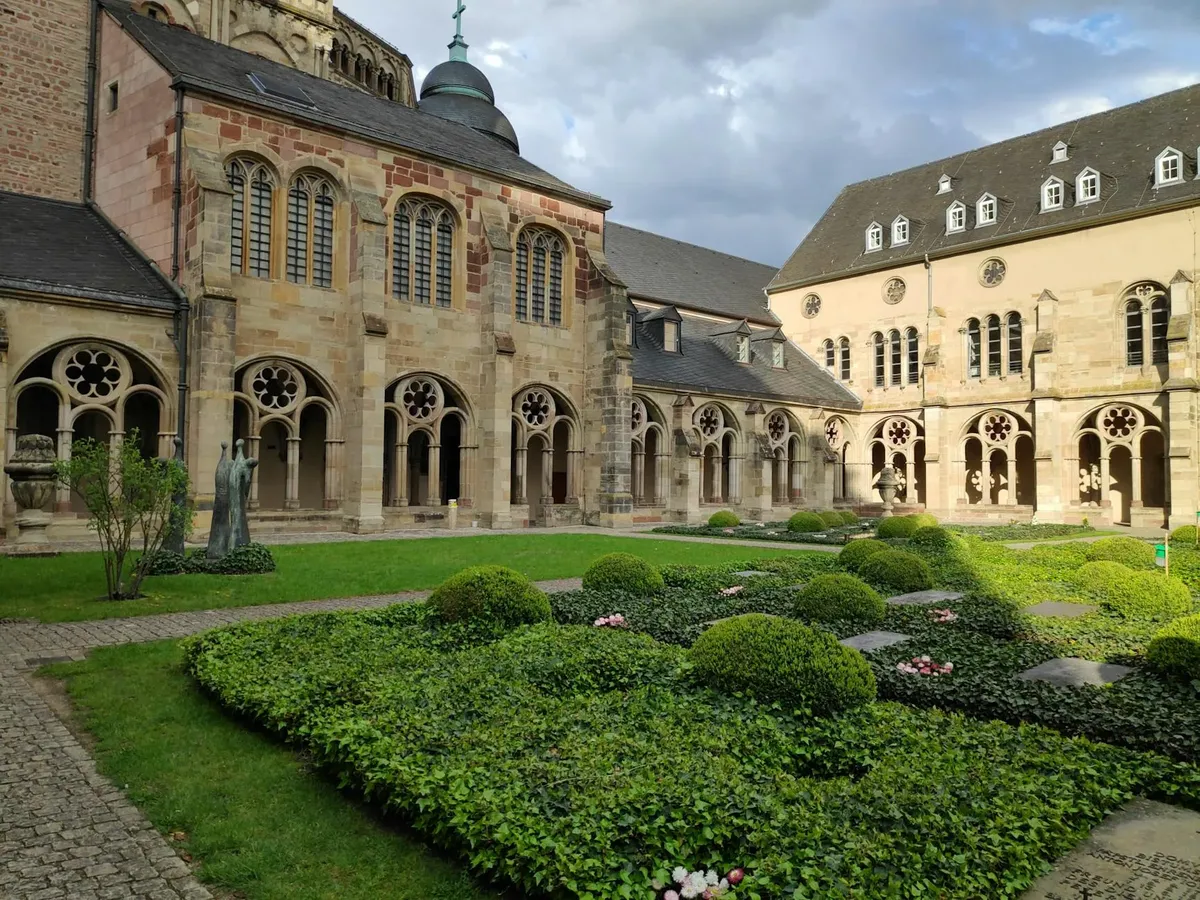
Trier, picturesquely situated on the Moselle, is a true Eldorado for history and culture enthusiasts and is home to nine UNESO World Heritage Sites
Founded over 2,000 years ago by the Romans, it is one of Germany’s oldest cities and boasts an impressive array of ancient and medieval buildings.
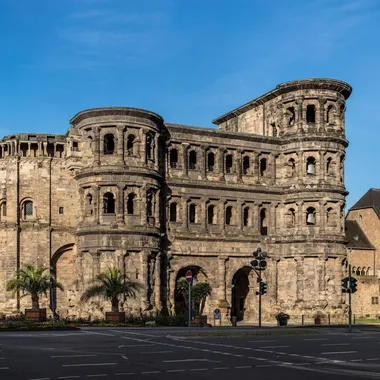
Foremost among them is the Porta Nigra, the best-preserved Roman city gate north of the Alps and the symbol of Trier. The Imperial Baths, once one of the largest thermal baths in the Roman Empire, as well as the amphitheater and the Roman Bridge, bear witness to the city’s splendor and significance in antiquity.
The Roman structures, along with other sites such as Trier Cathedral and the Church of Our Lady, are part of the UNESCO World Heritage Site.
But Trier has far more to offer than just history. The charming Old Town, with its picturesque alleys, the medieval Main Market, and a vibrant culinary scene, invites you to stroll and linger. The Karl Marx House, the birthplace of the famous philosopher, offers fascinating insights into his life and work.
The Porta Nigra is Trier's most famous landmark and an impressive relic of the Roman city wall from the 2nd century. Originally built as a mighty city gate, it impresses with its massive sandstone blocks and ornate arches. Today, visitors can explore the interior and enjoy a wonderful view of Trier from the upper floors.
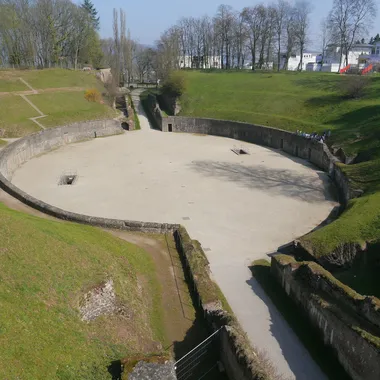
On the outskirts of Trier lies the well-preserved Roman amphitheater (UNESCO World Heritage Site), which was used in the 2nd century for spectacular gladiator fights and animal fights. With room for around 20,000 spectators, it was a center of public entertainment. Today, theater performances and events are occasionally held here.
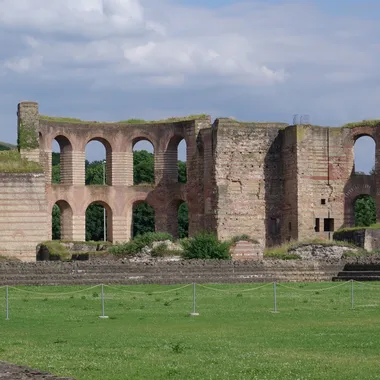
The Imperial Baths (UNESCO World Heritage Site) are among the largest bathing complexes ever built by the Romans and provide an impressive picture of the way of life in ancient Trier. Visitors can wander through the ruins and explore the underground passages that once served as a heating and supply system.
The Basilica of Constantine (UNESCO World Heritage Site), originally built as a throne room for Emperor Constantine, is one of the largest surviving buildings from antiquity. The simple, monumental interior impresses with its size and clear lines. Today, the basilica serves as a Protestant church.
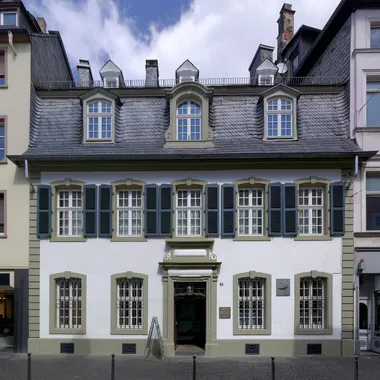
The birthplace of Karl Marx, the famous philosopher and founder of communism, is now a museum. Visitors can discover original writings, personal objects and multimedia exhibitions that shed light on the life and work of this influential thinker.
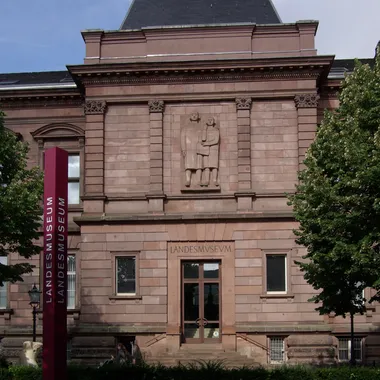
The Rheinisches Landesmuseum is an absolute must for history buffs. It houses one of the most important collections of Roman art and everyday objects, including magnificent mosaics and funerary monuments. The permanent exhibition tells the exciting story of Trier from antiquity to the Middle Ages.
Dialogue in the Dark" is an extraordinary exhibition where visitors can experience the world from the perspective of blind people in complete darkness. In various simulated everyday environments such as a café, a street or a park, blind guides lead the participants through the space and raise awareness of the challenges of life without sight. The exhibition is both educational and moving and encourages reflection on barriers and inclusion.
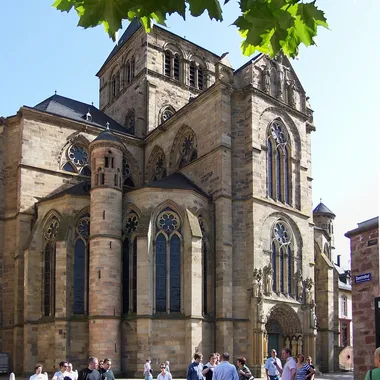
The Liebfrauenkirche in Trier is one of the earliest Gothic churches in Germany. Its unusual floor plan in the shape of a twelve-petaled rose gives it a special architectural effect. Visitors can discover the transition from Romanesque to Gothic architecture here.
The church has been a UNESCO World Heritage Site since 1986 (together with the Roman monuments and Trier Cathedral), as it is an important example of early Gothic architecture.