Amrum
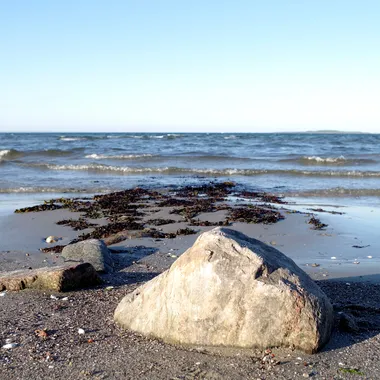
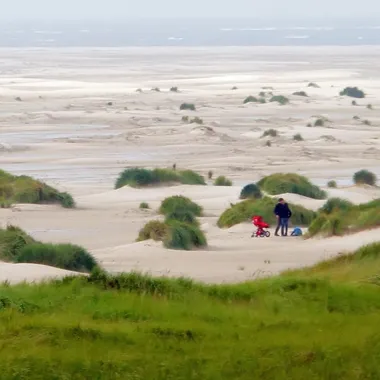
The island's Kniepsand is one of the most extensive beaches in Europe.
Population: 2,911,000
Schleswig-Holstein, Germany's northernmost federal state, enchants visitors with its unique location between the North Sea and the Baltic Sea. Here, endless beaches and picturesque dunes meet historic towns and charming villages
The region is a paradise for nature lovers, culture enthusiasts, and anyone looking to enjoy peace and quiet and the fresh sea air. The long beaches along the North Sea and Baltic Sea, the Wadden Sea (a UNESCO World Heritage Site), and idyllic islands such as Sylt, Föhr, and Fehmarn make Schleswig-Holstein a dream destination for those seeking relaxation. Seaside resorts like Timmendorfer Strand and Travemünde also attract numerous visitors every year.
While the North Sea fascinates with its rugged charm, tides, and the Wadden Sea, the Baltic Sea coast entices with gentle bays and crystal-clear, low-salinity water. Holstein Switzerland, a hilly inland region with numerous lakes, offers hiking and biking opportunities amidst unspoiled nature.
The state capital is known for Kiel Week, the largest sailing event in the world.
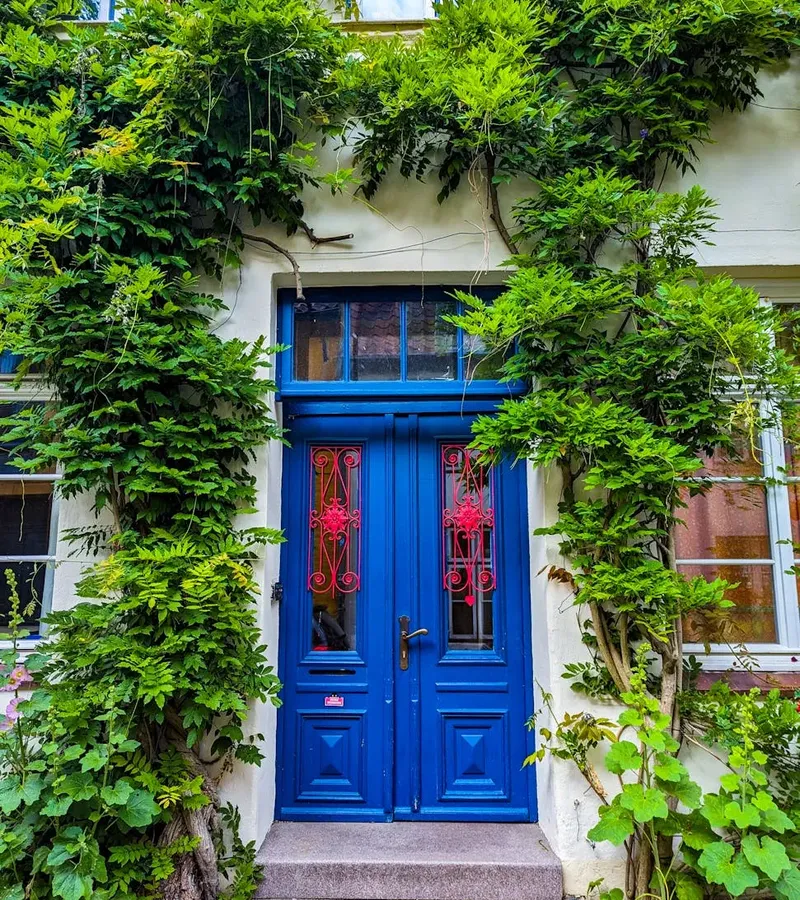
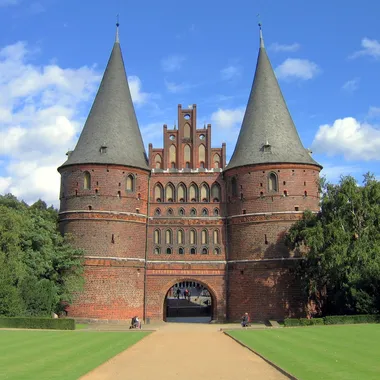
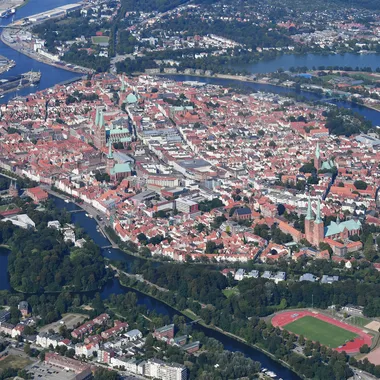
The Hanseatic city is known for its Holsten Gate and the historic UNESCO-protected Old Town with its impressive brick Gothic architecture.
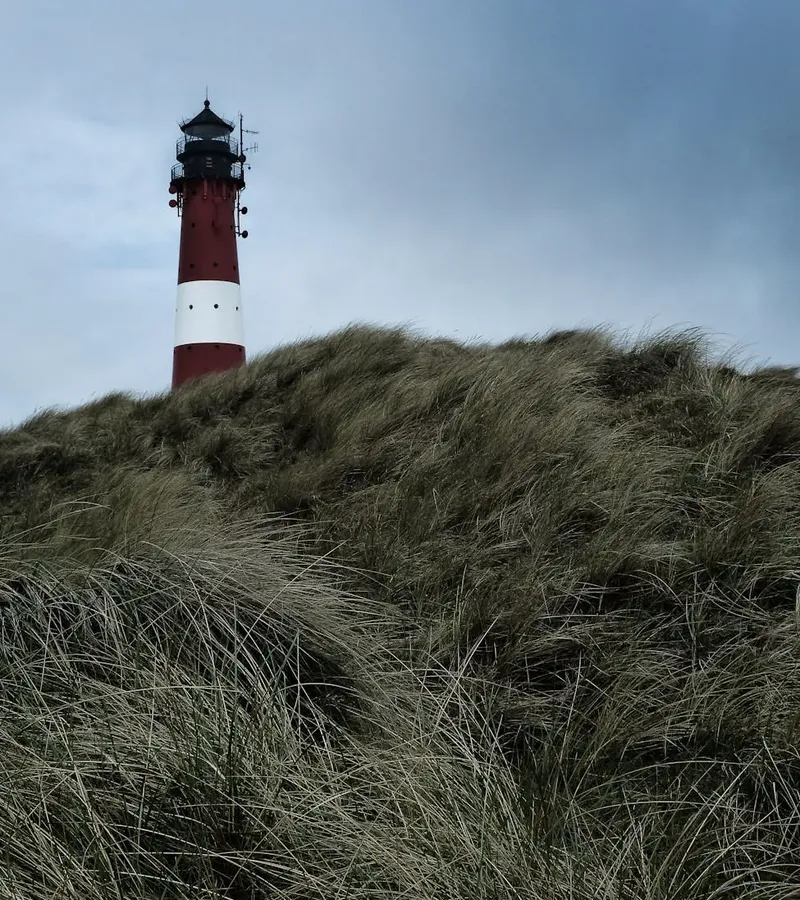
Germany's largest North Sea island attracts visitors with its miles of sandy beaches and picturesque dune landscapes.
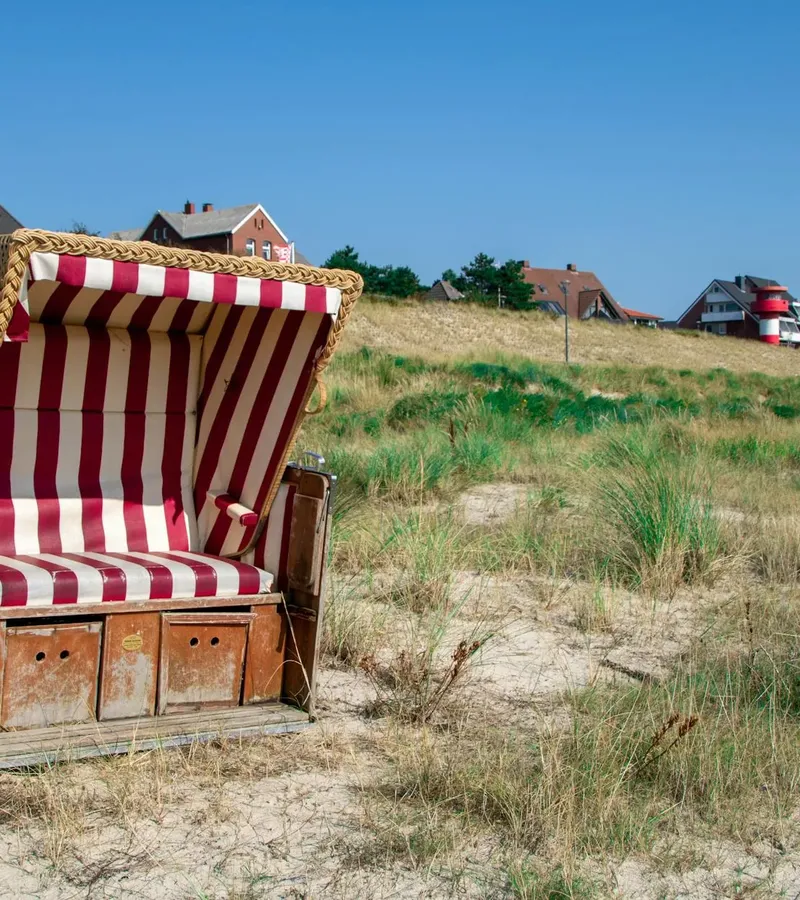
The island's Kniepsand is one of the most extensive beaches in Europe.
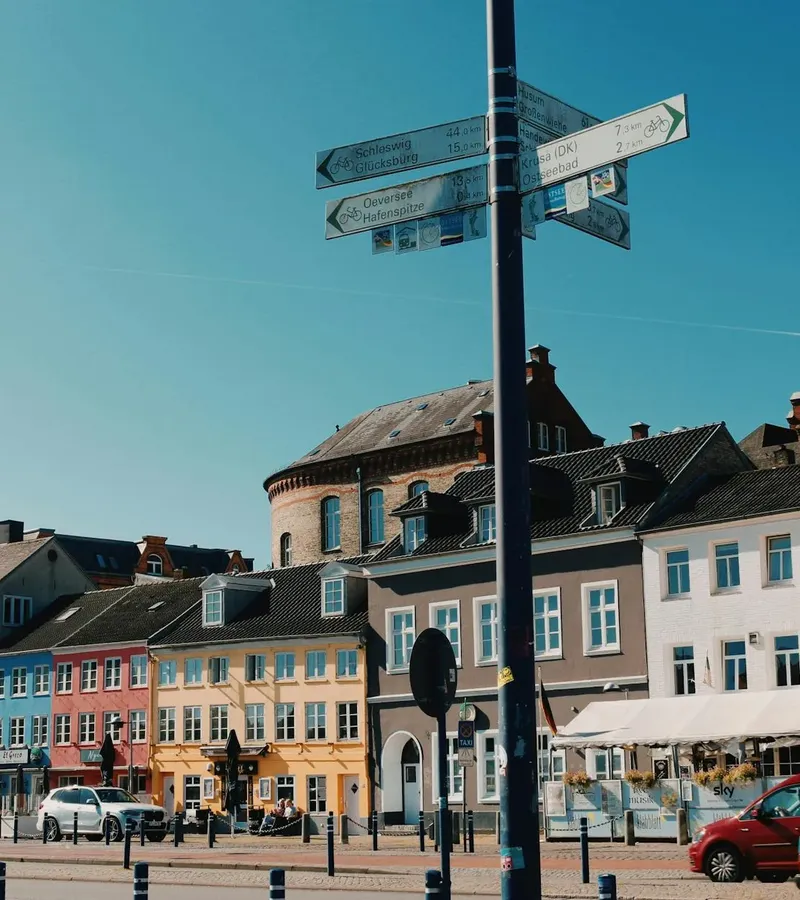
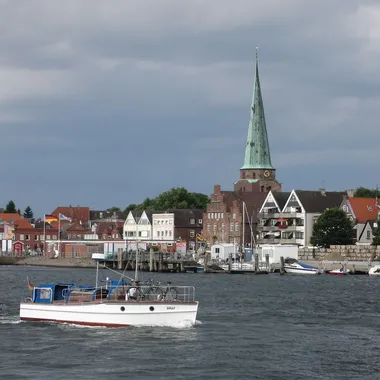
Germany's northernmost city fascinates with its maritime flair, historic harbor and Danish influence.
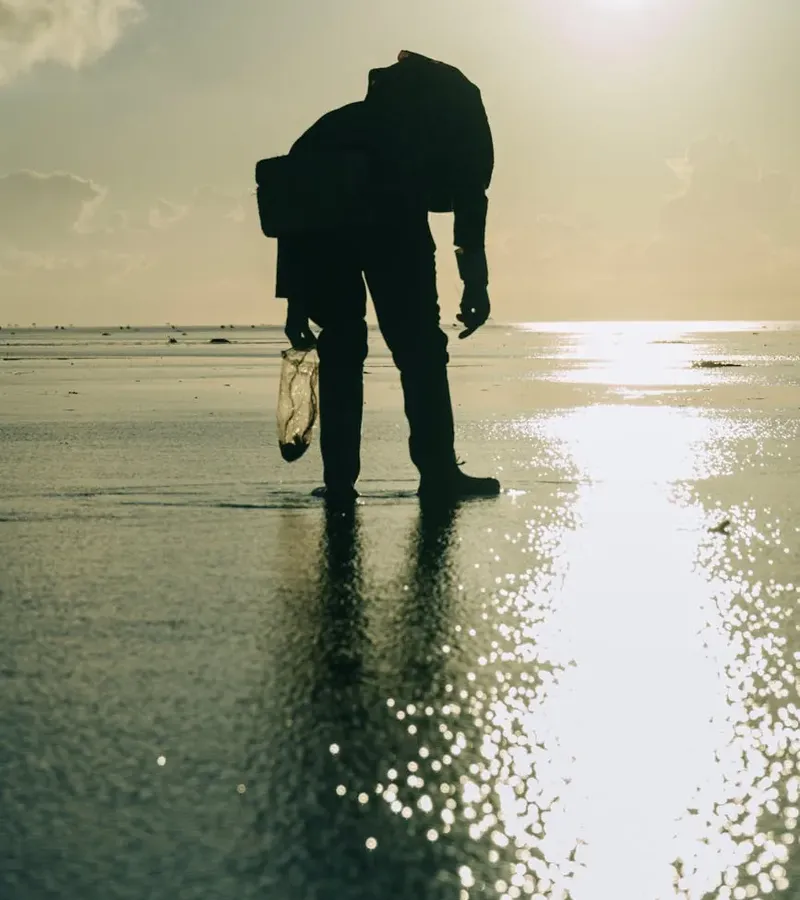
The "green island" is ideal for families and cyclists, with idyllic villages and long beaches.
The state capital is known for Kiel Week, the largest sailing event in the world.
The Hanseatic city is known for its Holsten Gate and the historic UNESCO-protected Old Town with its impressive brick Gothic architecture.
Germany's largest North Sea island attracts visitors with its miles of sandy beaches and picturesque dune landscapes.
83 sights
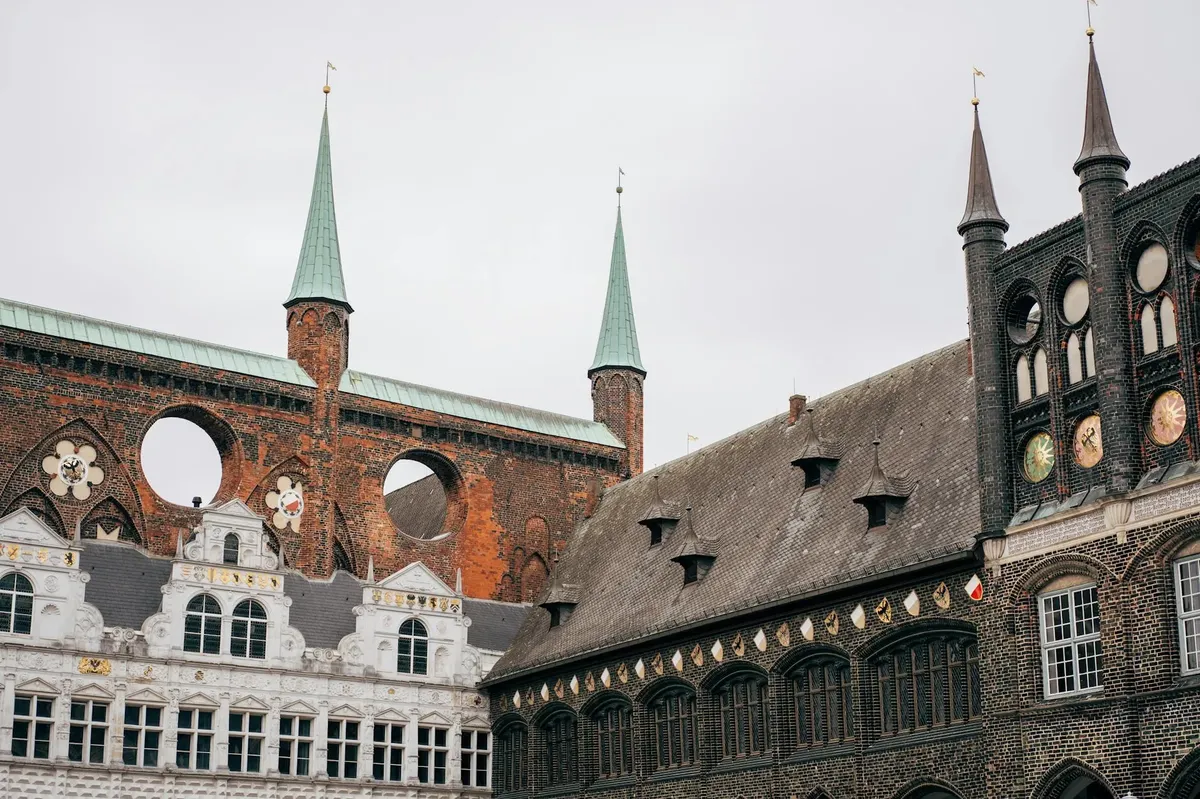
Lübeck is a historic city in the north of Germany, often referred to as the "Gateway to the North"
It is known for its beautiful old town, which has been a UNESCO World Heritage Site since 1987, and for its significant role during the Hanseatic era. Lübeck offers a fascinating blend of medieval architecture, cultural highlights, and maritime charm.
Today, Lübeck is a modern port and business hub with a strong maritime character. The port connects the city with Scandinavia and the Baltic states, making it an important center for trade and logistics. At the same time, Lübeck is a major hub for science and healthcare, boasting a renowned university and a high quality of life nestled between the Baltic Sea, the Old Town, and nature.
Lübeck is also known for Niederegger’s marzipan creations and its beautiful Christmas market.
Holsten Gate
Probably the city's most famous landmark is the Holstentor, an imposing city gate built in the 15th century. It is a symbol of Lübeck's former importance as a Hanseatic city and today houses the Holstentor Museum, which shows the history of the city and its trade connections.
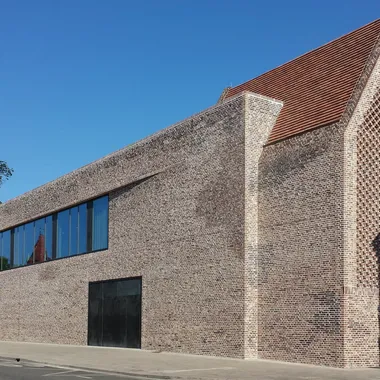
European Hanseatic Museum
The Hansemuseum in Lübeck is the largest museum in the world dedicated to the history of the Hanseatic League - a medieval network of trading cities of which Lübeck was a leading member. The museum offers an interactive and modern exhibition that brings the history of the Hanseatic League to life and highlights Lübeck's important role in international trade and the cultural development of the Middle Ages. With the help of multimedia installations, historical artifacts and themed exhibition areas, the history of the Hanseatic League is told in a vivid and exciting way.
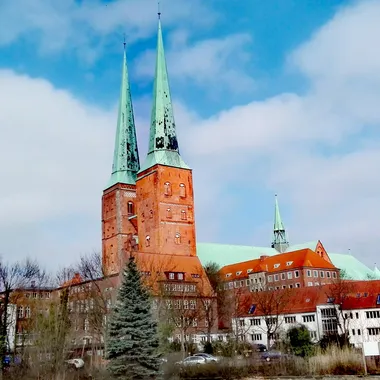
Luebeck Cathedral
Lübeck Cathedral is one of the most magnificent churches in northern Germany and a masterpiece of brick Gothic architecture. The cathedral impresses not only with its size, but also with its architectural diversity and the historical works of art inside. Particularly noteworthy are the altar by Benedikt van der Lübecke and the organ, which is considered one of the most important in Germany. The cathedral is not only a religious site, but also a cultural heritage and a popular destination for tourists and art lovers.
St. Mary's Church Lübeck
This church is a masterpiece of brick Gothic architecture and one of the largest churches in northern Germany. The high tower is particularly impressive, towering over the town and visible from afar. Inside, visitors will find beautiful stained glass windows and the famous pulpit altar.
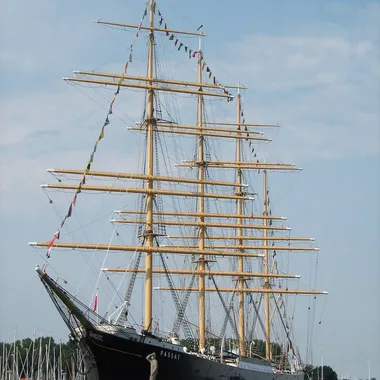
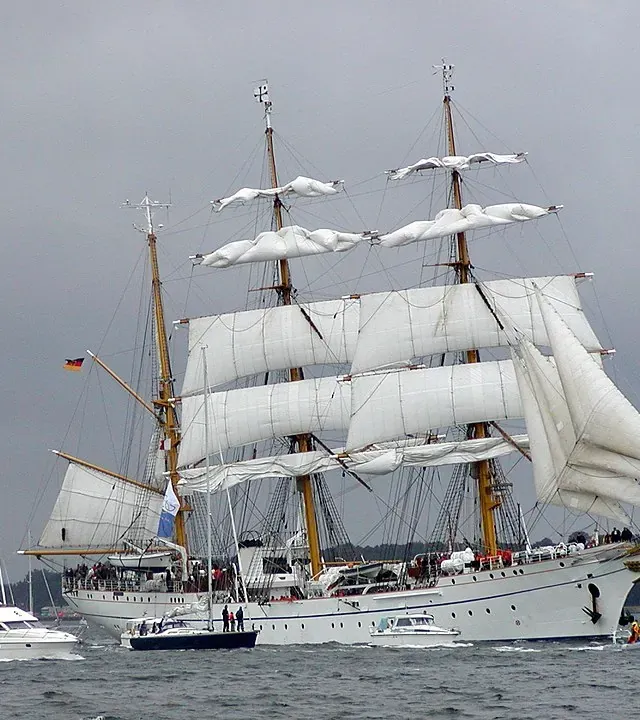
Passat Maritime Monument in Travemünde
The Passat is an imposing ship that is now a museum and landmark of Lübeck. The Passat, a former sailing ship of the windjammer class, was built in 1911 for trade with South America and provides an exciting insight into the history of seafaring and trade.
Hospital of the Holy Spirit
The Heiligen-Geist-Hospital is one of the oldest and most important buildings in Lübeck. It was founded in the 13th century and originally served as a hospital as well as an old people's home for the poor. Today, the building is a museum that reflects not only medical history, but also architectural and cultural significance. Particularly noteworthy is the cloister, which forms a beautiful inner courtyard, and the historic old town surrounding the hospital.
Gothmund Fishing Village
The small village of Gothmund is a picturesque place that is often referred to as the "Venice of Lübeck". Situated directly on the River Trave, the village has retained its historic charm and attracts many visitors with its half-timbered houses, cobbled streets and idyllic water views. Gothmund is particularly popular with walkers and photographers and offers a quiet retreat away from the crowds. Here you can experience the typical rural architecture of the Lübeck region.
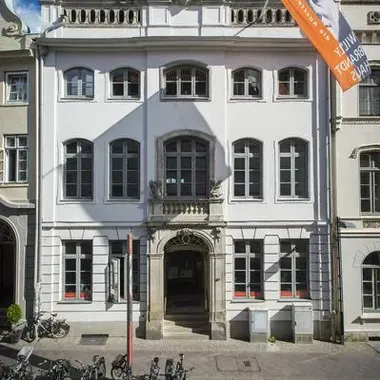
Willy Brandt House Luebeck
The Willy Brandt House in Lübeck is dedicated to the life and work of former German Chancellor Willy Brandt, who was born in Lübeck in 1913. The museum is located in Brandt's birthplace and offers an exciting exhibition about his political career, his commitment to the peace process and his role as Chancellor. The Willy Brandt House is an important place for political education and commemorates one of the most influential politicians of the German post-war period.
Luebeck Magic Theater
The Zaubertheater Lübeck is a unique theater dedicated entirely to the art of magic. Here, visitors can experience magic shows of the highest standard that will delight both young and older guests. The magic theater not only offers impressive magic tricks and illusions, but also exciting workshops where you can learn the art of magic. A special experience for anyone who wants to experience something magical!
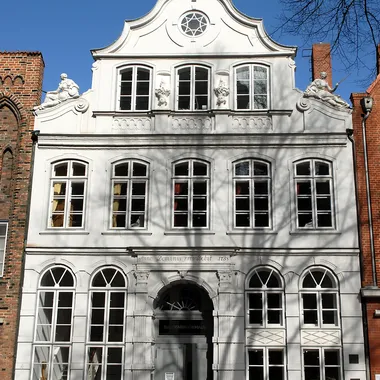
Buddenbrook House
The Buddenbrookhaus is dedicated to the life and work of the famous Lübeck writer Thomas Mann Mann (winner of the Nobel Prize for Literature in 1929), who became internationally famous with his work "Buddenbrooks". The museum is located in the former home of the Mann family (his brother was also a writer) and offers insights into their childhood, their literary development and their most important works.
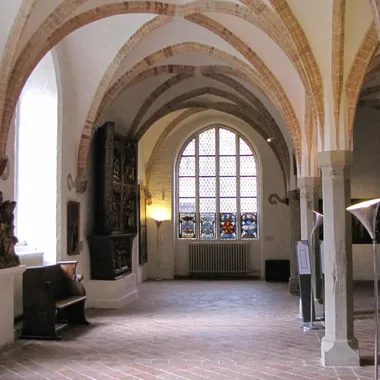
St. Annen Museum Quarter
The Kunsthalle St. Annen is an important museum for art and culture in Lübeck and houses an impressive collection of paintings, sculptures and arts and crafts. The exhibitions range from medieval art to modern works of art and offer an excellent opportunity to trace the development of art in the region and beyond.
Behnhaus Draegerhaus Museum
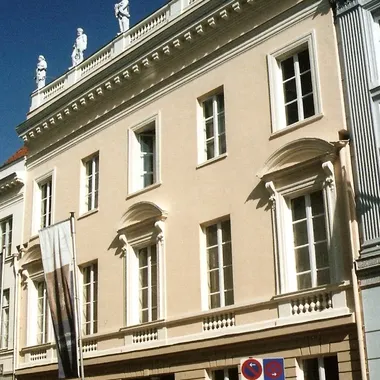
The Museum Behnhaus Drägerhaus is one of the most important art museums in Lübeck. It presents a collection of paintings and sculptures, mainly from the 19th century, including works by artists from the Romantic and Biedermeier periods. The museum is housed in two historic buildings, which impress from the outside with their neoclassical architecture. In addition to the art collection, there are regular temporary exhibitions dealing with various aspects of art history.
Puppet Theater Museum / KOLK 17
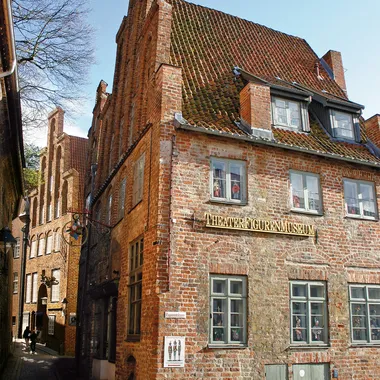
The TheaterFigurenMuseum is one of the most unique museums in Lübeck and displays an extensive collection of figures from the world of theater and puppetry. The museum offers fascinating insights into the world of puppetry and puppet theater and displays both historical and modern exhibits. From marionettes and hand puppets to mechanical figures - the museum offers an exciting overview of the art form that has been a part of cultural history for centuries. In addition to the museum, there are also performances that are popular with children.
Lübeck Puppet and Toy Museum
The Lübeck Doll and Toy Museum is another charming museum in Lübeck that is a great destination, especially for nostalgics and families with children. It displays an extensive collection of dolls, toys and miniature worlds from different eras. The museum is housed in a historic building and allows visitors to immerse themselves in the past, when dolls and toys played an important role in the lives of children and adults. It is a wonderful opportunity to discover the development of children's toys and the associated social changes.
Luebeck Old Town
The old town of Lübeck is a true jewel of medieval architecture. The winding alleyways, Gothic brick buildings and impressive churches such as Lübeck's St. Mary's Church or St. James' Church tell the story of the city. Breite Strasse and the market square in particular offer a picturesque backdrop.
Travemuende Seaside Resort
Travemünde is a district of Lübeck and one of the most famous Baltic Sea spas. It lies at the mouth of the River Trave into the Baltic Sea and is primarily known as a seaside resort and harbor town. Travemünde offers a long, fine sandy beach and a lively promenade that invites you to take a stroll. Travemünde beach is a popular destination for sun worshippers, swimmers and water sports enthusiasts. The seawater here contains very little salt.
The Travemünde Week sailing festival also takes place in Travemünde.
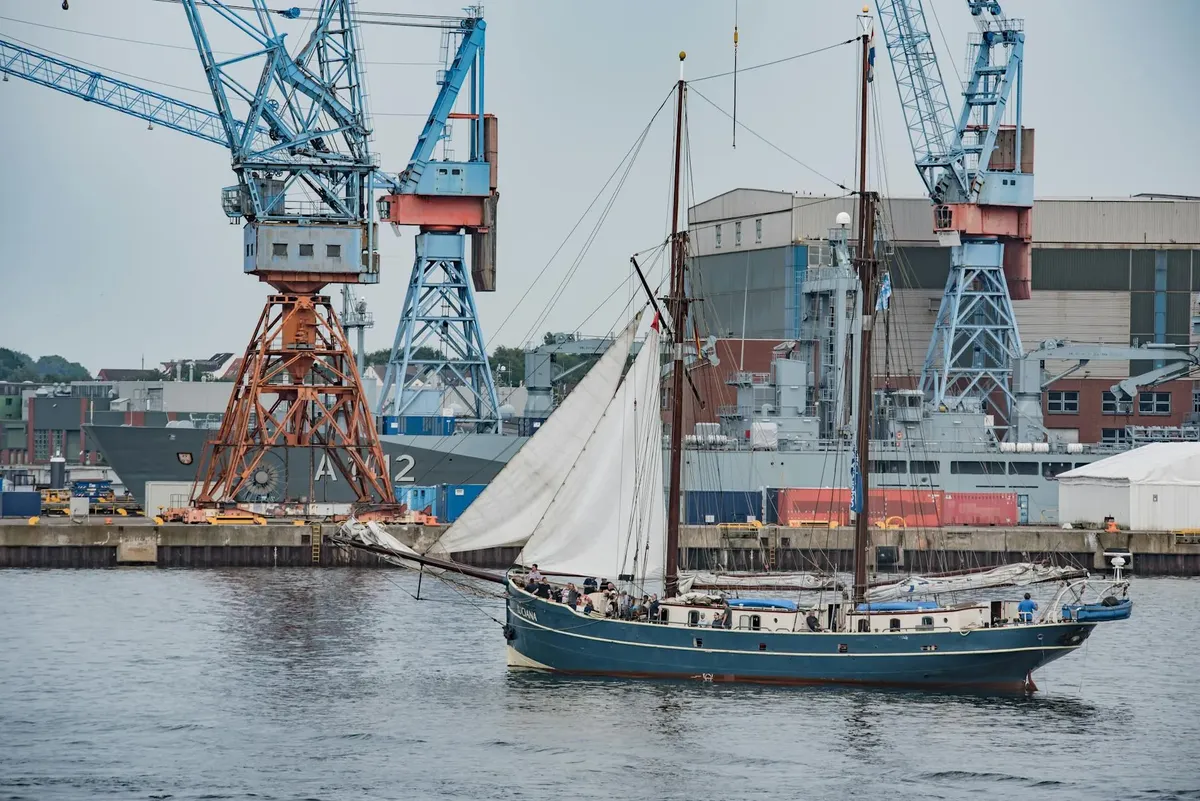
Kiel is the capital of Schleswig-Holstein and an important port city on the Baltic Sea
It is known for its maritime history, its seafaring tradition, and as the host city of Kieler Woche, one of the world’s largest sailing events.
Since the city was heavily damaged during the war, very few people today would describe it as particularly beautiful. Today, the city serves as an important ferry port to Scandinavia and the mouth of the Kiel Canal.
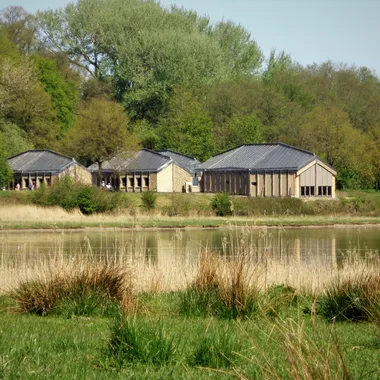
Kiel Botanical Garden
The botanical garden is the ideal place for quiet walks and offers plenty of space for relaxation and enjoyment of nature, but is somewhat removed from the center.
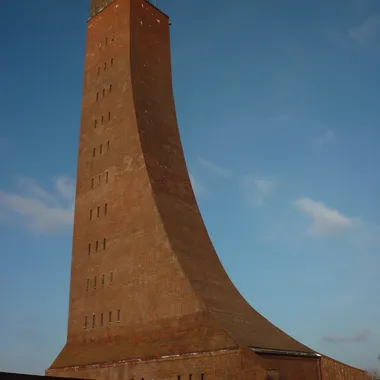
Submarine Memorial and Laboe
The submarine memorial and submarine museum in Laboe, which is dedicated to the victims of the submarine wars, is located near Kiel. The submarine can be visited and from there you have a beautiful view of the fjord.
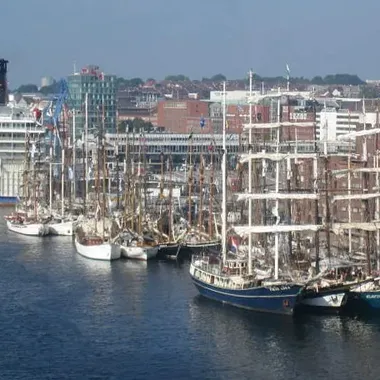
Kiel Week
A highlight in Kiel's calendar of events is Kieler Woche, the world's largest sailing event and one of the largest maritime festivals in the world. Every year in June, more than 3 million people come to watch the regattas, enjoy maritime culture and experience the music and cultural events.
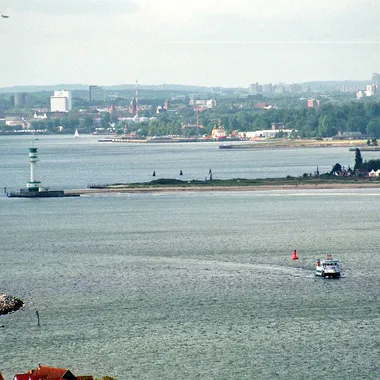
Kiel Fjord
The Kiel Fjord is the heart of the city and connects Kiel with the Baltic Sea. The waterfront promenades and the many ships that sail through the harbor make the Kiel Fjord one of the most beautiful water areas in Germany. Boats, ferries and sailing ships allow you to experience the city from a different perspective.
Kiel Canal
The Kiel Canal (NOK) is one of the most important transport links between the North Sea and the Baltic Sea. It stretches 98 kilometers from the Kiel Fjord to the Elbe port in Brunsbüttel and is a popular destination for ship encounters. Cargo, container and cruise ships sail along the canal every day, offering exciting photo opportunities. Some locks, such as those in Kiel-Holtenau and Brunsbüttel, are open to visitors and offer great opportunities to watch the ships at close quarters.
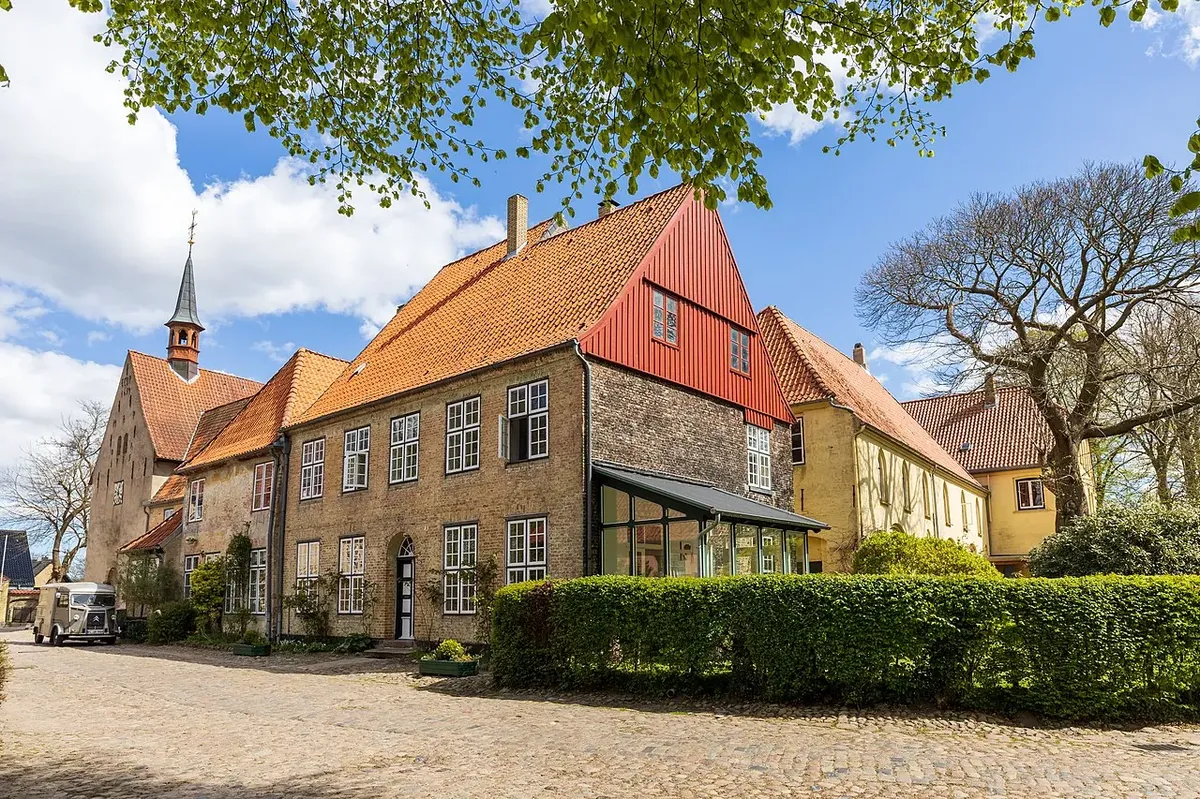
Schleswig is a city in northern Germany and is located on the Schlei, a 42-kilometer-long bay that extends from the Baltic Sea into the country
Schleswig is particularly well known for its historic sites, medieval heritage, and location near the Danish border.
The old town of Schleswig offers a mix of historic buildings and charming alleyways. Here, visitors can stroll through the streets and discover medieval architecture, old half-timbered houses, and numerous small shops and cafés.
Haithabu Viking Museum
The Viking Museum Haithabu is located near Schleswig. It deals with the Viking Age and is one of the most important archaeological sites in Europe and a UNESCO World Heritage Site. The museum offers comprehensive exhibitions on the life of the Vikings and the importance of Haithabu as a trading center in the early Middle Ages.
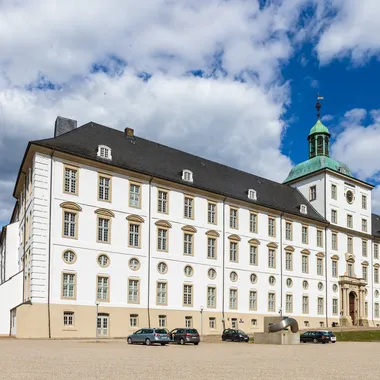
Gottorf Castle
Gottorf Castle is one of the most important historical buildings in Schleswig. It was once the residence of the Dukes of Schleswig-Holstein-Gottorf and is now home to the State Museum of Art and Cultural History. The gardens and castle park are particularly worth a visit and are perfect for a stroll.
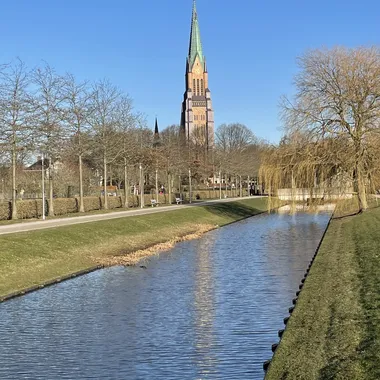
Dom St Petri
Schleswig Cathedral is an imposing Gothic church that dominates the cityscape. It is known for its beautiful decor, such as the stained glass windows and the altar. The church is also notable for its location on a hill and the magnificent view of the surrounding area.
Schlei Inlet
The Schlei itself is a narrow inlet surrounded by nature. The area is ideal for boat trips, hikes and cycling tours. The surrounding area also offers many opportunities for birdwatching and nature experiences.
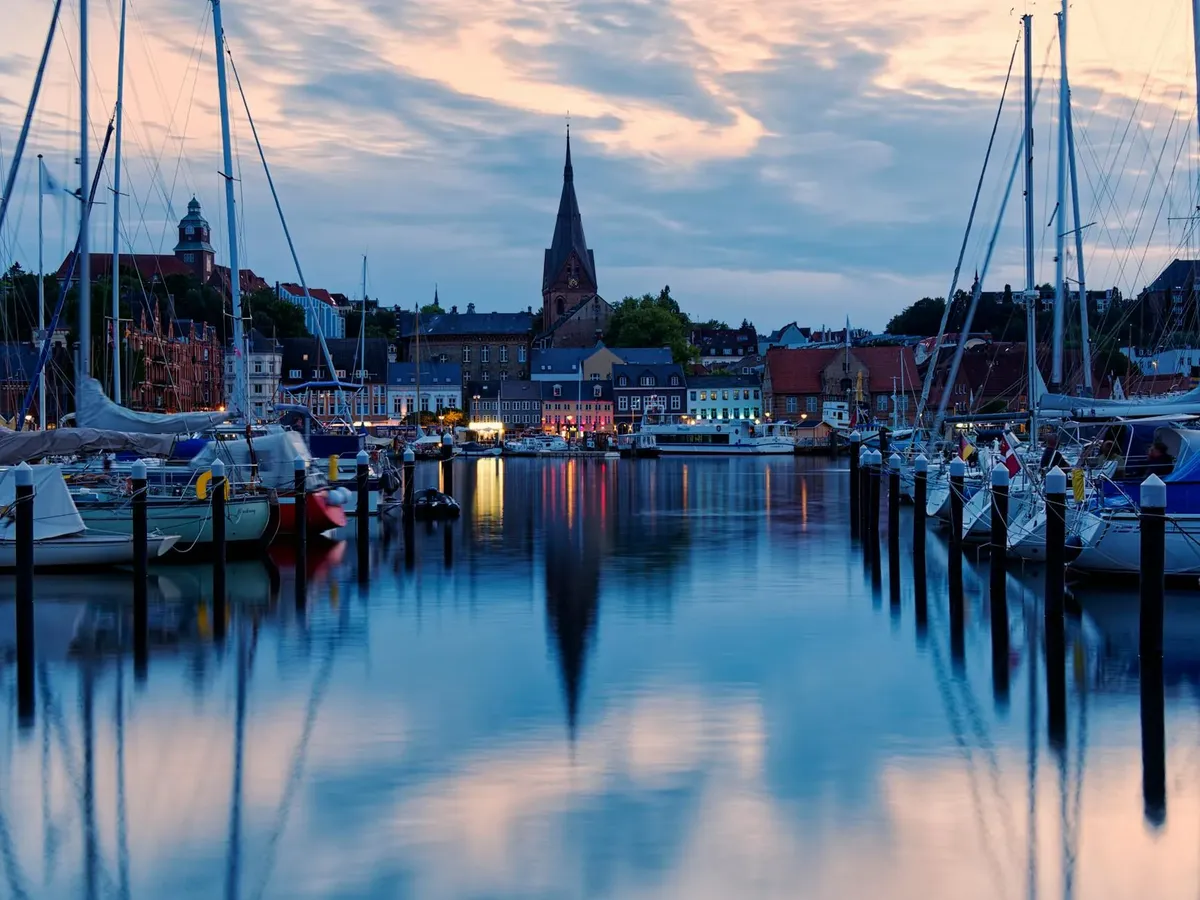
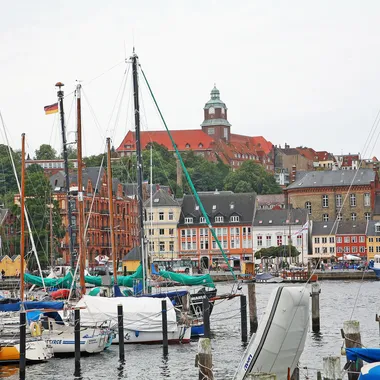
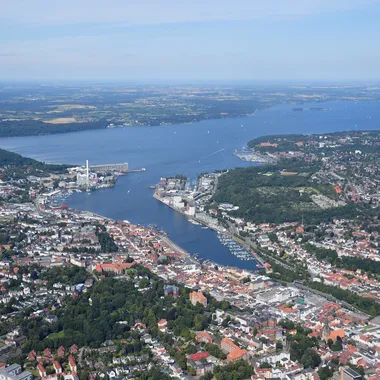
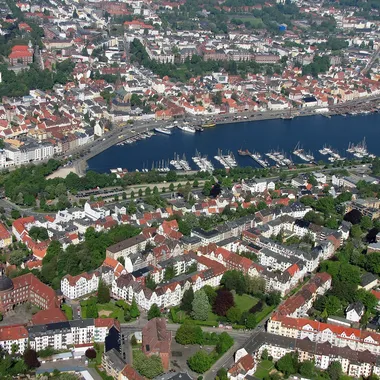
Flensburg is a charming city on the Baltic Sea in the far north of Germany, known for its historic old town, its picturesque harbor, and the Federal Motor Transport Authority, which issues points for traffic violations.
Harbor and Harbor Tip
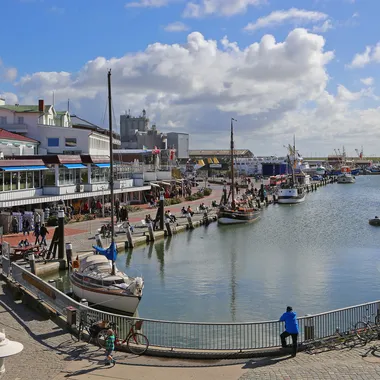
The port of Flensburg is not only a historic trading center, but also a lively part of the city. Here you can watch ships, take a tour of the harbor or join one of the harbor tours. The harbor is also a popular place for sailors, as Flensburg has a long tradition of shipping.
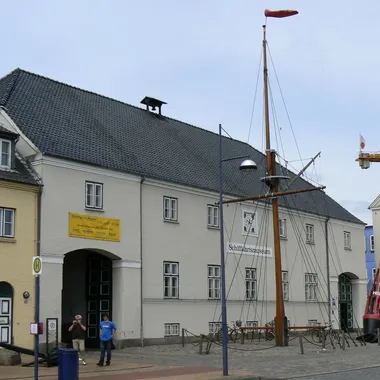
The harbor point is a beautiful spot to see the city from afar and enjoy the maritime atmosphere. It is also home to the Maritime Museum, which explains the history of the city and the harbor.
Flensburg Maritime Museum
The museum shows the maritime history of the city and the region with exhibitions about the port, shipping and trade. Historical ship models and artifacts can be viewed here.
Flensburg Fjord
The Flensburg Fjord is one of the most beautiful bays in the Baltic Sea and offers numerous opportunities for water sports such as sailing, windsurfing and kayaking. The fjord is known for its calm waters and picturesque shoreline landscapes. There are several beaches along the fjord, including the sandy beach in Glücksburg and the small beach in Flensburg. These are ideal for a refreshing swim or a picnic by the water.
Old Town of Flensburg
The old town of Flensburg is a real highlight for visitors who want to stroll through narrow alleyways (e.g. Oluf-Samson-Gang), historic buildings and beautiful historic courtyards. The town houses from the 17th and 18th centuries with their colorful facades and pointed roofs are particularly charming. The streets around Flensburg harbor invite you to take a stroll and offer many cafés, restaurants and small stores. One of the most famous streets in the old town is the red street.
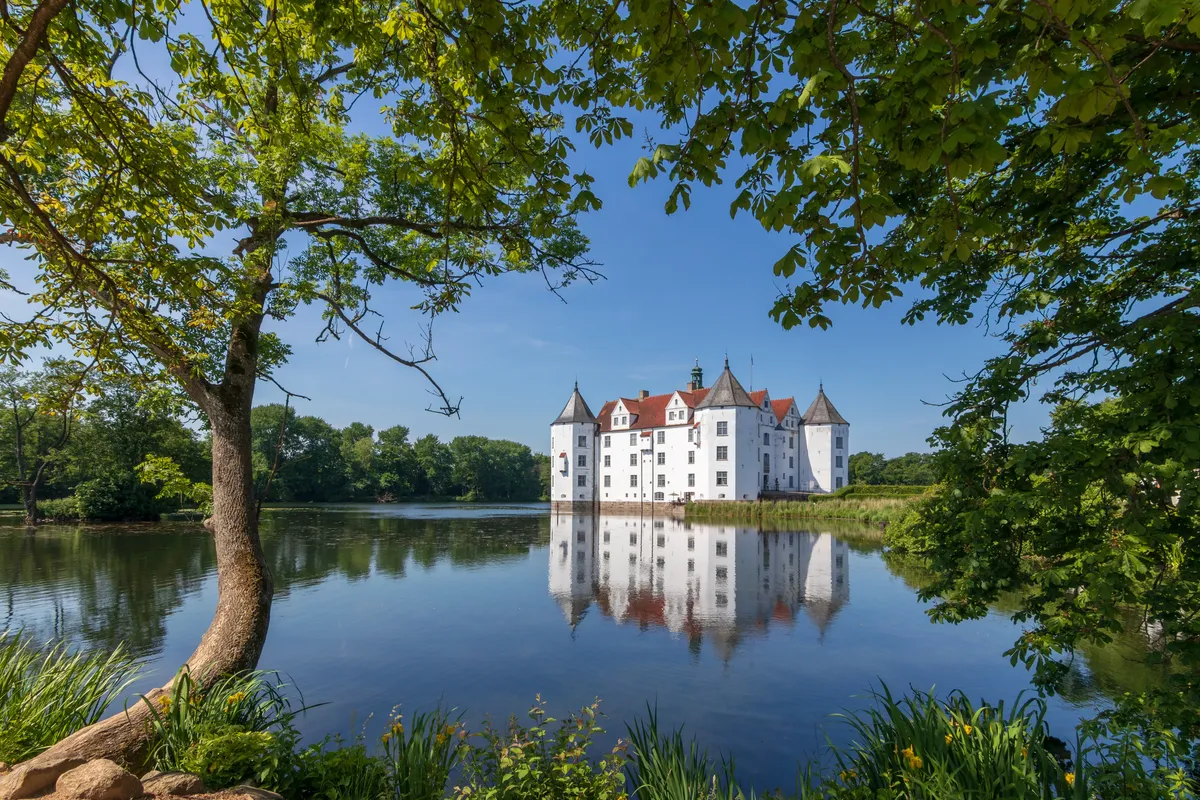
Glücksburg is located in the far north of Germany on the Flensburg Fjord and is characterized by its maritime landscape, tranquil coastal atmosphere and historical significance
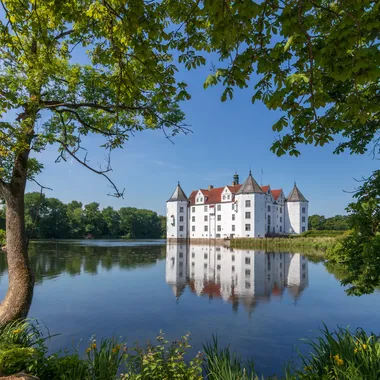
At the heart of the region lies Glücksburg Castle, one of the most significant Renaissance castles in Northern Europe, which served as the residence of various ducal families for centuries and had close ties to the royal houses of Scandinavia. The region blends history with nature: stretches of coastline, forests, and its proximity to the Baltic Sea define the landscape.
Glücksburg Castle
Glücksburg Castle is one of the most important Renaissance moated castles in Northern Europe. The complex is picturesquely situated on an island in the lake and was the ancestral seat of European aristocratic houses. Visitors can tour the historic rooms and learn more about the history of the region.
Holnis Peninsula-Flensburg Fjord Nature Reserve
The Holnis peninsula is a protected nature reserve with beaches, cliffs and bird resting places. Visitors can hike here, enjoy the coastal landscape and observe rare animal species.
Artefact Power Park Energy Experience
The Artefact Power Park is an interactive experience center dedicated to renewable energies. Exhibitions and experiments vividly convey topics such as wind power, solar energy and sustainability. Visitors can combine technology and environmental education here. However, some visitors complain about the lack of safety at some of the exhibits.
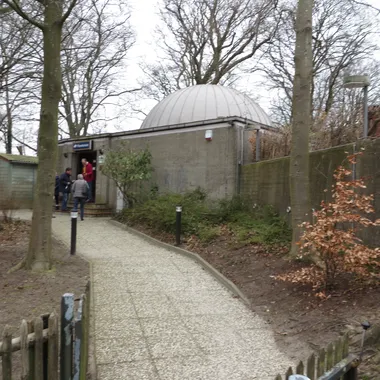
Glücksburg Planetarium
The planetarium offers events about astronomy and space. Modern projections provide a glimpse into distant galaxies and explain scientific correlations. Visitors experience an exciting combination of science and entertainment.
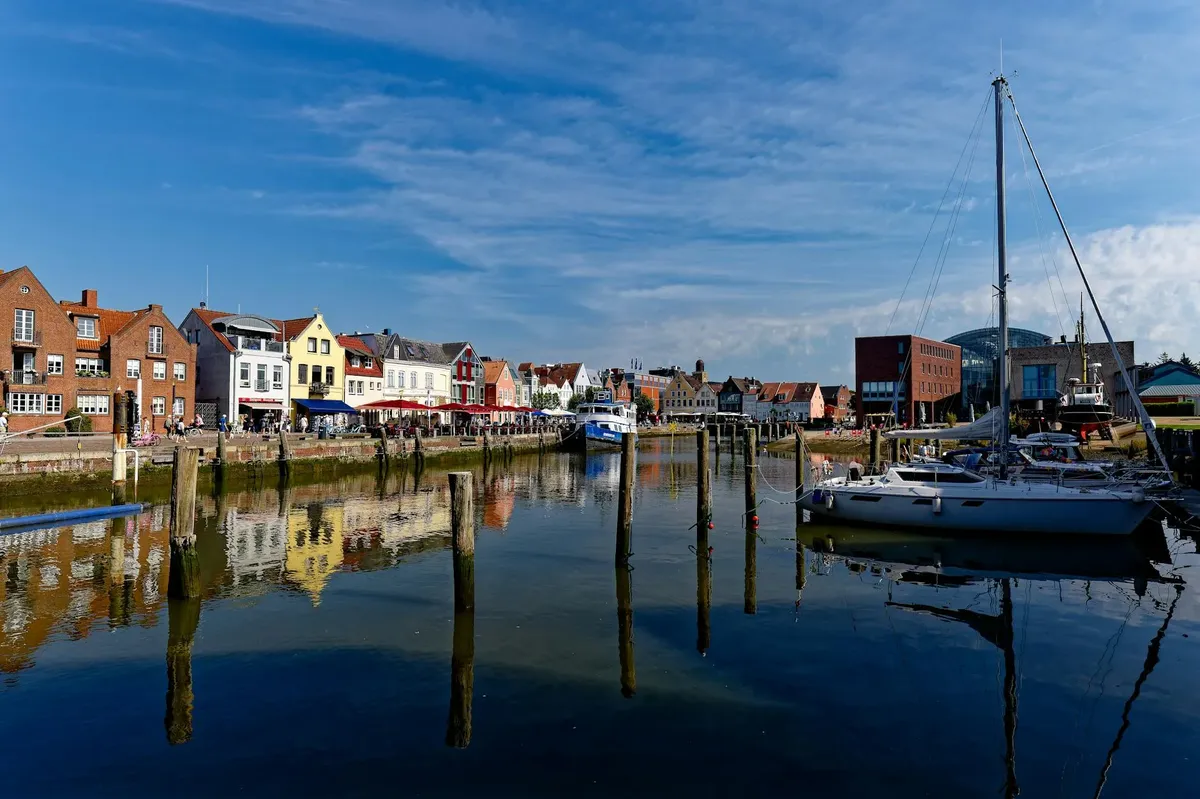
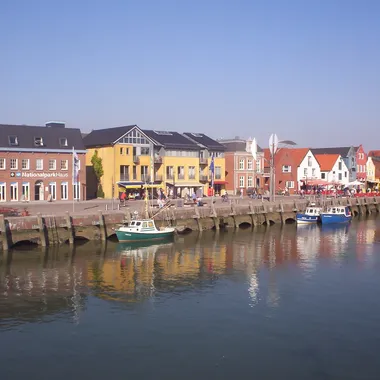
Husum, often referred to as "the gray town by the sea", is a charming harbor town on the North Sea coast of Schleswig-Holstein
The poet Theodor Storm, who was born here, coined this name in one of his poems—but Husum is far more than just gray. Especially in the spring, when millions of crocuses transform the castle park into a sea of purple blossoms, the city reveals its colorful side.
As the cultural and economic center of North Frisia, Husum combines maritime charm with North German history and a lively atmosphere.
Not far from Husum lies the Wadden Sea, a UNESCO World Heritage Site. From Husum, you can go on mudflat hikes and take trips to the Halligen islands, which offer a unique insight into this special ecosystem.
Husum Old Town and Harbour
The historic old town with its small alleyways, colorful houses and cozy cafés invites you to take a stroll. The harbor is the heart of the city, where shrimp boats and sailing boats dock and visitors can enjoy the fresh fish.
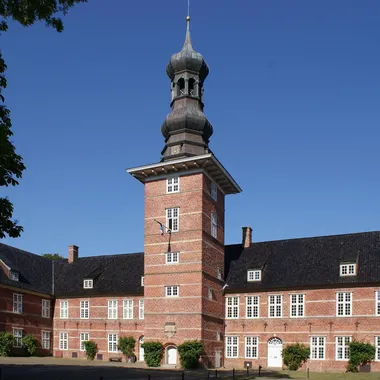
Husum Castle
One of the most important sights is the castle outside Husum, a Renaissance building from the 16th century, which today serves as a museum and event venue. The aforementioned castle park, which is covered in crocuses in spring, is particularly famous - an impressive natural spectacle.
North Frisia Maritime Museum
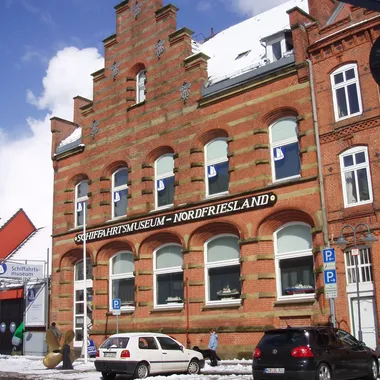
A true Husum original is the Nordfriesland Maritime Museum, which focuses on the region's long seafaring tradition. Here, visitors can discover historical ship models, navigation instruments and exciting stories about life at sea.
North Friesland Museum Network
The North Friesland Museum Association brings together several museums in Husum and the surrounding area that focus on the history, culture and nature of North Friesland. These include the NordseeMuseum Husum, the Schifffahrtsmuseum Nordfriesland, the Ostenfelder Bauernhaus and the Christmas Museum. Each of these museums offers a unique view of the region - from seafaring and life on the coast to traditional customs and historic buildings.
The NordseeMuseum Husum is located in a former warehouse building and features exhibitions on the history of the town, dyke construction, storm surges and North Frisian culture. There is a special focus on the history of the Uthlande, i.e. the islands and Halligen in the region.
Theodor Storm House
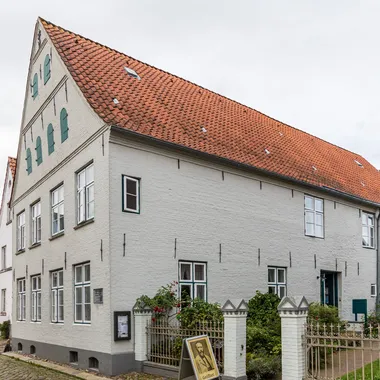
The Theodor Storm House provides an insight into the life and work of the famous poet, who wrote German literary history with works such as "Der Schimmelreiter" and "Immensee". Another highlight is the NordseeMuseum Husum, which vividly depicts the history of the town and the region, life with the storm surges and the development of dyke construction.
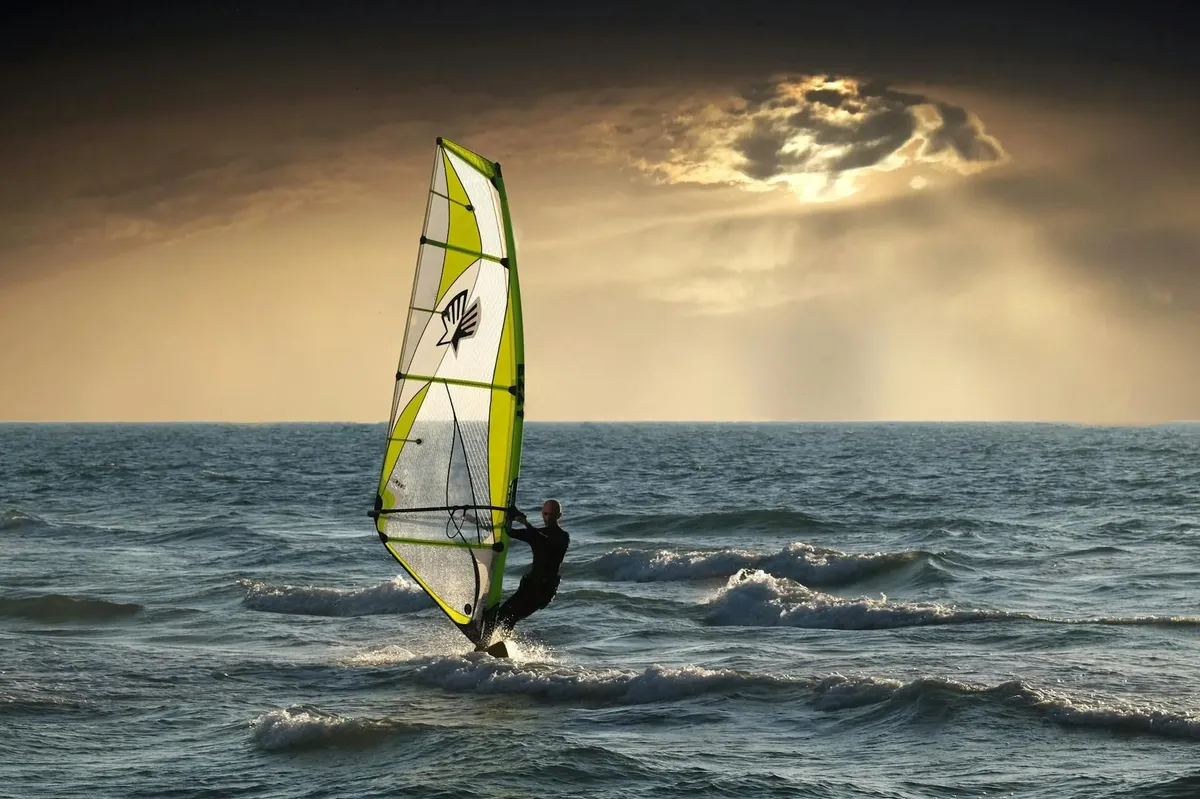
St. Peter-Ording combines the North Sea, wide beaches and ideal conditions for water sports
St. Peter-Ording is one of the most famous coastal towns on the North Sea and captivates visitors with its miles of sandy beaches, dune landscapes, and the typical Wadden Sea atmosphere. Its wide beaches set on stilts, the fresh North Sea air, and its location right on the Wadden Sea—a UNESCO World Natural Heritage Site—are all hallmarks of the town. St. Peter-Ording boasts one of the largest and widest sandy beaches in Europe. In fact, the beach there is about 12 kilometers long and up to 2 kilometers wide at low tide. For water sports, St. Peter-Ording is considered one of the best spots in Germany—especially for: kitesurfing, windsurfing, beach sailing, kite buggying, and wing foiling.
St. Peter Ording Stilt Houses
The pile dwellings are the landmark of St. Peter-Ording. The buildings on stilts stand directly on the beach and characterize the image of the North Sea coast with their special architecture. Originally they served as protection against storm surges, among other things, but today some of them house restaurants, cafés or rescue stations. The pile dwellings offer an impressive photo opportunity, especially at sunset.
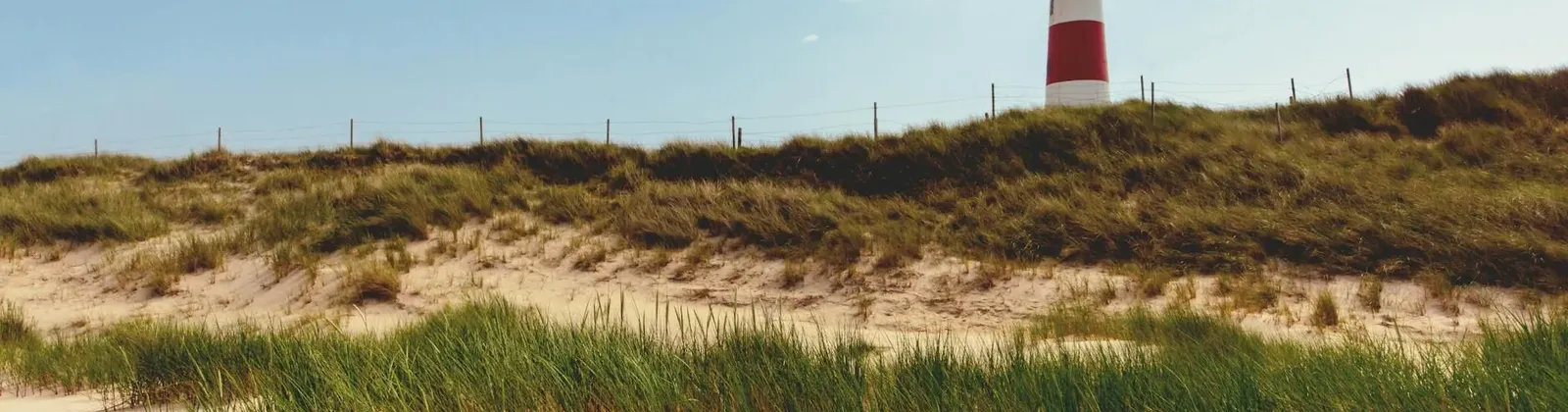
St. Peter Boehl Lighthouse
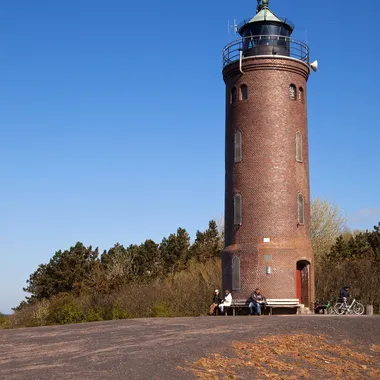
St. Peter-Böhl lighthouse is picturesquely situated on the edge of the salt marshes and is one of the region's best-known landmarks. The red and white lighthouse offers a sweeping view of the North Sea coast and the Wadden Sea. The tranquil surroundings make the village particularly popular for walks and nature watching.
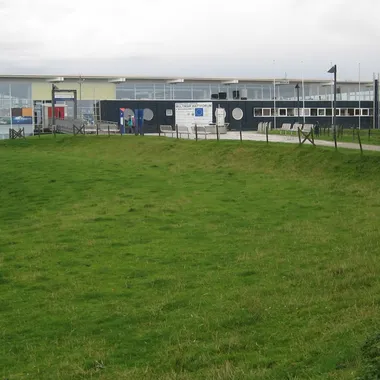
National Park House
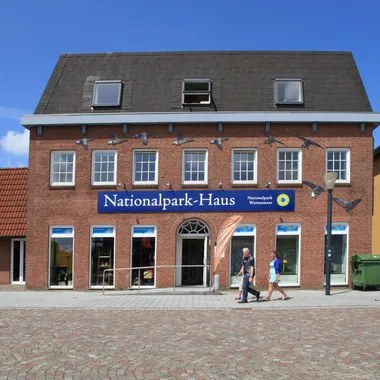
The National Park House provides exciting insights into the natural and animal world of the Wadden Sea. Interactive exhibitions provide information about tides, coastal protection and the special significance of the national park. Visitors can learn more about the unique landscape and the numerous animal species that call the Wadden Sea their home.
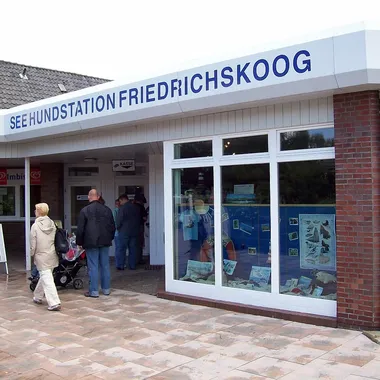
Friedrichskoog Seal Station
The Friedrichskoog Seal Sanctuary cares for injured or orphaned seals and grey seals from the Wadden Sea. Visitors gain exciting insights into the work of the sanctuary and learn more about the wildlife of the North Sea. The observation areas, where the animals can be seen up close, are particularly popular.
The best time to visit the Friedrichskoog seal sanctuary is usually between spring and late summer. The months of May to August are particularly exciting, as young, orphaned seals - known as howlers - are often taken in and cared for during this time. There are often a particularly large number of animals at the station.
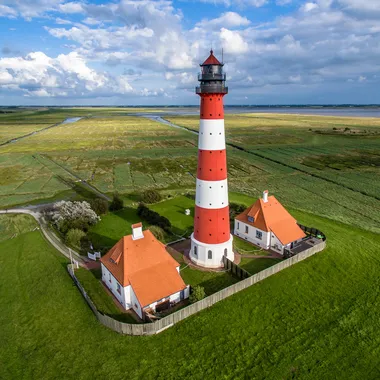
Westerheversand Lighthouse
The Westerheversand lighthouse is one of the most famous landmarks on the German North Sea coast. The red and white striped lighthouse stands in the middle of the salt marshes and can only be reached via a long dyke path. Particularly at sunset, it creates an impressive coastal landscape with sweeping views over the Wadden Sea.
Historic Harbour of Tönning
The historic port of Tönning is one of the most beautiful harbor facilities on the North Sea coast. Old warehouses, traditional ships and the tranquil harbor atmosphere are reminders of the town's long trading and fishing history. Cafés and small restaurants make the harbor a popular meeting place.
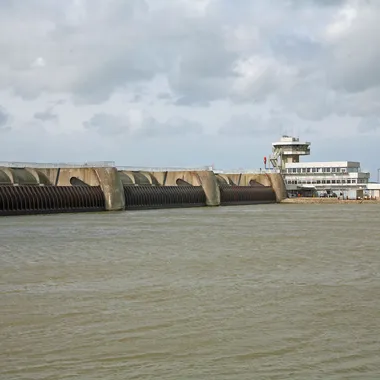
Eider Barrage
The Eider barrage is one of the largest coastal protection structures in Germany. The huge structure protects the region from storm surges and also regulates the water level of the Eider. The combination of modern engineering and the vast North Sea backdrop is particularly impressive.
Before the barrage was built, there were regular heavy storm surges along the Eider, which pushed seawater far inland. Today, the barrage prevents storm surges from entering the Eider in an uncontrolled manner, thereby protecting dykes, settlements, agricultural areas and traffic routes. At the same time, it regulates the water level of the river and improves the drainage of the low-lying marshlands.
The structure was also built as a consequence of the devastating Hamburg storm surge of 1962, after which coastal protection in northern Germany was massively expanded.
Phaenomania Buesum Science Center
Phänomania Büsum is an interactive hands-on museum dedicated to science, technology and perception. Numerous experimental stations invite visitors to try out physical phenomena for themselves and discover them in a playful way. The mixture of learning, experimenting and entertainment makes the exhibition particularly interesting for families and children.
Multimar Watt Forum Toenning
The Multimar Wattforum is the largest information center on the Wadden Sea UNESCO World Heritage Site in Schleswig-Holstein. Interactive exhibitions, large seawater aquariums and numerous models vividly convey the flora and fauna of the North Sea. The observation tanks with fish, crabs and other sea creatures are particularly popular, as is the information on tides, coastal protection and bird life.
Buesum Sea Worlds
The Aquarium Büsumer Meereswelten presents the underwater world of the North Sea as well as exotic marine animals in various aquarium landscapes. Visitors can observe native fish species, corals, crabs and tropical sea creatures up close. The exhibition also provides interesting facts about marine habitats and the importance of marine conservation.
Buesum Museum Harbor
The Büsum museum harbor gives an impression of the town's maritime past. Historic ships and traditional harbor facilities are reminiscent of the time when fishing and crabbing shaped life on the coast. Today, the harbor combines tourist flair with North German coastal tradition.
Katinger Watt Wetlands
Katinger Watt was created after the construction of the Eider barrage and developed into an important refuge for numerous bird species. The mixture of wet meadows, water areas and quiet natural areas makes the area an important bird paradise on the North Sea coast. Observation towers and hiking trails allow for intensive nature experiences.
Haubarge on Eiderstedt (historic farmhouses)
The traditional Haubarge on Eiderstedt are among the most striking farmhouses in northern Germany. The large thatched-roof houses were built to protect people, animals and supplies under one roof - even during storm surges. With their mighty roofs, they still characterize the landscape of the peninsula today.
Friedrichstadt Old Town
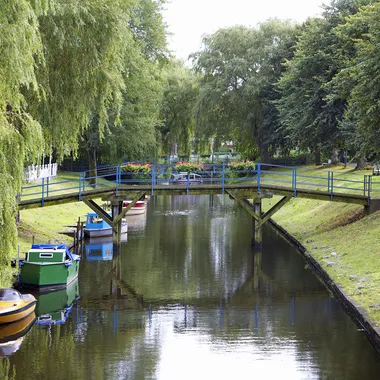
The old town of Friedrichstadt impresses with its canals, small bridges and historic Dutch-style houses. The town was founded in the 17th century by Dutch religious refugees and still has an unusually Dutch cityscape today. Canal cruises and cozy alleyways give Friedrichstadt a special atmosphere.
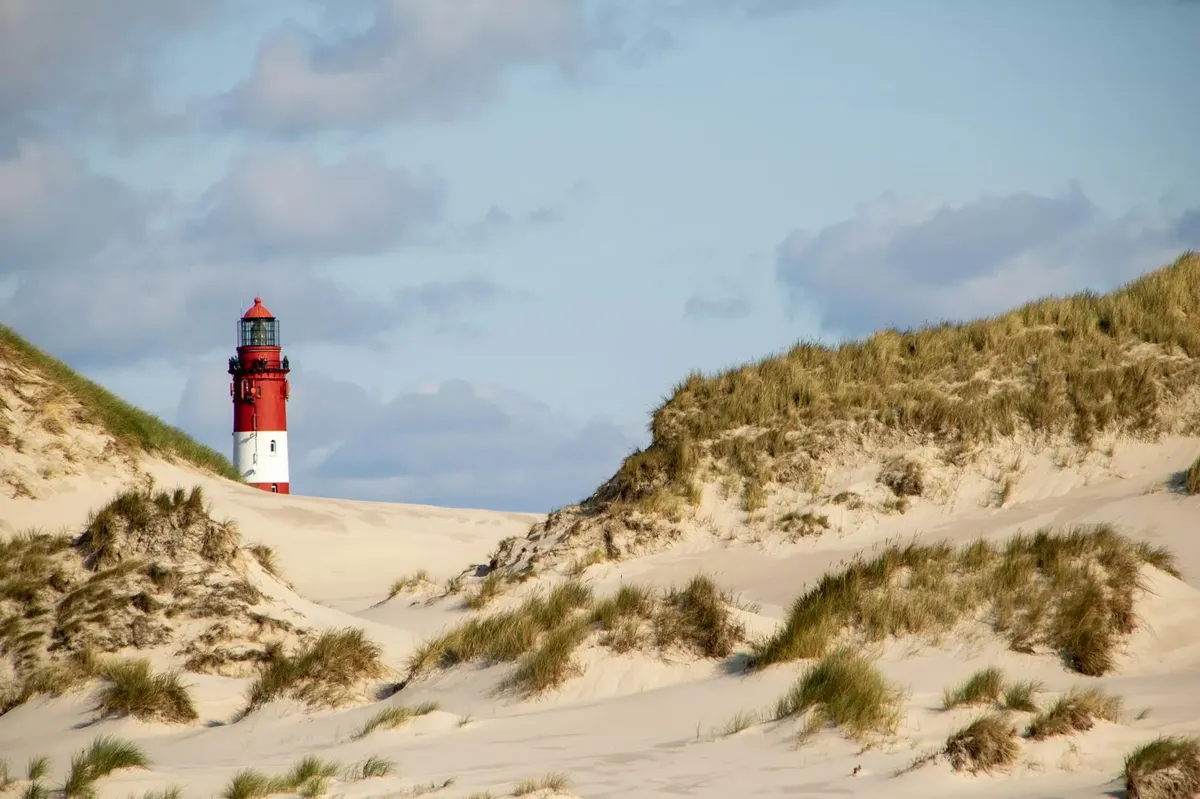
Sylt is the largest and most famous of the North Frisian Islands and is known for its beautiful beaches, thatched houses and high real estate prices
West Beach, in particular, is famous for its dune-filled landscape, beach chairs, and strong winds that make it ideal for surfing or kitesurfing.
Sylt is also considered a hotspot for high society, and the island is home to numerous luxury hotels, wellness resorts, and Michelin-starred restaurants.
The island offers a variety of culinary highlights, especially for lovers of seafood and fresh fish. Sylt oysters, which thrive in the island’s salty waters, are particularly well-known. North Sea shrimp are also frequently available.
Forces of Nature Experience Center
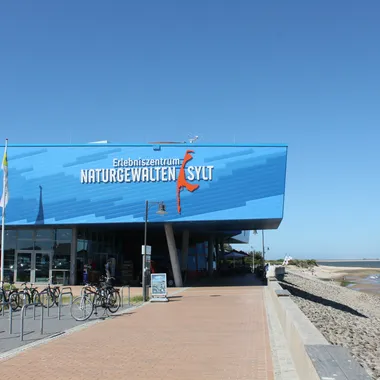
The Erlebniszentrum Naturgewalten in List is an interactive museum that focuses on nature, weather phenomena and the Sylt environment. Here, visitors of all ages can experience the forces of nature in an exciting and vivid way.
The exhibition is divided into several sections: Climate and weather (formation of storms and other weather phenomena), living with the forces of nature (coastal protection) and flora and fauna of the Wadden Sea. Next to the exhibition there is a wind tunnel where you can feel the power of storm winds.
Wadden Sea
Sylt is located directly on the Wadden Sea UNESCO World Heritage Site, which makes it a particularly interesting destination for nature lovers. The mudflats are a unique ecosystem and are regularly used for mudflat walks, where visitors can experience the mudflats up close.
Altfriesische Haus
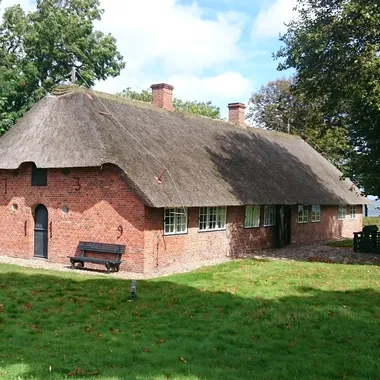
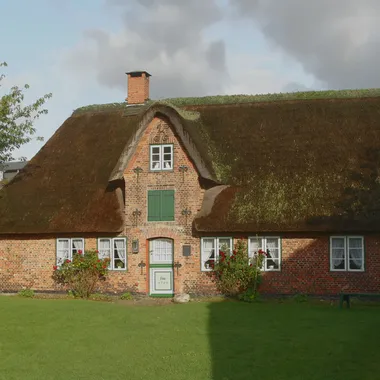
The Old Frisian House in Keitum is a historic Frisian house that offers an insight into life and living on Sylt in the 18th century. It was built in 1739 and today houses a museum that vividly presents the history and culture of the island.
The house impresses with its typical thatched roof, the small windows and the lovingly designed garden. It shows the traditional building style that was shaped by the harsh weather conditions on Sylt.
Denghoog Burial Chamber
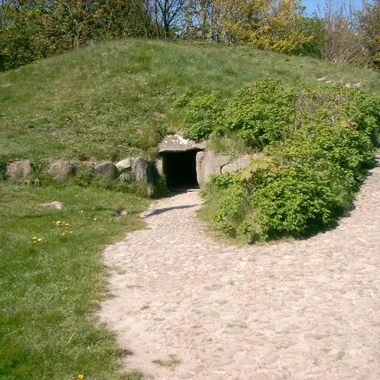
The Denghoog in Wenningstedt is a prehistoric megalithic tomb and one of the oldest surviving evidence of human settlement on Sylt. It dates back to the Neolithic period, around 3000 BC. The Denghoog was probably used as a burial site and consists of a chamber made of large stone blocks covered in earth. Visitors can enter the stone burial chamber through a narrow entrance.
Ellenbogen Tip
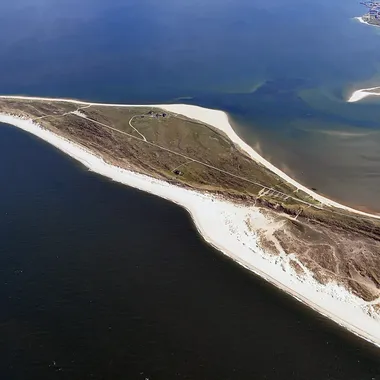
The Ellenbogenspitze in the far north of the island of Sylt is a true paradise for nature lovers and those seeking peace and quiet. This scenically impressive area is a nature reserve characterized by wide sandy beaches, dunes and the rough North Sea. The Ellenbogenspitze is the northernmost accessible point in Germany.
The two lighthouses List Ost and List West, which characterize the region, are popular photo motifs. The Ellenbogenspitze also offers fantastic sunrises and spectacular views of the neighboring islands and the Wadden Sea.
Uwe Dune
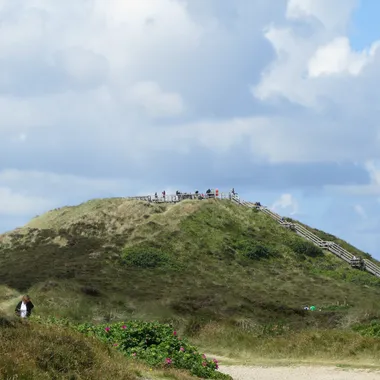
At 52 meters, the Uwe Dune near Kampen is the highest natural elevation on Sylt and a perfect vantage point from which to experience the beauty of the island. It was named after the poet and politician Uwe Jens Lornsen, who fought for the freedom of the people of Schleswig-Holstein. After a short but steep climb up 109 steps, you reach the platform, which offers a breathtaking panoramic view of Sylt, the North Sea and the Wadden Sea. The area surrounding the Uwe Dune is characterized by heathland, which is particularly picturesque in late summer when the heather is in bloom.
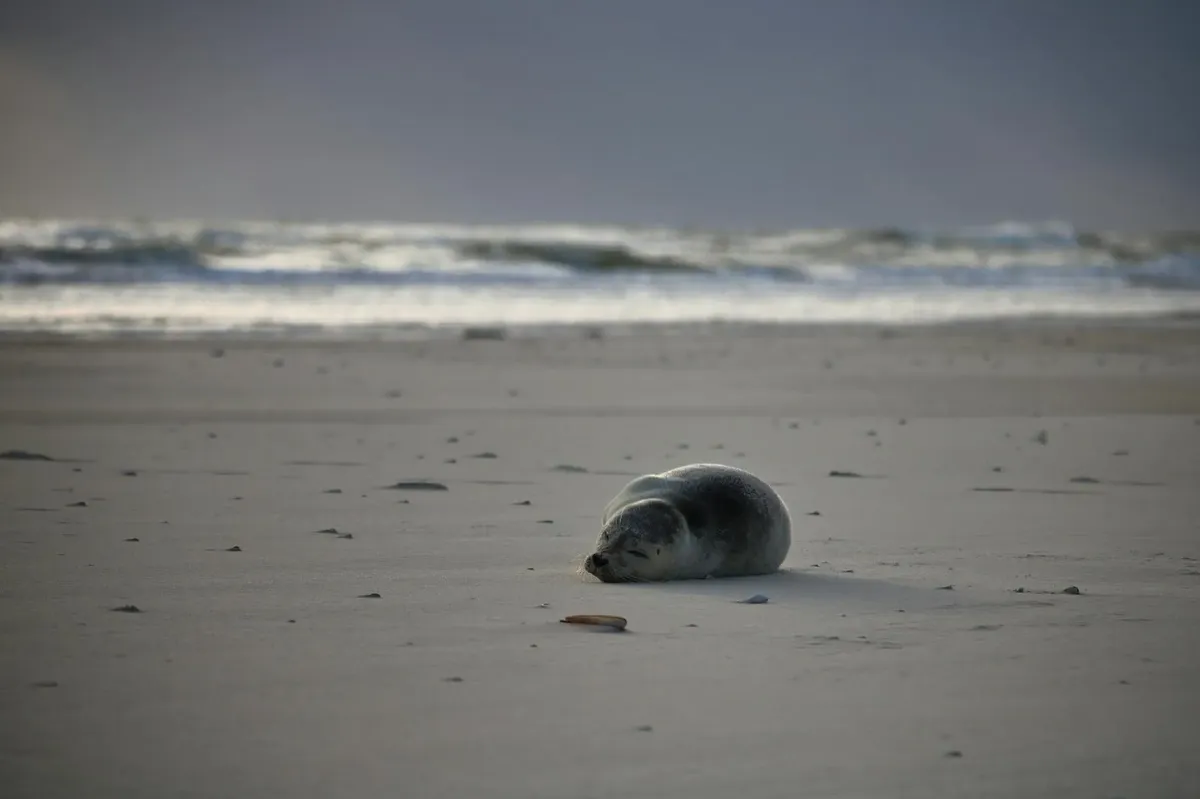
Föhr is the second largest North Frisian island. It is sheltered in the Wadden Sea and is particularly known for its mild climate, long sandy beaches and typical Frisian culture
Föhr is located in the heart of the Wadden Sea, a UNESCO World Heritage Site. Mudflat hikes from Föhr lead to the Halligen islands, such as Langeneß or Oland, or you can walk from Dagebüll to Föhr with a mudflat guide.
You can reach the island by ferry from Dagebüll, which also carries cars. Alternatively, you can reach the island from the mainland by small propeller plane. Cars are allowed on Föhr, but many visitors prefer bicycles, as the island has an extensive network of bike paths.
Dr. Carl Haeberlin Frisian Museum
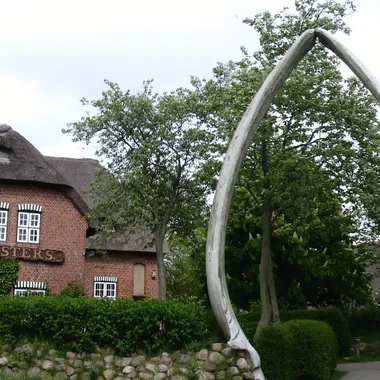
This historical museum in Wyk provides a deep insight into the Frisian culture and history of the island. Particularly worth seeing are the traditional costumes, the reconstructed historic Frisian house and the exhibition on seafaring. The large whaler's pine arch at the entrance is a striking landmark.
Museum Art of the West Coast
The museum in Alkersum is primarily dedicated to the depiction of coastal landscapes and seafaring in art. It shows works by painters such as Emil Nolde and Max Liebermann and offers changing exhibitions that focus on life by the sea and Nordic culture.
Foehr Water Park
Aqua Föhr in Wyk is a particularly good alternative for families when the weather isn't playing ball. The pool offers seawater pools, a slide and a wellness area with sauna.
Goting Cliff
This striking cliff is located on the southwest coast of the island near Goting. Here you can experience impressive sunsets and catch a glimpse of the neighboring Halligen islands. The erosion of the cliff shows the constant change in the coastal landscape and makes it a fascinating natural phenomenon. In addition to the Goting cliff, there is the less-visited Greveling cliff in the east of Föhr, which impresses with a great view over the mudflats and the national park.
Old Frisian Tea House
This historic building in Wyk is one of the oldest tea houses in northern Germany. Frisian specialties such as Pharisäer (coffee with rum and cream) or genuine East Frisian tea are served here in a cosy atmosphere. The furnishings with old porcelain and Frisian decorations make the visit a special experience.
Foehr Seal Center
The center provides information about the way of life of grey seals and harbor seals in the Wadden Sea. Visitors learn more about the protection of the animals and can take part in guided tours to observe seals in the wild.
Foehr National Park House
As part of the Wadden Sea National Park, this exhibition offers exciting insights into the unique nature of the region. There are interactive stations, aquariums with mudflat dwellers and information about the island's birdlife. Families with children in particular will find a good introduction to the Wadden Sea here.
Nieblum Village
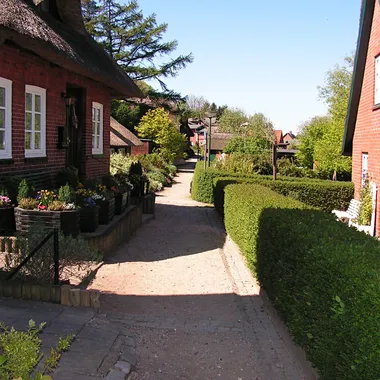
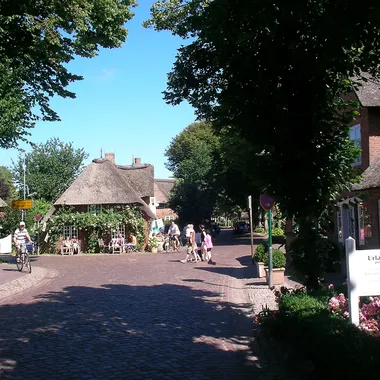
Nieblum is considered one of the most beautiful villages on Föhr with its thatched houses, flowering gardens and small cobbled streets. The St. Johannis Church, also known as the "Friesendom", is particularly worth seeing. Its cemetery, with its old gravestones, tells exciting stories of seafarers and whalers.
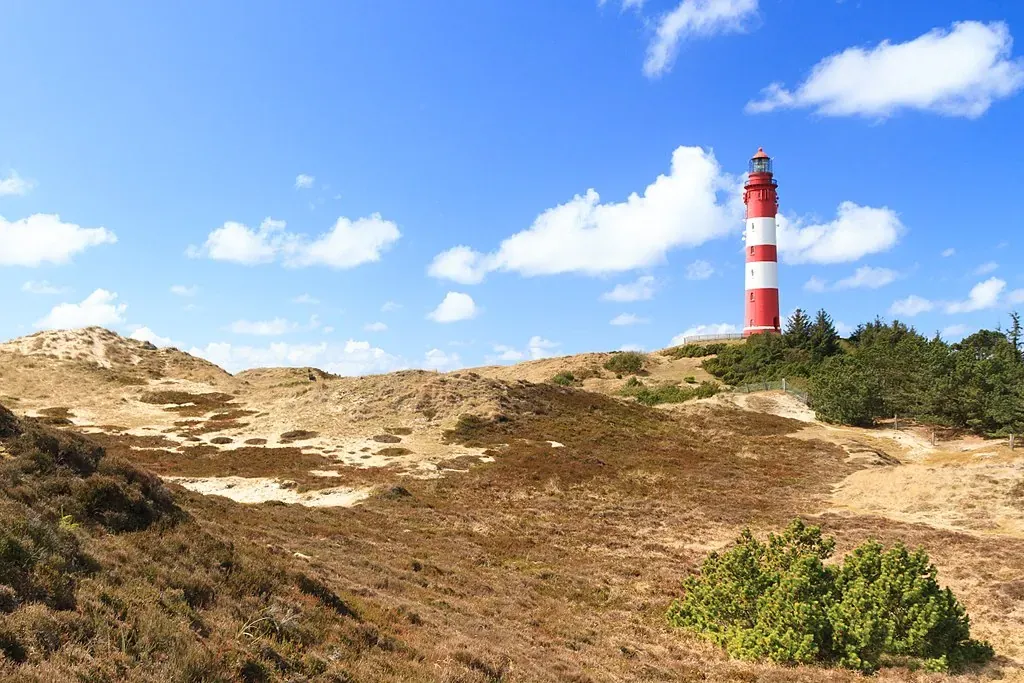
Amrum, the neighboring island of Föhr, is one of the North Frisian Islands and impresses with its unique blend of nature, tranquility and Frisian culture
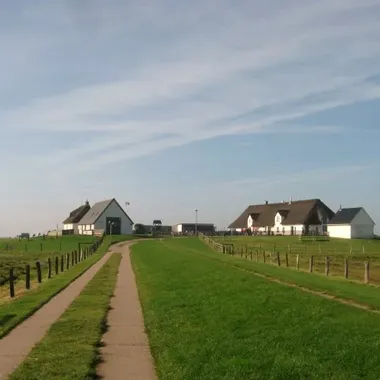
It is particularly well known for Kniepsand, one of the largest sandy areas in Europe, as well as its quaint island villages with thatched-roof houses.
The Wadden Sea around Amrum is a UNESCO World Heritage Site. Guided mudflat hikes to Föhr or the Halligen are particularly exciting. Amrum is accessible only by ferry.
From Dagebüll or Schlüttsiel, the ferry travels via Föhr to Amrum. Alternatively, there is a connection from Nordstrand via the Halligen. The crossing takes about 1.5 to 2 hours.
Driving is permitted on the island, but many visitors prefer to explore Amrum by bike or on foot.
Amrum Lighthouse
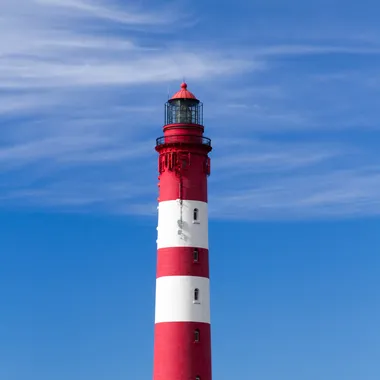
The Amrum lighthouse is the island's landmark. At 63 meters high, it is one of the highest on the German North Sea coast. After climbing 297 steps, you are rewarded with a breathtaking view of the island and the Wadden Sea.
Nebel and Oeoemrang Hues
Nebel is the most beautiful village on the island with historic Frisian houses, the Öömrang-Hüs (a museum of island history) and the old St. Clemens Church with a seafarers' cemetery worth seeing.
Kniep Sandbank
Kniepsand is a huge expanse of sand up to 1.5 km wide that stretches along the entire west coast. The fine, white sandy beach is ideal for long walks, sunbathing or water sports such as kitesurfing and windsurfing. It is the largest sandbank in Europe.
Natour-Duene Amrum National Park House
The Natour-Düne National Park House on Amrum is an exciting nature experience center run by the Wadden Sea Protection Station. It is located directly in the Amrum dunes and offers fascinating insights into the Wadden Sea UNESCO World Heritage Site and the island's unique dune and beach landscape.
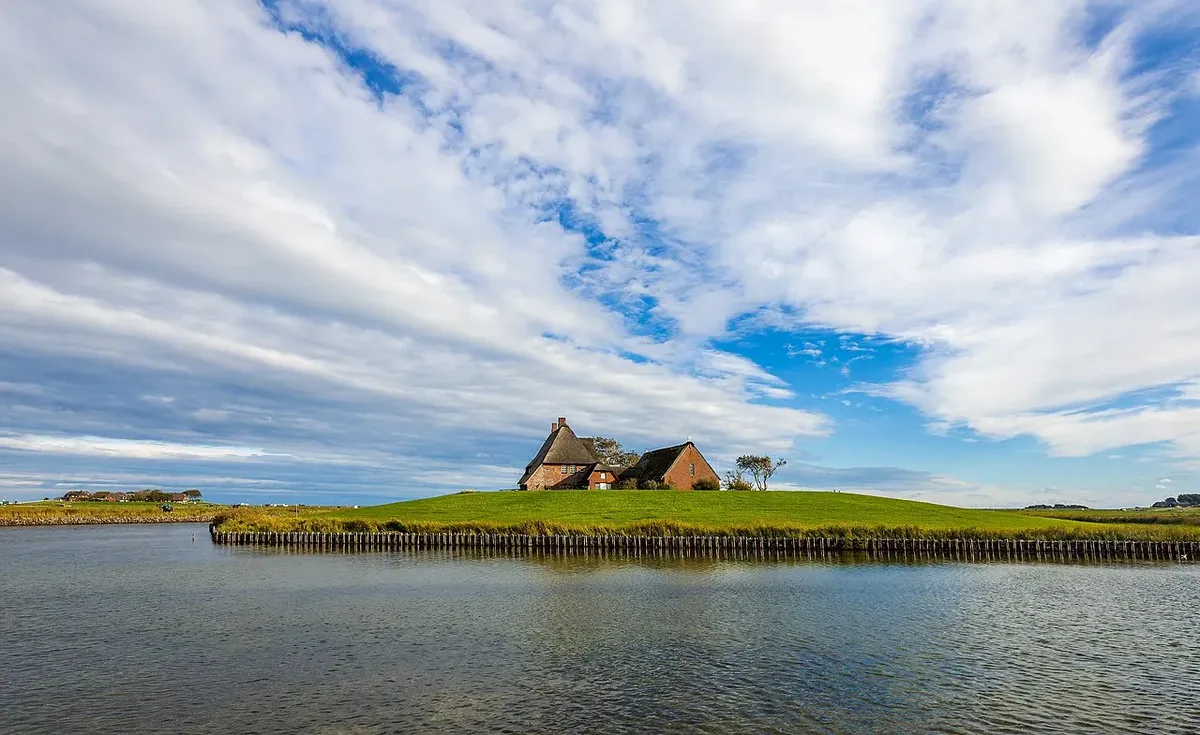
The Halligen in the North Sea are a unique landscape that can only be found in Germany
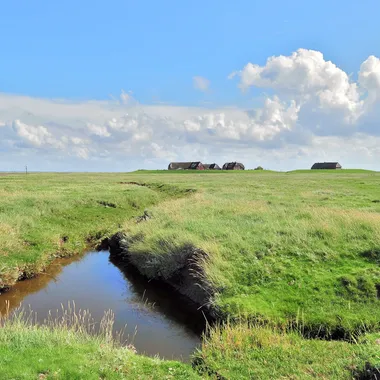
These small, largely unprotected islands are located in the North Frisian Wadden Sea and are characterized by regular flooding.
Unlike ordinary islands, they are not surrounded by dikes, so that during storm surges, the water floods large parts of the Halligen. Only the warften—artificially mounded hills—offer protection for the few residents and buildings.
There are ten Halligen in total: Gröde, Hooge, Langeneß, Nordstrandischmoor, Oland, Südfall, Habel, Süderoog, Hamburger Hallig, and Norderoog.
Habel and Norderoog are nature reserves and not open to the public.
Life on a Hallig means a constant battle against the sea. Several times a year, so-called “Landunter” events occur, during which the entire Hallig—except for the mounds—disappears under water.
Hamburg Hallig
The Hamburg Hallig differs from the other Hallig islands as it is connected to the mainland by a causeway and is therefore comparatively easy to reach. It is part of the Wadden Sea National Park and is particularly popular with nature lovers. Many visitors come by bike or on foot over the causeway to enjoy the vast landscape and observe rare bird species.
Nordmarsch Langeneß Hallig
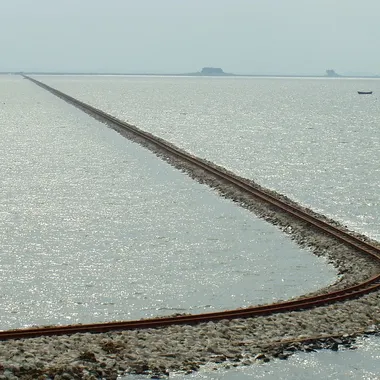
Nordmarsch-Langeneß is the largest of the Halligen, with a length of around ten kilometers. It consists of 18 terps, some of which are still inhabited. The Captain Tadsen Museum, which provides an insight into the lives of former seafarers, is particularly worth a visit. The diverse bird life also makes Langeneß a popular destination for ornithologists. A special feature is the Lorenbahn, which is used for transportation on the terp and provides a charming, nostalgic link between the scattered settlements.
Groede Hallig
Hallig Gröde is the smallest municipality in Germany and consists of just two terps with few permanent residents. It can only be reached by boat or on foot across the mudflats at low tide. If you are looking for absolute peace and quiet and want to enjoy nature undisturbed, you will find a small, secluded paradise with impressive birdlife here.
Hooge Hallig
Hallig Hooge is often referred to as the "Queen of the Halligs" as it is one of the largest and best developed. There are paved paths, several sights and a small tourist infrastructure. The Königspesel, a magnificently furnished historic Frisian house that bears witness to the former prosperity of the Halligen, is particularly well known. The small Hallig church of St. Johannis is another charming relic of the past. In the storm surge cinema on Hooge, you can experience impressively the danger the sea poses to the Halligen. A viewing platform on the Hanswarft also offers a fantastic view over the Wadden Sea.
Nordstrandischmoor Hallig
Nordstrandischmoor is a small hallig that is characterized above all by its unique connection to the mainland: a trolley railroad that is used to transport people and goods. This charming, rail-bound connection is a popular photo motif and an unmistakable feature of the Hallig. Nordstrandischmoor is part of Nordstrand, which used to be a hallig but has now become a peninsula due to dyking.
Heligoland is Germany's only high seas island and lies far out in the North Sea
The island is characterized by red sandstone cliffs, steep slopes, and unique wildlife. Due to its isolated location, Heligoland historically developed into a strategic military site and later into a health resort and nature destination. In the 19th century, Heligoland belonged to the United Kingdom and was thus a British colony. It was not until 1890 that the island was ceded to the German Empire in exchange for territories in East Africa under the so-called “Heligoland-Zanzibar Treaty.” Subsequently, the Germans expanded Heligoland into an important naval base, further reinforcing the island’s military significance. Its customs status has also been unique ever since: no value-added tax is levied on many goods. As a result, spirits, tobacco products, and perfume in particular are comparatively inexpensive for visitors. Heligoland is more popular among slightly older tourists. Neither cars nor bicycles are permitted on the island.
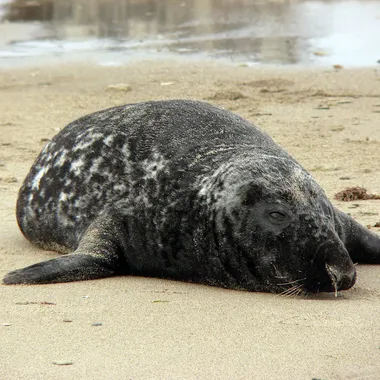
After the gray seals on Heligoland had nearly disappeared by the early 20th century due to hunting and displacement, Heligoland is now an important site for seal births (especially in winter) and the rearing of pups.
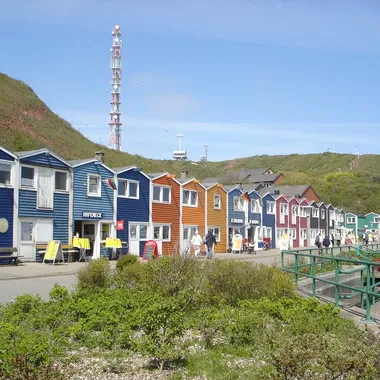
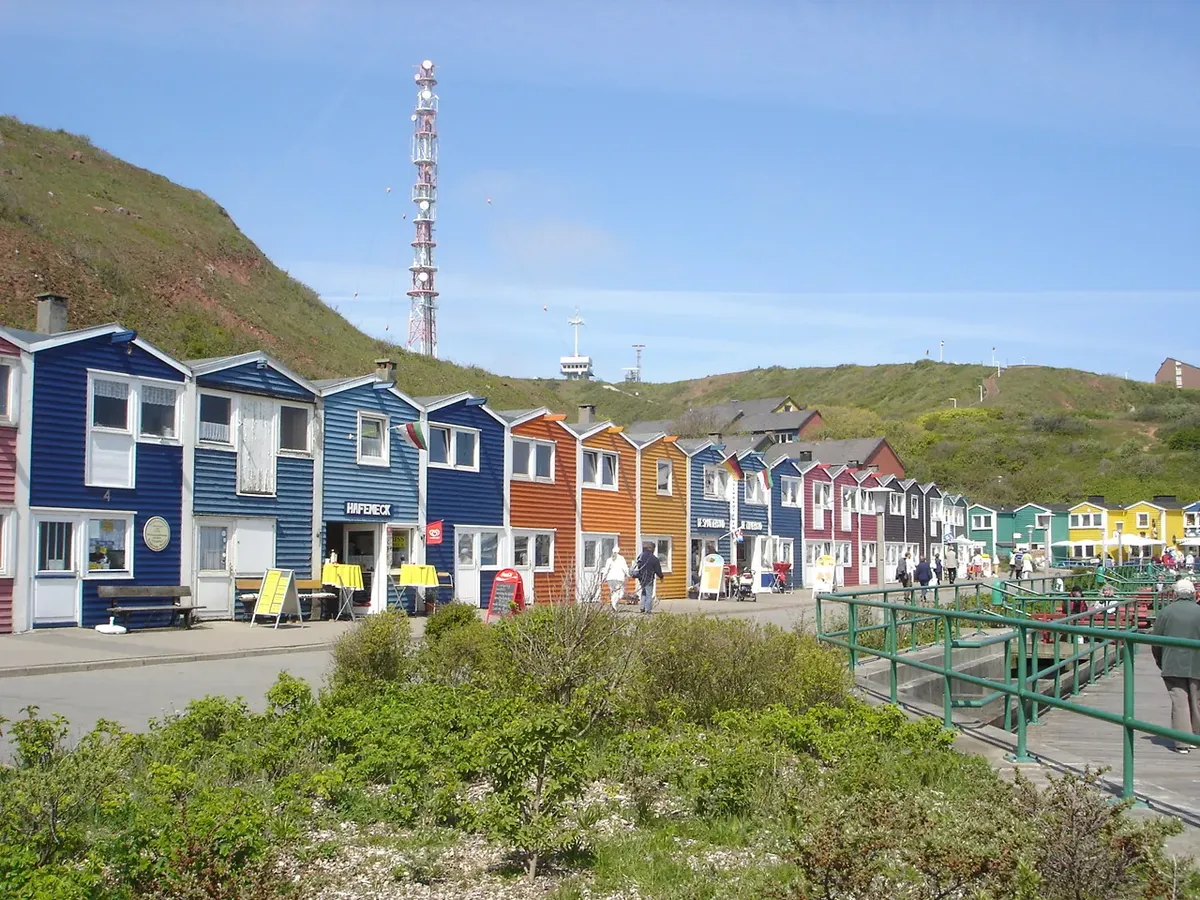
Lobster Booths
The colorful lobster shacks are small, colorful houses along the harbor. They used to serve as workshops for fishermen, but today they house stores and cafés. Visitors can experience a lively piece of island culture here.
Crater of a 5000 kg Bomb
The "funnel of a 5000 kg bomb" is a reminder of the massive destruction of the island after the Second World War. in 1947, the British carried out one of the largest non-nuclear explosions to destroy military installations. Visitors can still see the traces of these events today.
Heligoland Grey Seals
Heligoland is one of the few places in Germany where grey seals can be observed in the wild. Especially in winter, the animals come to the beaches to give birth to their young. Visitors can experience an extraordinary animal watching experience here.
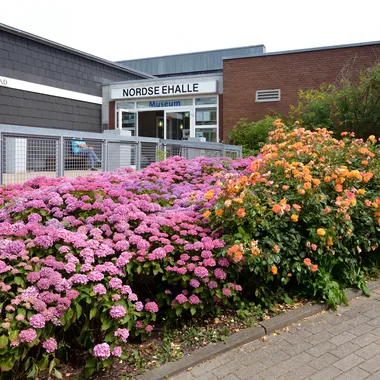
Heligoland Museum
The museum shows the history of the island from its early days through its military use to its current importance as a nature and tourist resort. Visitors are given a comprehensive overview of Heligoland's development.
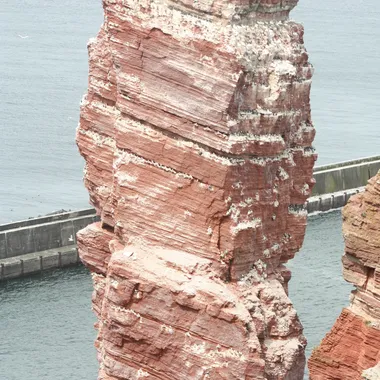
Long Anna
Lange Anna is a free-standing red rock and the landmark of Heligoland. The imposing rock needle juts out of the sea and is part of the steep cliff landscape. Visitors can view it from vantage points.
Jaegerstieg Trail
The Jägerstieg is a hiking trail along the cliffs and offers impressive views of the sea and rocks. Visitors can experience Heligoland's nature particularly intensively here.
Heligoland Fortress
Heligoland Fortress is a reminder of the island's military use, especially in the 20th century. Bunkers and defensive structures bear witness to Heligoland's strategic importance. Visitors can explore parts of this history.
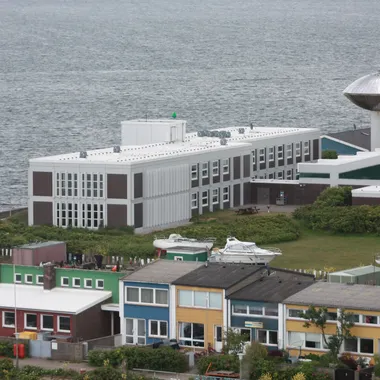
Biological Institute Helgoland
The Biological Institute is an important research facility for marine biology. Scientists study the North Sea and its ecosystems here. Visitors gain insights into research into the marine environment.
Start your tour in Lübeck, where the historic old town awaits you with its famous Holstentor gate and winding alleys. Continue on to Kiel, where you can stroll along the fjord or marvel at the Kiel Canal. Afterward, it’s worth taking a detour to Flensburg—a charming port city with a Scandinavian flair and a pretty old town. To wrap up your trip, head to the North Sea and take a ferry to the islands of Sylt or Föhr. Whether it’s a hike through the dunes, a walk on the mudflats, or simply breathing in the fresh sea air—here you can relax and bring your tour to a peaceful close.
Schleswig-Holstein offers plenty of opportunities for exciting day trips and weekend getaways. Whether you’re looking for outdoor adventures, coastal towns, or city breaks—there’s something for everyone here.
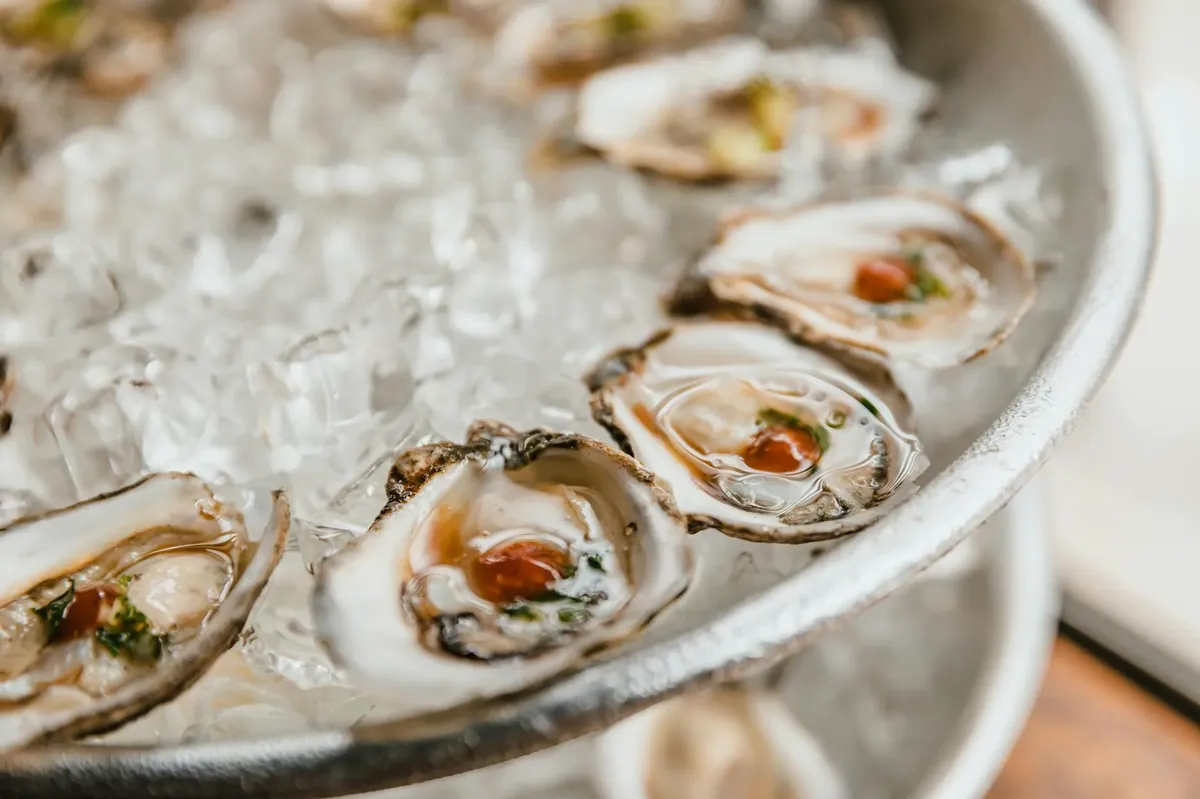
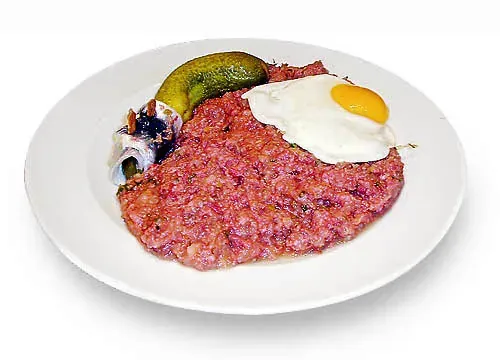
Schleswig-Holstein’s cuisine reflects its proximity to the sea. Fresh fish, crab sandwiches, matjes herring, and Labskaus are typical dishes. Specialties such as beetroot purée, Mehlbeutel, and Frisian tea are also part of the region’s culinary tradition.
Schleswig-Holstein offers a wide variety of regional products and unique souvenirs that capture the charm of the North. From culinary specialties like Lübeck marzipan, Kiel sprats, and Flensburg Pilsner to handmade crafts—there’s a souvenir for everyone here.
You can find current events at rausgegangen.de.
The nightlife is concentrated in the larger cities such as Kiel, Lübeck, Flensburg, and nearby Hamburg. Bars, clubs, and music venues offer entertainment for all ages. The harbor areas and historic districts are particularly popular for relaxing evenings or live music.
In Schleswig-Holstein, the queer community is primarily concentrated in Kiel, Lübeck, and other major coastal cities. HAKI e.V. in Kiel is an important resource, offering counseling, support groups, and networking opportunities for the Schleswig-Holstein region. For information on current Pride events, parties, and meeting spots, check out Gay-Party.de and Gay-Location.de.
Schleswig-Holstein is strongly influenced by water and weather. Especially along the North Sea coast, tides, currents, and winds can quickly become dangerous; the old warning “The North Sea is a deadly sea” may be an exaggeration, but it serves as a reminder of the real risks.
Water levels and currents change rapidly in the North Sea. When swimming, use only designated swimming areas, pay attention to warning flags, and do not underestimate tidal creeks. Even water that appears shallow can become powerful during ebb or flood tides.
Mudflat hikes should only be undertaken with a guide familiar with the area or with very thorough preparation. Fog, thunderstorms, tidal creeks, and the rapidly rising tide can be life-threatening. Always check the times, weather, and return route in advance.
Kitesurfing, sailing, SUP, and kayaking are popular, but sudden shifts in wind direction, offshore winds, and cold water can be risky. On the North Sea and Baltic Sea, ferries, sightseeing boats, and island connections may be canceled or experience significant delays during storms.
At the coast, on the dike, and at the beach, sunburn is often underestimated because the wind masks the heat. Sunscreen, head coverings, and windproof clothing are recommended. Fall and winter storms can make paths, boardwalks, and coastal areas dangerous at times.
Sylt, Fehmarn, Lübeck, Kiel, and popular beaches can get crowded during the season. Parking lots, ferries, and trains fill up quickly; be especially careful with valuables and bicycles.
Schleswig-Holstein has a long history, shaped by Scandinavian influences, political conflicts, and its geographical location as a bridge between Germany and Denmark. As early as the Viking Age, the region was an important trading center, particularly Haithabu, near the modern-day city of Schleswig.
In the Middle Ages, Schleswig was closely linked to the Kingdom of Denmark, while Holstein, as a duchy, was part of the Holy Roman Empire. This political division led to tensions between Denmark and the German states for centuries.
In the 19th century, the Schleswig-Holstein Uprising (1848–1851) and the Danish-Prussian War (1864) marked important turning points: Prussia and Austria defeated Denmark, resulting in Schleswig and Holstein becoming Prussian provinces.
In 1920, a referendum in North Schleswig determined whether the region would become part of Denmark or Germany. The northern part of Schleswig became Danish, while the southern part remained German—a border that still stands today.
After World War II, Schleswig-Holstein took in numerous refugees from the former eastern territories. Despite the challenges, the state developed into a modern, economically stable region. In 1950, Schleswig-Holstein was officially established as a federal state.
Today, Schleswig-Holstein is known for its location between the North Sea and the Baltic Sea, its maritime economy, renewable energy, and its close cooperation with Denmark. Minority rights are upheld, both for the Danish minority in Schleswig and for the German minority in North Schleswig.
Public transportation is provided by regional trains, buses, and ferries. The Marschbahn connects Hamburg with Sylt. Many smaller towns are accessible by bus, although the network is less extensive in rural areas. The Schleswig-Holstein Ticket is particularly affordable for groups.
Sylt is accessible via the car ferry from Niebüll. Amrum and Föhr are car-free or have limited vehicle access, while Heligoland is completely car-free. Prices and ferry capacities should be checked in advance.
Ferry services are essential:
Cycling is popular: the Baltic Sea Cycle Route from Flensburg to Lübeck, and the North Sea Cycle Route through the Wadden Sea and marshlands. Holstein Switzerland is ideal for cycling tours. Depending on its direction, the wind can make cycling difficult.
Wild camping is permitted only under certain conditions. Camping without a permit is prohibited in nature reserves and on beaches. Authorized wild camping is permitted.