Altmühl Valley
Early fossils, archaeopteryx and many opportunities for active vacations.
The territory that is now Germany has a long history. The Celts, Romans, and Nazis have all left their mark. This section provides an overview of that history.
The Alps, Germany’s youngest mountain range, began to rise about 30 to 40 million years ago when the African and Eurasian tectonic plates collided. In the process, ancient rock layers were pushed on top of one another and folded, creating Europe’s highest mountain range.
In contrast, Germany’s low mountain ranges, such as the Harz, the Ore Mountains, and the Rhenish Slate Mountains, were formed more than 300 million years ago, also as a result of the collision of tectonic plates. Over time, these mountains have been heavily eroded. Saxon Switzerland, a spectacular sandstone mountain range along the Elbe River, formed around 100 million years ago from the sediments of a shallow sea.
During the Jurassic and Cretaceous periods, approximately 200 to 66 million years ago, Germany was characterized by tropical seas, river deltas, and densely vegetated swamplands. During this time, numerous dinosaurs lived here, and their fossils are still found today in various parts of Germany.
One of the most famous sites is the Altmühl Valley in Bavaria, where fossilized skeletons of Archaeopteryx, the famous primitive bird, were discovered.
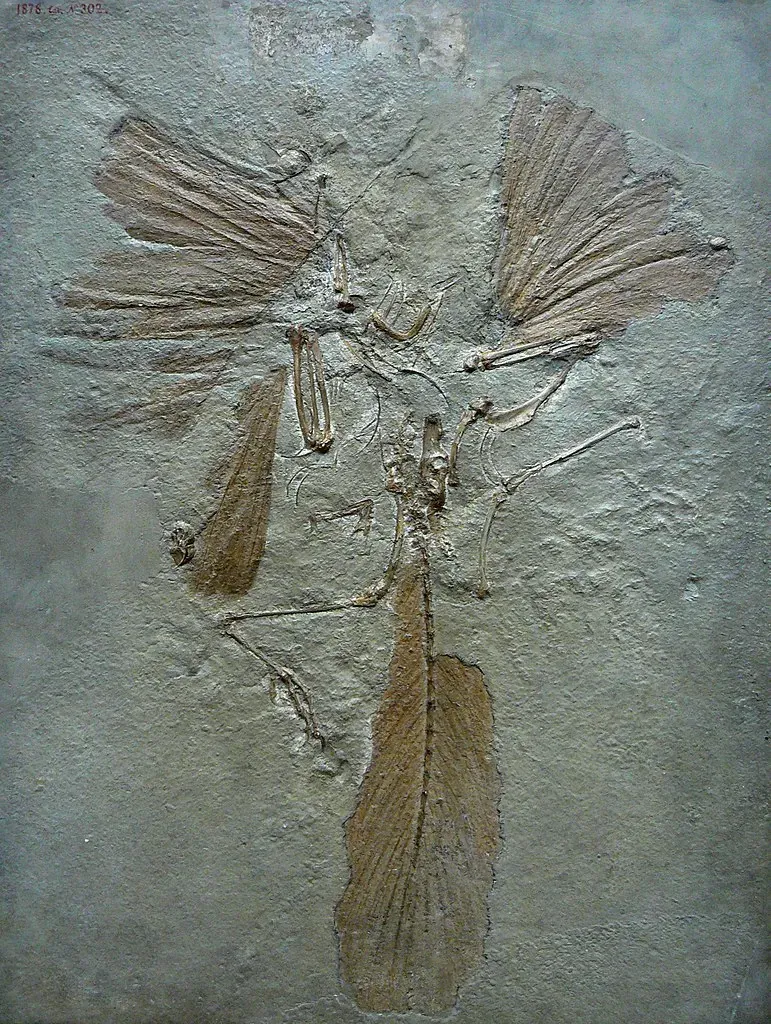
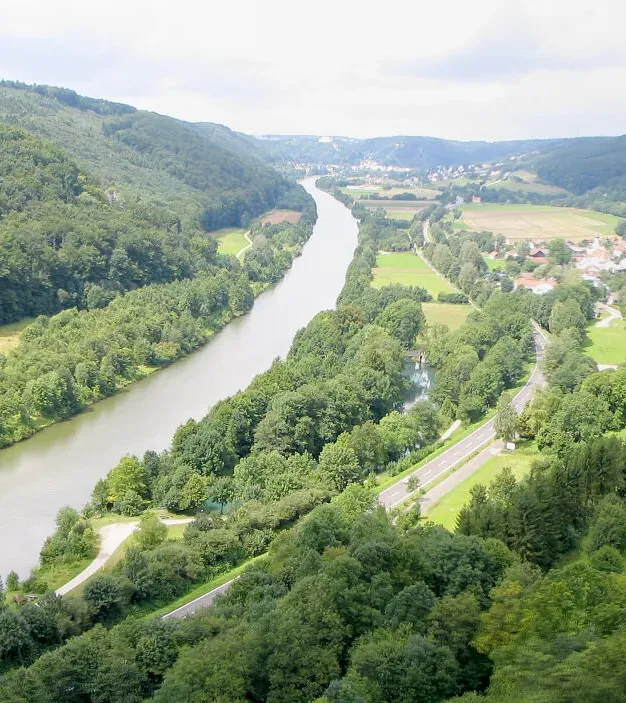
Early fossils, archaeopteryx and many opportunities for active vacations.
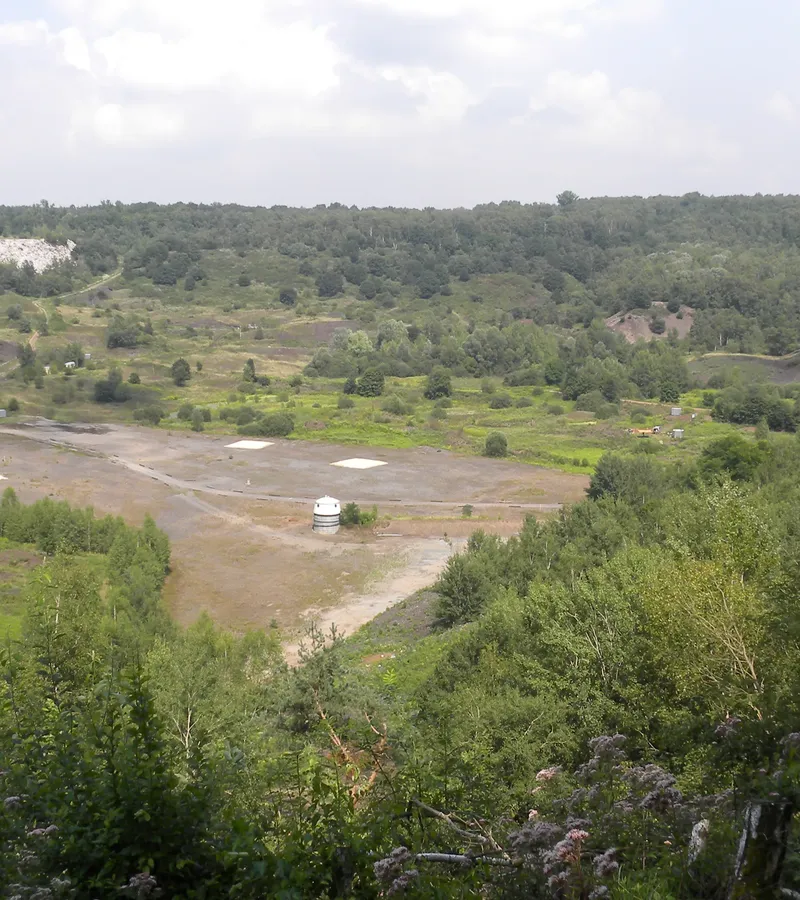
UNESCO World Heritage Site and one of the most important fossil sites in Europe.
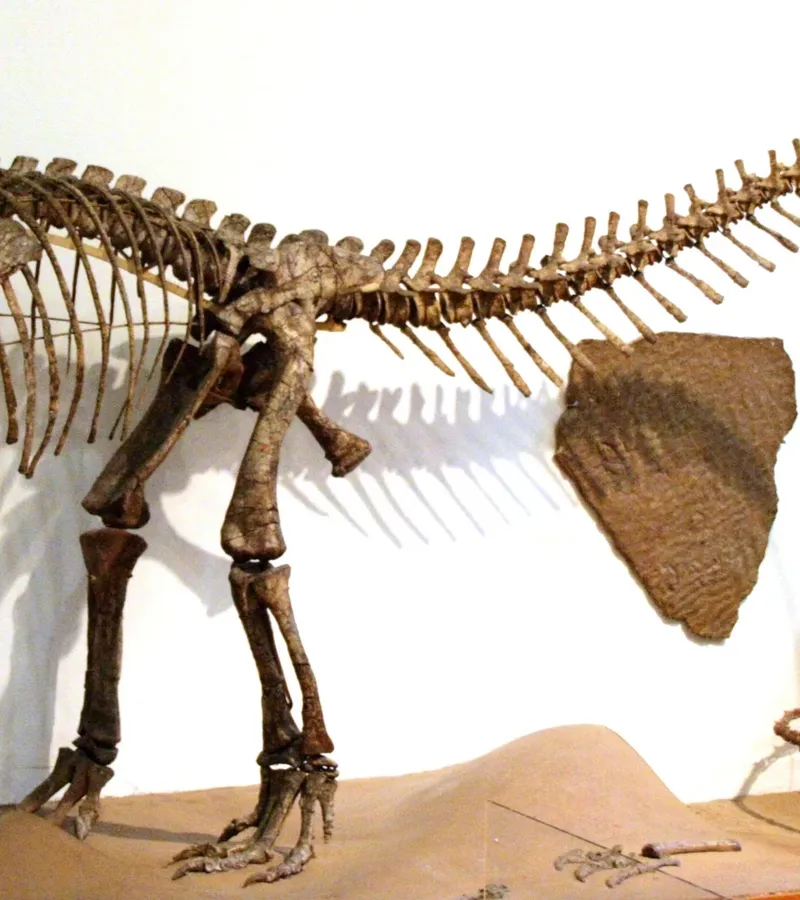
Fossils, geological history and early life forms.
Early fossils, archaeopteryx and many opportunities for active vacations.
UNESCO World Heritage Site and one of the most important fossil sites in Europe.
Fossils, geological history and early life forms.
The Paleolithic era was characterized by Ice Age conditions and nomadic hunters and gatherers. The oldest human traces come from Homo heidelbergensis, whose remains were found in Mauer near Heidelberg (ca. 600,000 B.C.). Later, Neanderthals also lived here; their most famous finds include the Neanderthal skull (discovered in North Rhine-Westphalia in 1856) and stone tools. These early humans hunted mammoths and reindeer and used fire as well as simple stone tools. The Venus of Hohlefels, found in the Swabian Alb and dating back approximately 40,000 years, is the world’s oldest confirmed depiction of a human.
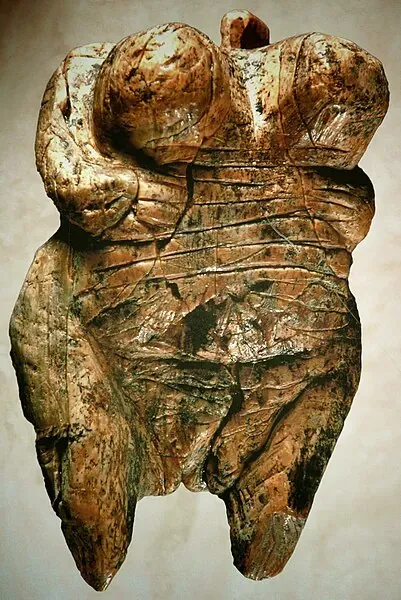
After the end of the Ice Age, the climate became warmer, and humans adapted to the new conditions. During this period, they began to refine their hunting techniques and rely more heavily on fishing and gathering, but they still did not settle down.
The introduction of agriculture and livestock farming brought about fundamental changes in people’s lives. People began to establish permanent settlements and produce pottery. Important finds from the Neolithic period include megalithic tombs in northern Germany and the glacier mummy Ötzi (ca. 3,300 B.C.), who was discovered in the Alps.
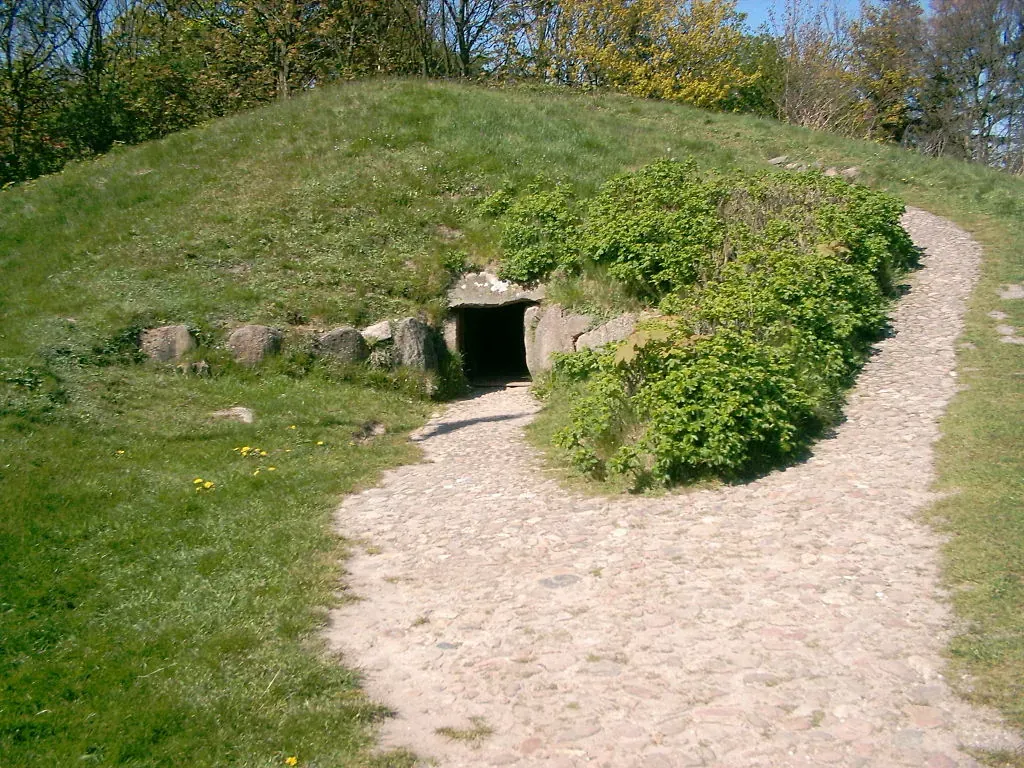
Megalithic tombs are Stone Age burial sites constructed from large, unhewn boulders.
They served as collective graves in which multiple deceased individuals were interred and usually contained grave goods such as pottery, stone tools, and jewelry. Well-known tombs include the “Visbek Bride and Groom” (Lower Saxony), the Seven Stone Houses (Lüneburg Heath), and Denghoog (Sylt).
The approximately 5,300-year-old glacier mummy was discovered in 1991 by hikers in the Ötztal Alps on the border between Italy and Austria. His discovery is considered one of the most significant archaeological finds of modern times, as he is exceptionally well-preserved and provides valuable insights into the lives of people in the late Neolithic period.
Ötzi was about 45 years old when he died, approximately 1.60 meters tall, and suffered from arteriosclerosis, tooth wear, and joint problems. He was also lactose intolerant, meaning his body could not digest milk sugar. Among other things, ibex meat was found in his stomach. He wore a goatskin jacket, leather pants, a cape made of woven grass, and shoes with hay insulation, which provided him with protection from the cold. In addition to a copper axe, a dagger with a flint blade, and an unfinished bow with arrows, he carried a tinder fungus with him, which he used to start fires. Today, Ötzi is preserved and studied at the South Tyrolean Museum of Archaeology in Bolzano.
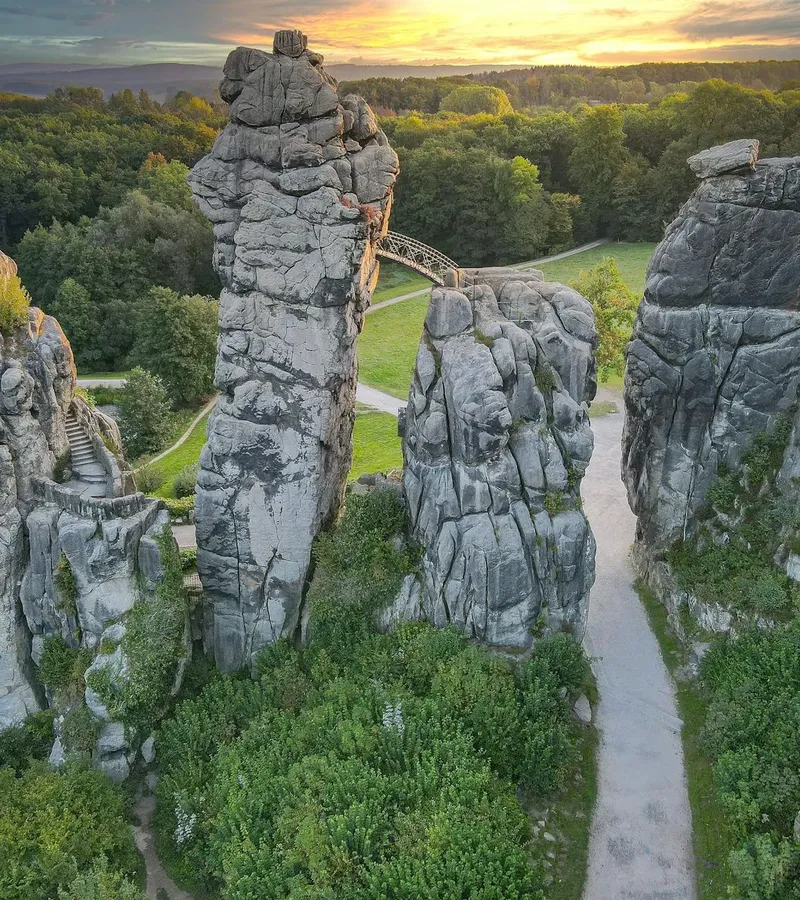
Striking rock formation and culturally and historically complex location in NRW.
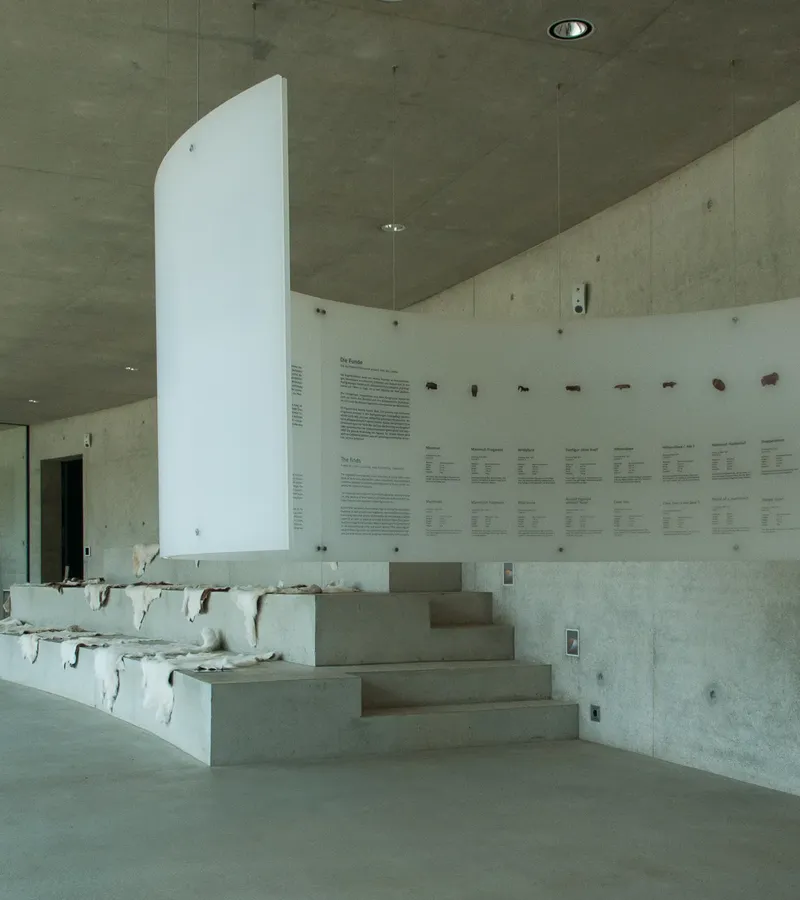
Close-to-site education on Ice Age art and early humans.
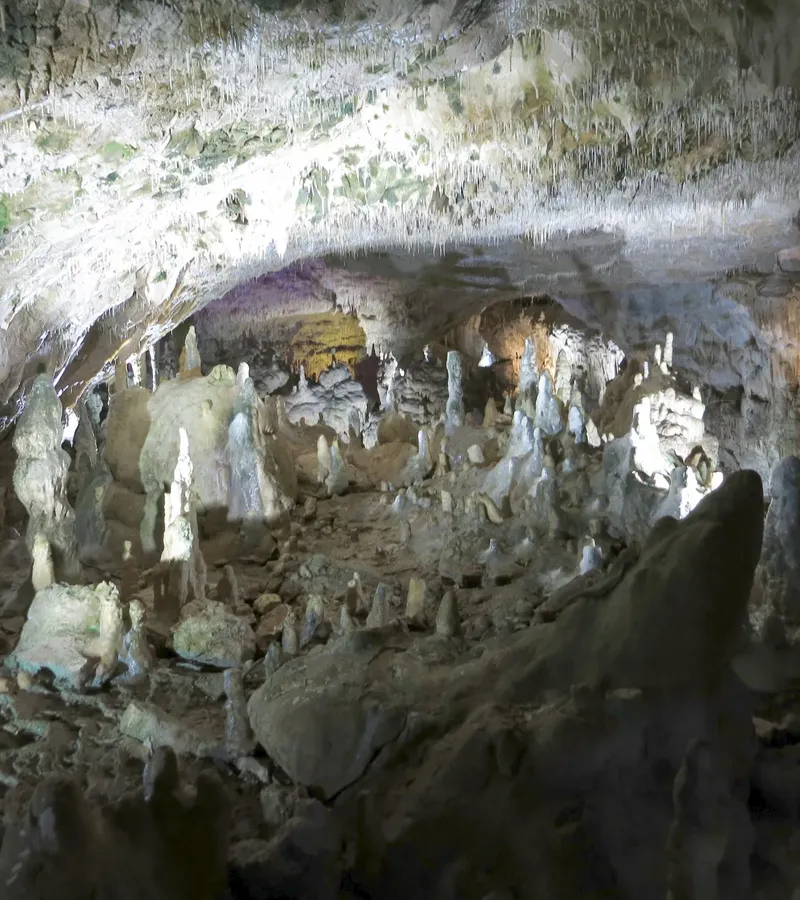
Cave in the Swabian Alb with traces of the Ice Age.
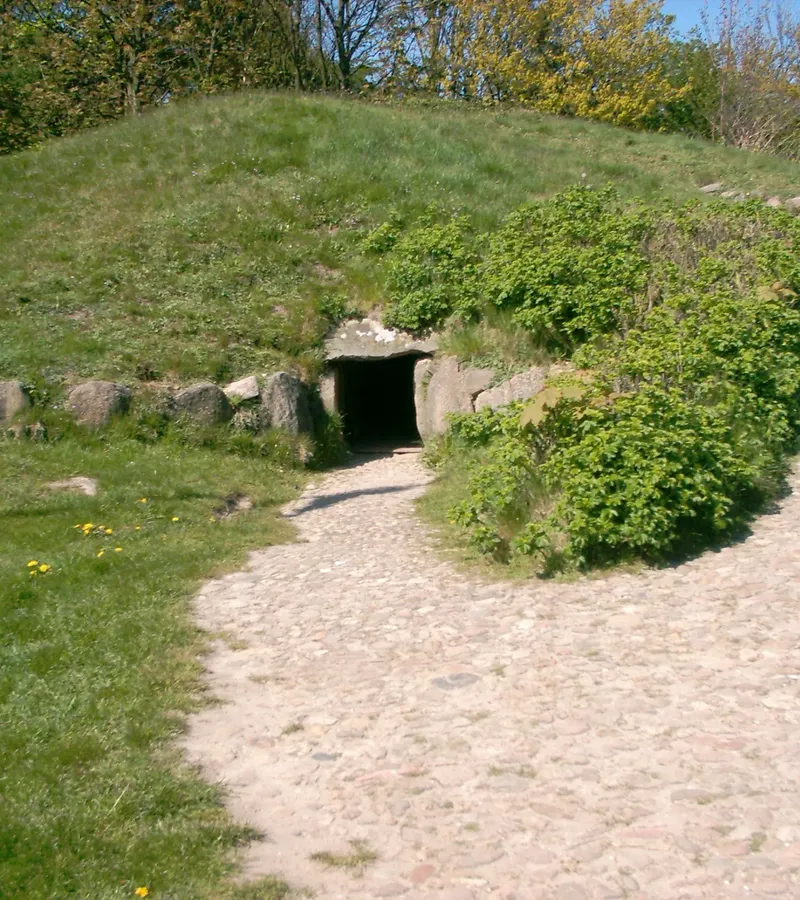
Megalithic tomb and visible reference to the Neolithic period on Sylt.
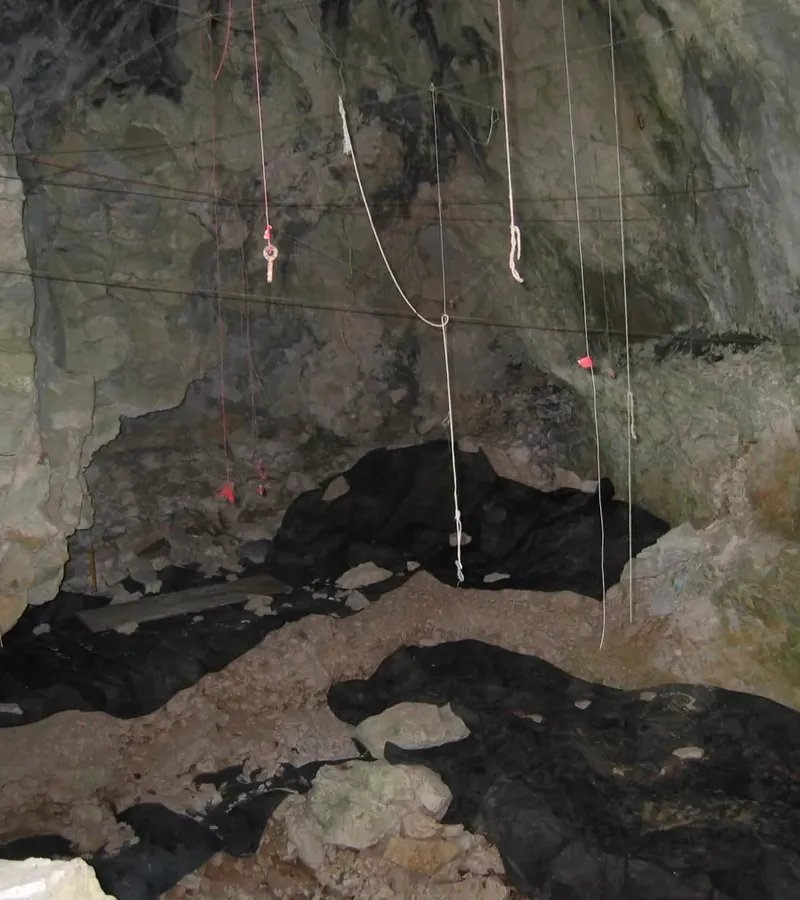
Cave site with very early art and music artefacts.
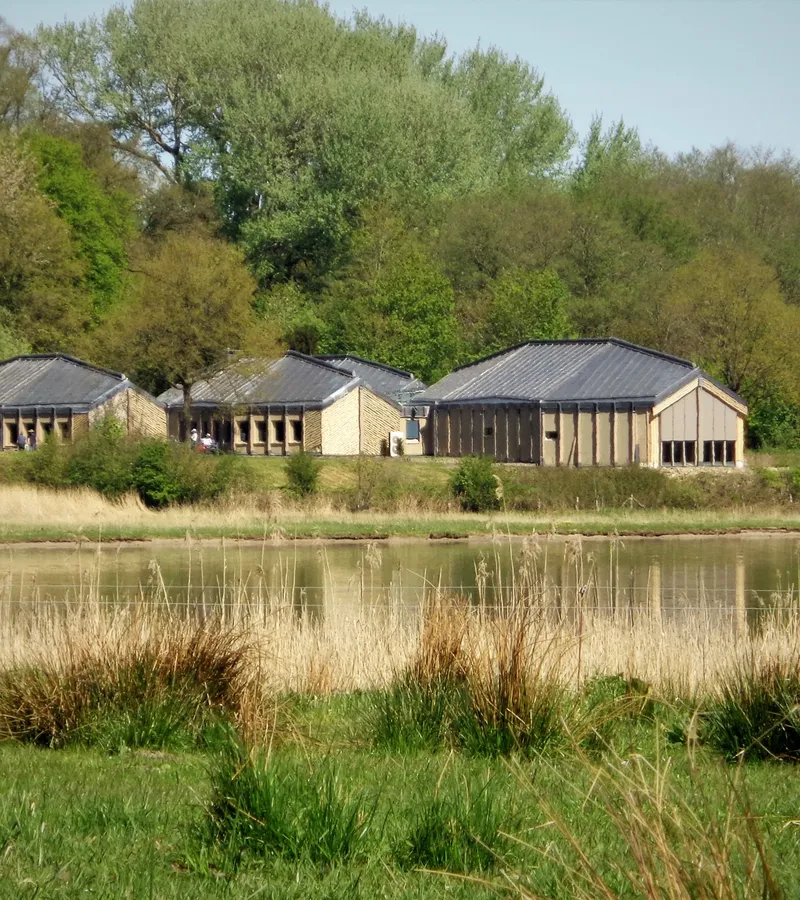
Viking Age trading center and archaeological memorial in the north.
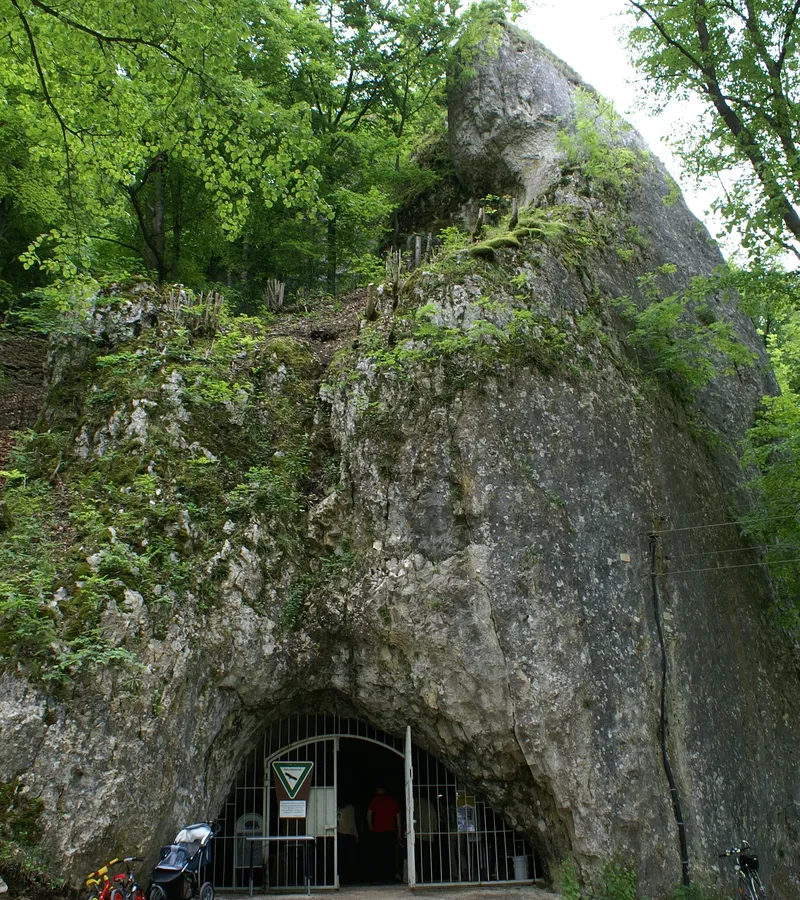
Important site of Ice Age art in the Swabian Alb.
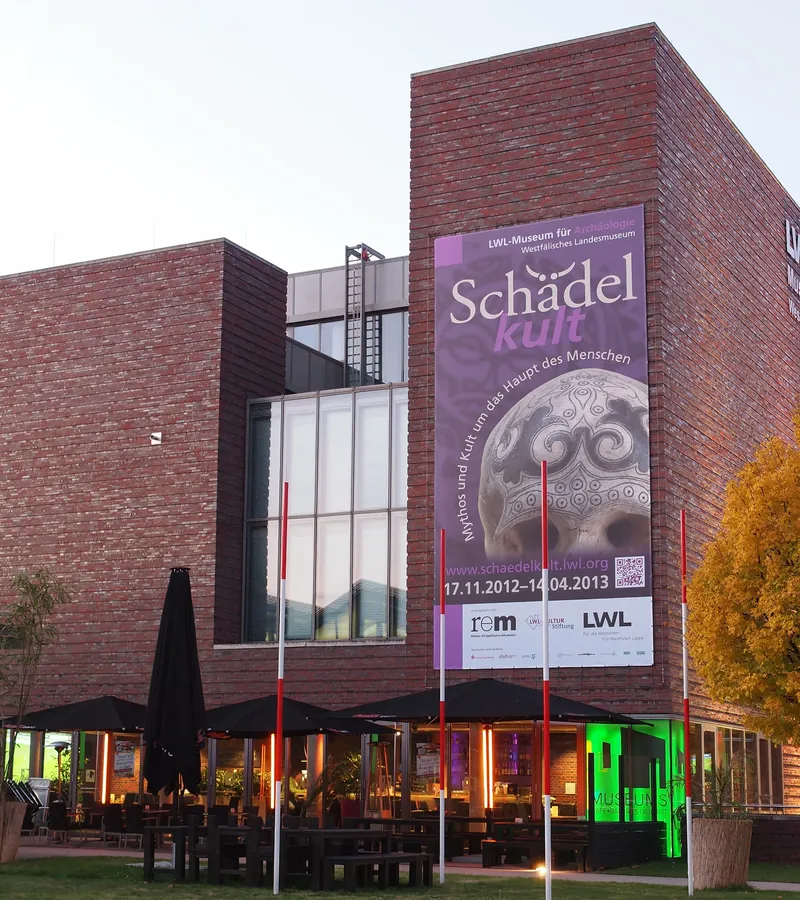
Archaeological finds and everyday life in early societies.
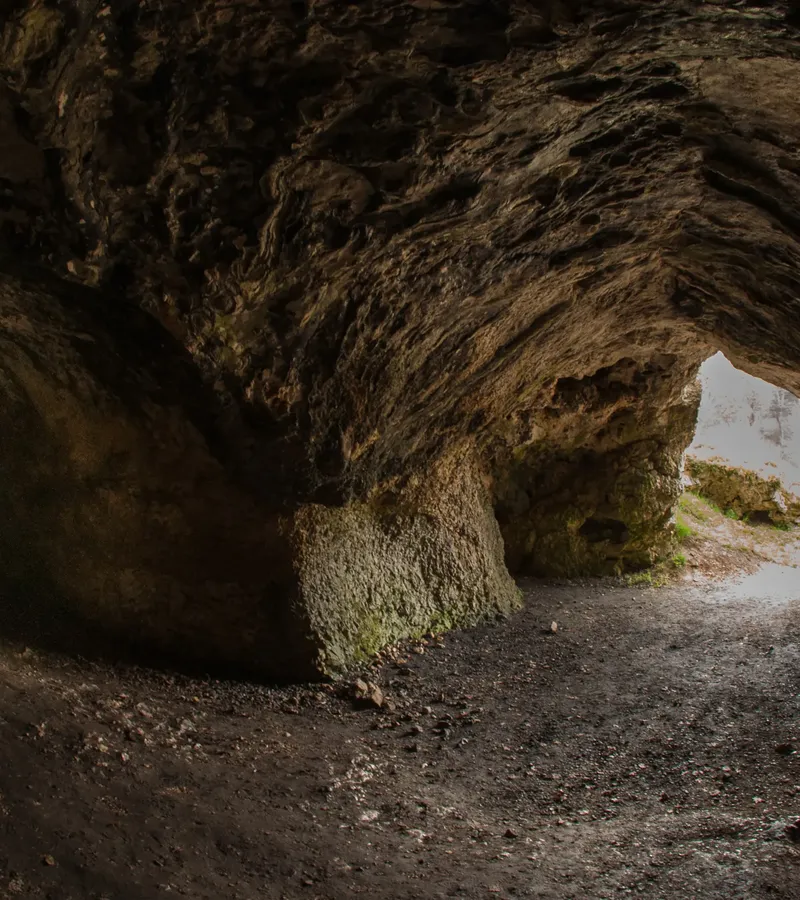
Cave site with famous Ice Age animal figures.
Striking rock formation and culturally and historically complex location in NRW.
Close-to-site education on Ice Age art and early humans.
Cave in the Swabian Alb with traces of the Ice Age.
Megalithic tomb and visible reference to the Neolithic period on Sylt.
Cave site with very early art and music artefacts.
Viking Age trading center and archaeological memorial in the north.
Important site of Ice Age art in the Swabian Alb.
Archaeological finds and everyday life in early societies.
Cave site with famous Ice Age animal figures.
The Bronze Age was characterized by the use of bronze (an alloy of copper and tin). Trade routes emerged between Central Europe and the Mediterranean region, and the first social hierarchies began to develop. Notable finds include the Nebra Sky Disk (ca. 1600 BCE)—one of the oldest known depictions of the sky, discovered in Saxony-Anhalt—and the princely graves of Leubingen and Helmsdorf—richly furnished graves containing valuable grave goods that point to early elites.
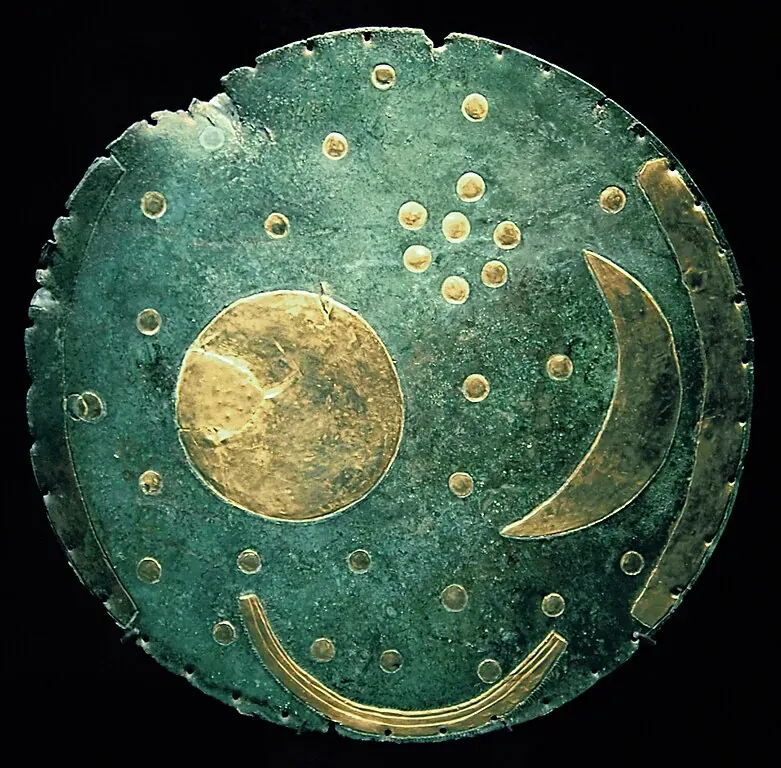
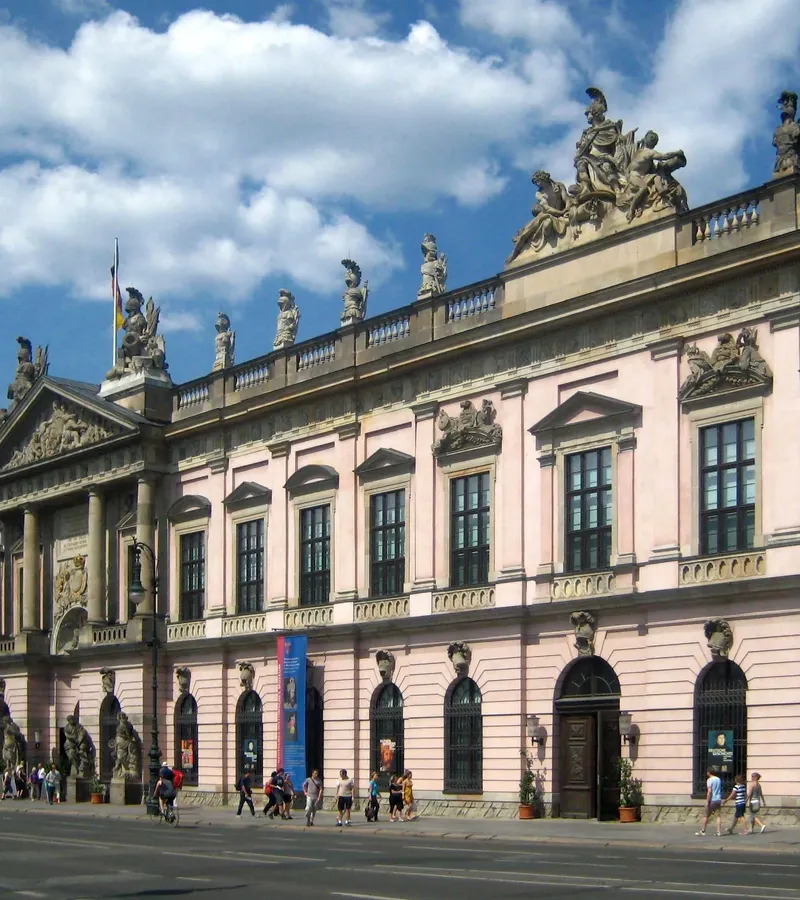
Overview of German history with archaeological and historical objects.
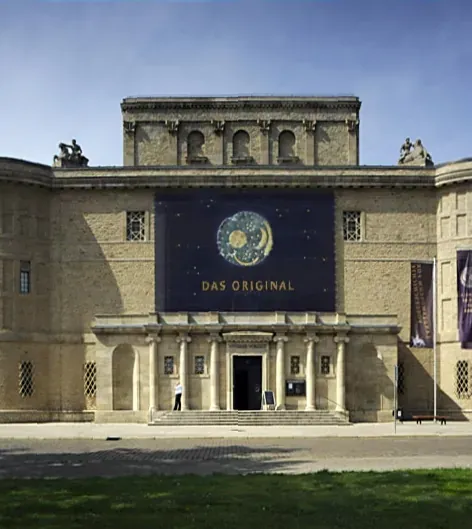
Context close to the Nebra Sky Disk.
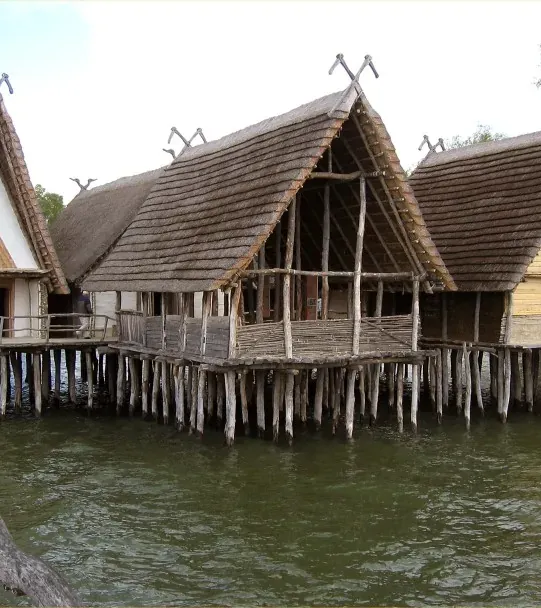
Reconstructions of prehistoric pile dwellings on Lake Constance.
Overview of German history with archaeological and historical objects.
Context close to the Nebra Sky Disk.
Reconstructions of prehistoric pile dwellings on Lake Constance.
The Iron Age was the era of the Celtic and Germanic tribes, first described by the Romans. Iron tools increasingly replaced bronze, revolutionizing agriculture and warfare.
The Celts were skilled craftsmen and traders, and their culture spread across large parts of Europe, including what is now southern Germany. Famous Celtic sites included Heuneburg (Baden-Württemberg) and the Oppidum of Manching (Bavaria).
Unlike the Celts, the Germanic tribes lived in northern Germany in small tribal confederations. They did not develop large cities or a sense of community beyond their own clans. They were known for their warlike culture and were in conflict with the Romans, who began encroaching on their territory in the 1st century BCE.
Remnants of the Germanic peoples include presumed weapons, coins, and bone fragments from the Battle of Varus (Kalkriese, Lower Saxony), in which the Germanic peoples defeated the Romans, as well as settlement remains in Feddersen Wierde (Lower Saxony) and several bog bodies.
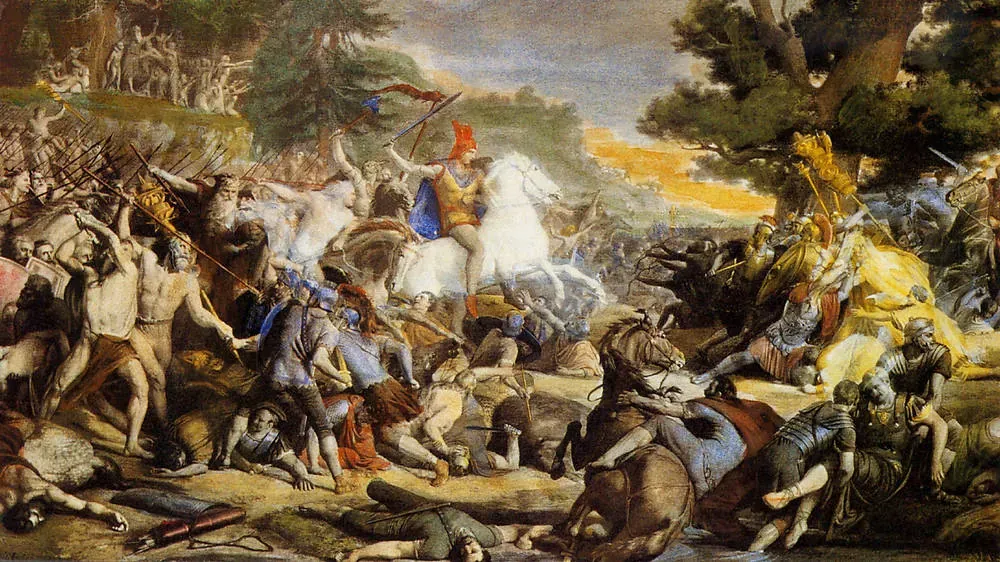
The history of Germany from the turn of the era through the Middle Ages is marked by the rise and fall of the Roman Empire, the Migration Period, and the emergence of the Frankish Kingdom, culminating in the founding of the Holy Roman Empire. This era laid the foundations for the political and cultural development of Central Europe.
Around the turn of the era, large parts of what is now Germany were inhabited by Germanic tribes, while the Roman Empire was expanding its influence. Emperor Augustus attempted to conquer Germania as far as the Elbe River, but suffered a severe defeat at the Battle of Varus in 9 AD. The Romans abandoned their expansion plans, and the Roman frontier, the Limes, ran along the Rhine and the Danube, serving for centuries as a defense against Germanic attacks.
In southern Germany and along the Rhine, Roman cities such as Colonia Claudia Ara Agrippinensium (Cologne), Augusta Vindelicorum (Augsburg), and Mogontiacum (Mainz). There, Roman culture flourished with temples, bathhouses, and trading posts, while the Germanic tribes continued to live in tribal societies in the north. Other former Roman cities in Germany include Trier, Worms, Xanten, Bonn, and Regensburg.
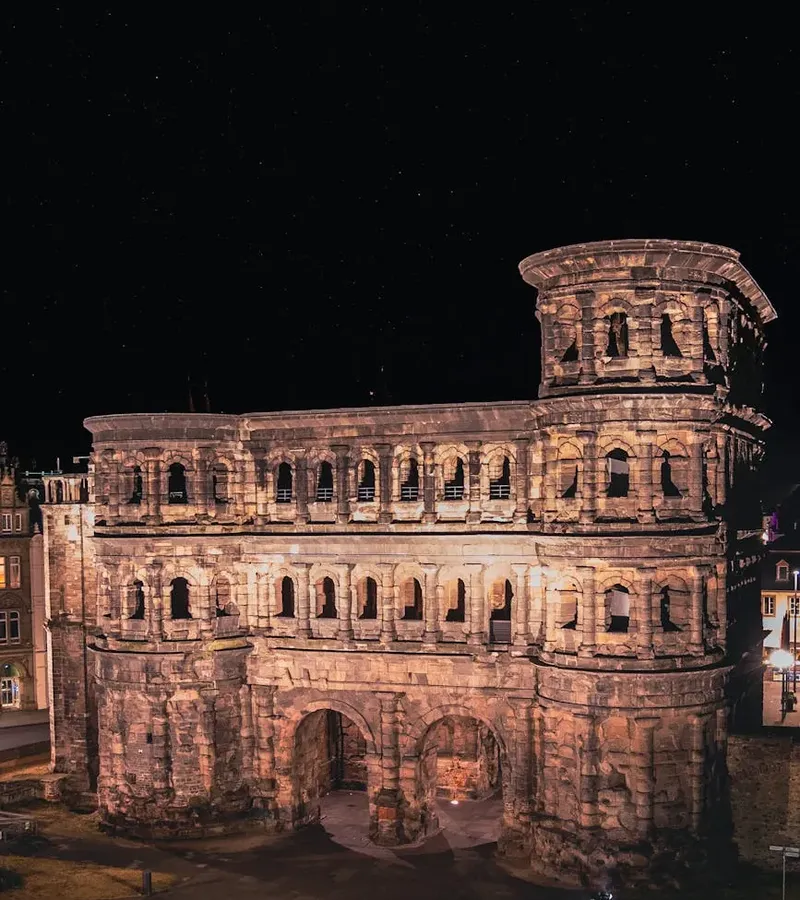
Roman buildings and one of the oldest cities in Germany.
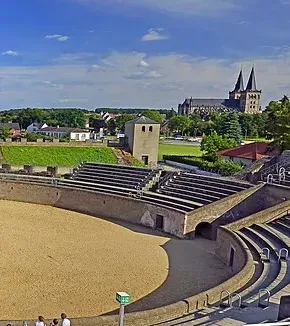
Archaeological park and Roman city history.
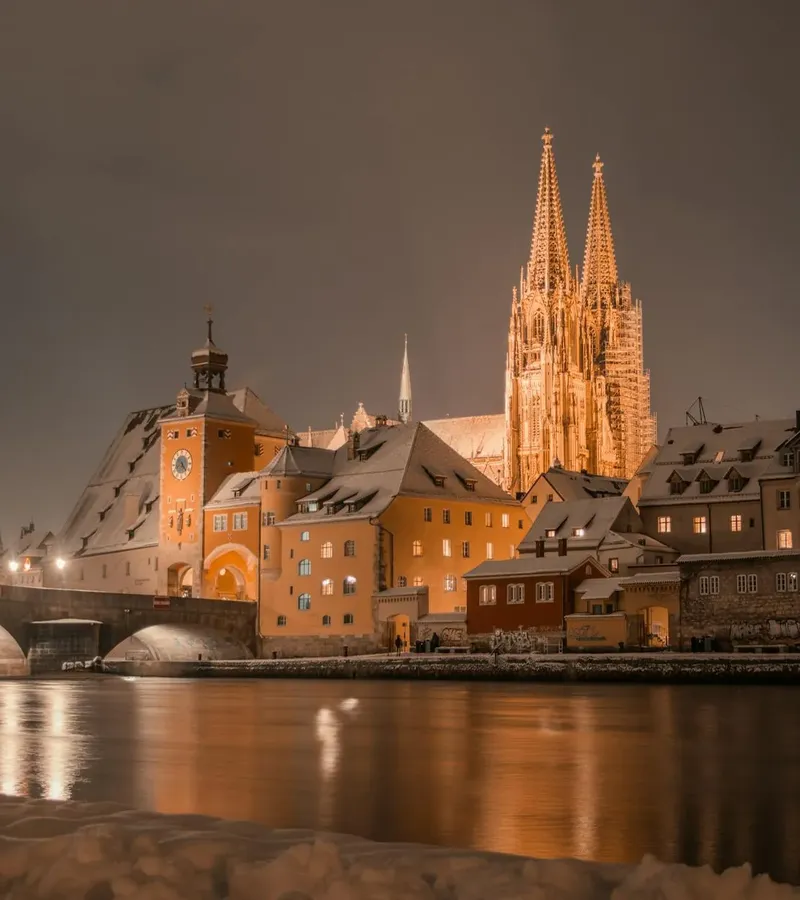
Roman roots on the Danube and later medieval center.
Roman buildings and one of the oldest cities in Germany.
Archaeological park and Roman city history.
Roman roots on the Danube and later medieval center.
The Migration Period began in the 4th century, triggered by the invasion of the Huns, a nomadic horsemen from Eurasia. Numerous Germanic tribes, such as the Goths, Vandals, Lombards, and Franks, invaded the territory of the Roman Empire. In 476 AD, the Western Roman Empire fell, marking the end of the ancient world and the beginning of the Middle Ages. Particularly significant was the rise of the Franks, who established a powerful empire under Clovis I (482–511, of the Merovingian dynasty). With his baptism into Christianity, he laid the foundation for the close connection between the later medieval empire and the Church. While the Germanic tribes migrated southwest, Slavic peoples moved into northern Germany; their descendants still live in Germany today as the Sorbs.
The Sorbs are a West Slavic minority that has lived in Lusatia in eastern Germany for over 1,000 years. Historically, they have differed significantly from the German majority population—primarily through their own language, Sorbian, as well as through their distinctive traditional clothing, customs, and a culture that is, in some respects, more strongly influenced by Catholicism. Today, the Sorbs are largely integrated into German society, yet they consciously continue to cultivate their identity. Sorbian is protected as a minority language, and in many places—especially around Bautzen—bilingual signs point to this living tradition. In total, about 60,000 people identify as part of the Sorbian ethnic group, though only around 20,000 still actively speak Sorbian, and the number of native speakers continues to decline. Today, visitors can experience the culture primarily during Easter celebrations.
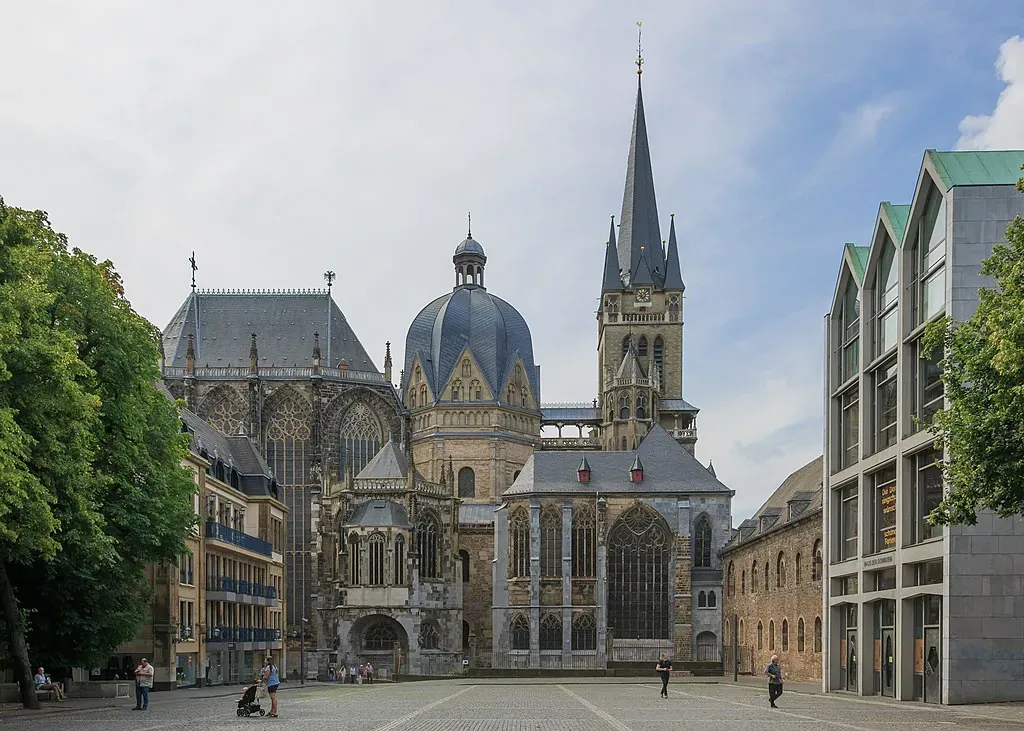
In the 8th century, the Frankish Empire, under the rule of the Carolingians, became the dominant power in Central Europe. It stretched from what is now Germany south of the Elbe River to the modern-day border between Spain and France and central Italy. Charlemagne (747–814) carried out numerous conquests, subjugated the Saxons in northern Germany, and forcibly Christianized them. In 800, he had himself crowned Emperor of the Roman Empire by the Pope, thereby establishing the concept of a new Roman Empire, which lived on as the Holy Roman Empire. It is only from this time onward that a common German language (with numerous regional dialects) can be traced. Charlemagne promoted education, administration, and culture, giving rise to the so-called Carolingian Renaissance—a golden age of Latin literature and architecture. After his death, his empire was divided among his grandsons in the Treaty of Verdun (843), laying the foundations for the later kingdoms of Germany and France. The Palatine Chapel in Aachen, which Charlemagne had built in the 9th century, is a monumental relic of his reign and later became an important symbol of the Holy Roman Emperors. His remains and treasures, such as the Crown of Charlemagne, are also housed there.
The Holy Roman Empire was a confederation of states that existed from 800 to 1806. It was a political entity comprising many different territories, principalities, and kingdoms. The emperor was the central figure in the Holy Roman Empire, but his influence was essentially limited and varied greatly depending on the time and circumstances. The Emperor was primarily active as a mediator and supreme judge in conflicts between the Imperial Estates. The Imperial Estates (the princes, bishops, and free cities) were the actual holders of power in the Empire. The Emperor was regarded as the protector of Christianity and as an instrument for the protection of the Catholic Church.
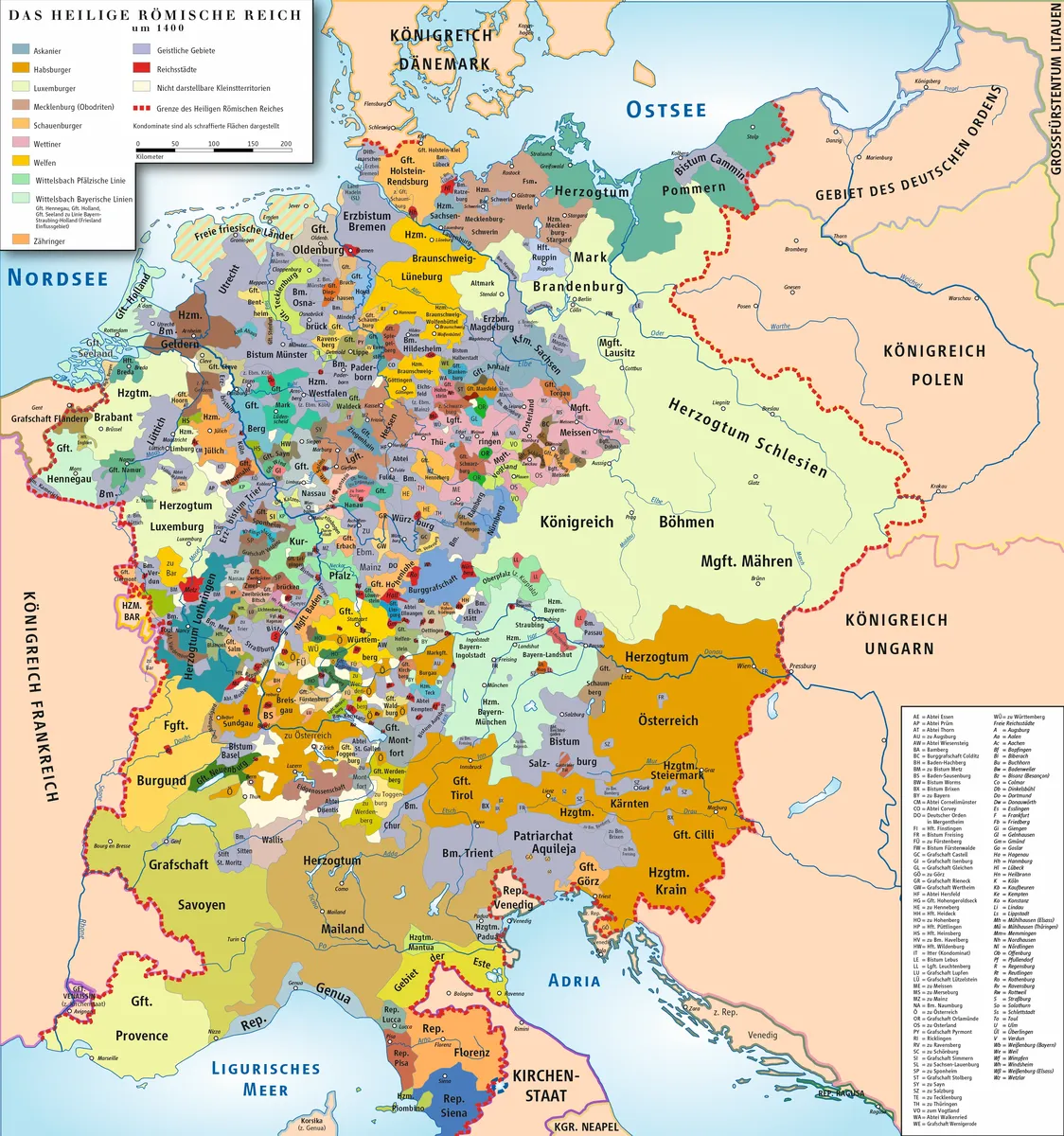
The Emperor of the Holy Roman Empire had the right to grant titles such as Duke. This was usually done as a reward for loyalty or to secure the balance of power within the empire. Dukes were thus often appointed as princes by the Emperor and received large territories, which they then administered themselves.
In the centuries that followed, numerous duchies emerged, such as Saxony, Bavaria, Swabia, and Lorraine. Over time, the division of estates led to the creation of many more duchies. “Free cities” also had the right to enact their own laws (e.g., customs duties).
The Holy Roman Empire, under the rule of the Ottonian and Salian dynasties, experienced a golden age. Henry IV and Frederick I Barbarossa were prominent emperors who sought to strengthen their control over the Italian territories and the Church.
Cities began to develop, and trade flourished. The emergence of monasteries and universities, as well as the spread of Romanesque and Gothic styles in architecture and art, characterized this era. It was also a time of the Crusades, during which German knights and princes took part in military expeditions to the Holy Land (modern-day Israel) to liberate it from Muslim rule (an effort that ultimately proved unsuccessful).
Society in the Middle Ages was highly hierarchical. The king stood at the top of the social order, followed by the nobility and the clergy. Peasants and artisans formed the lower class of society. Christianity played a central role in daily life, culture, politics, and the arts.
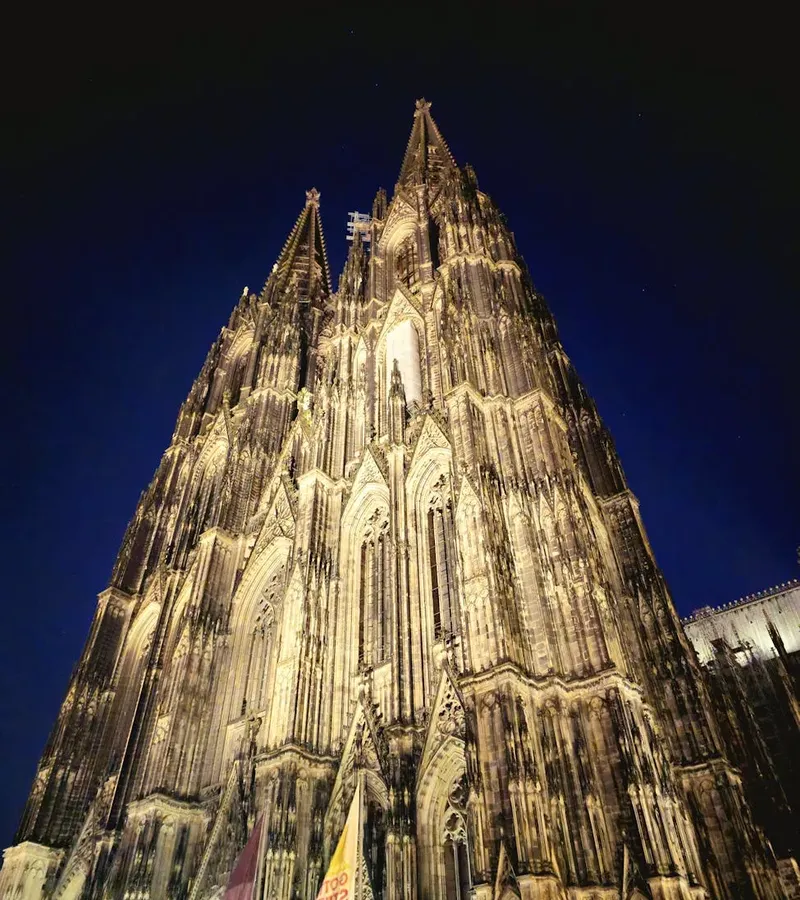
Gothic cathedral and one of the most famous buildings in Germany.
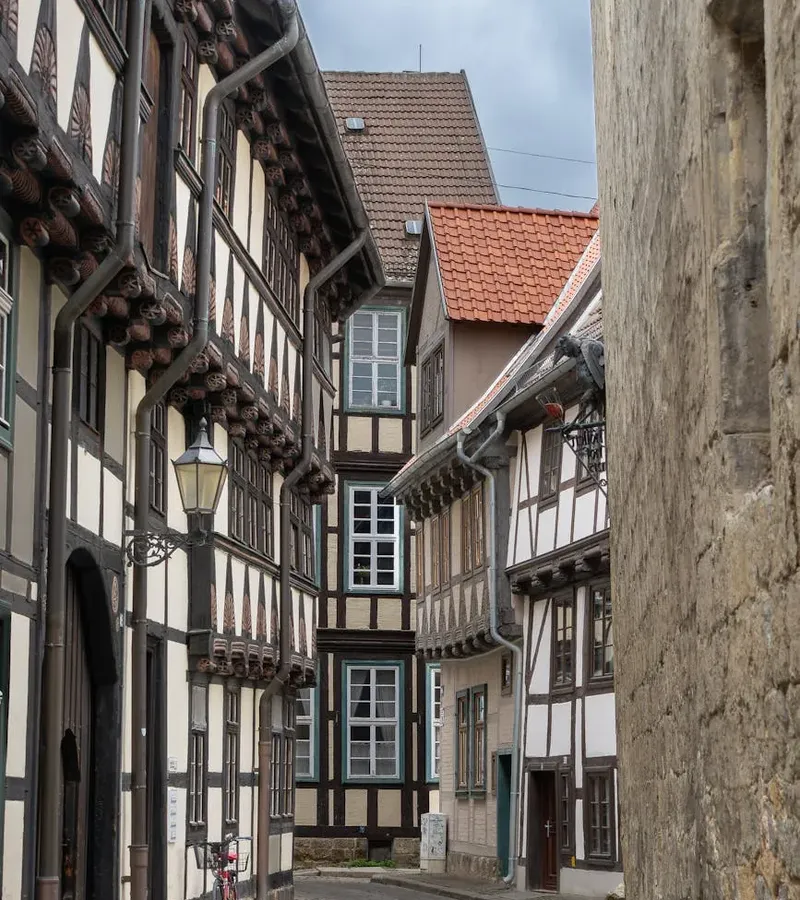
UNESCO World Heritage city with Ottonian history and half-timbered buildings.
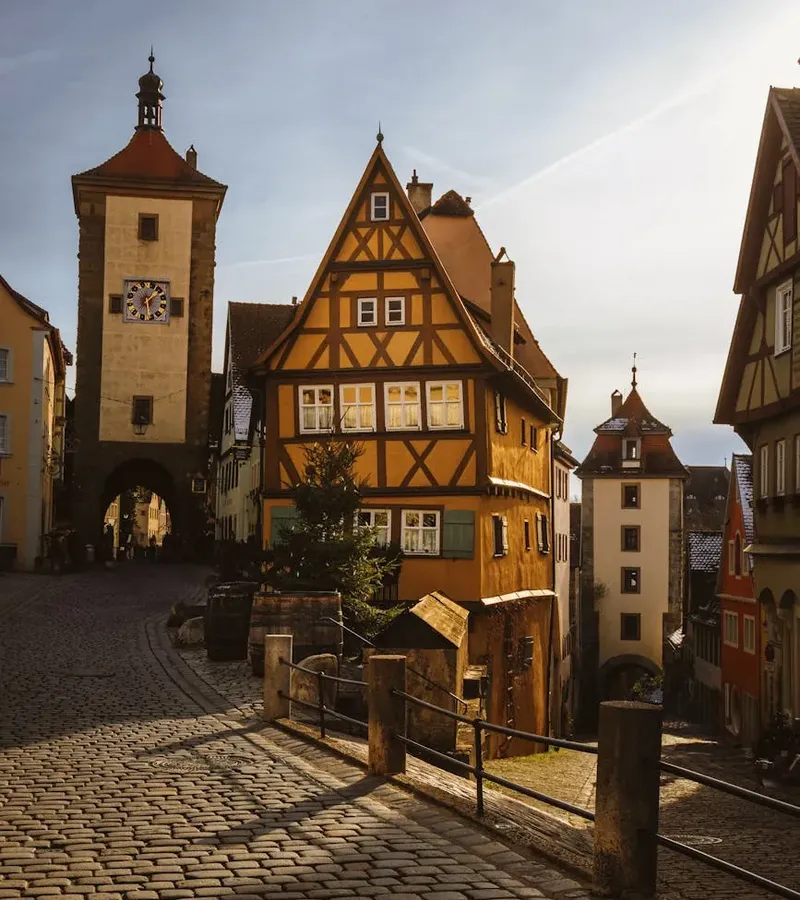
Medieval town with a rebuilt town center.
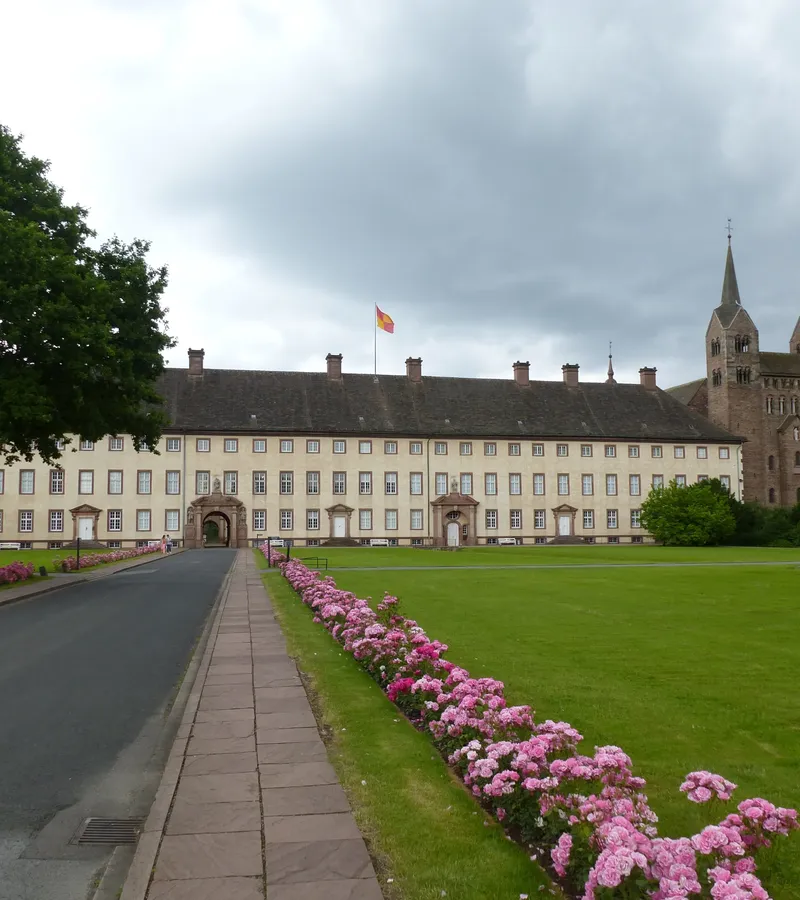
Former imperial abbey and UNESCO World Heritage Site.
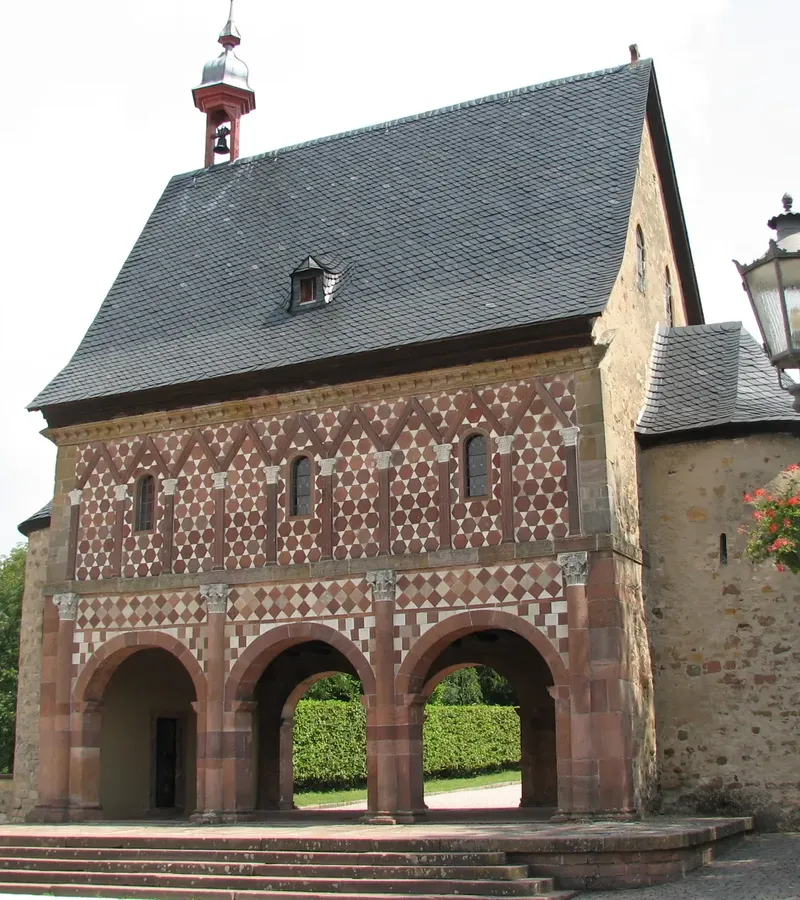
Carolingian UNESCO World Heritage Site and important monastery town.
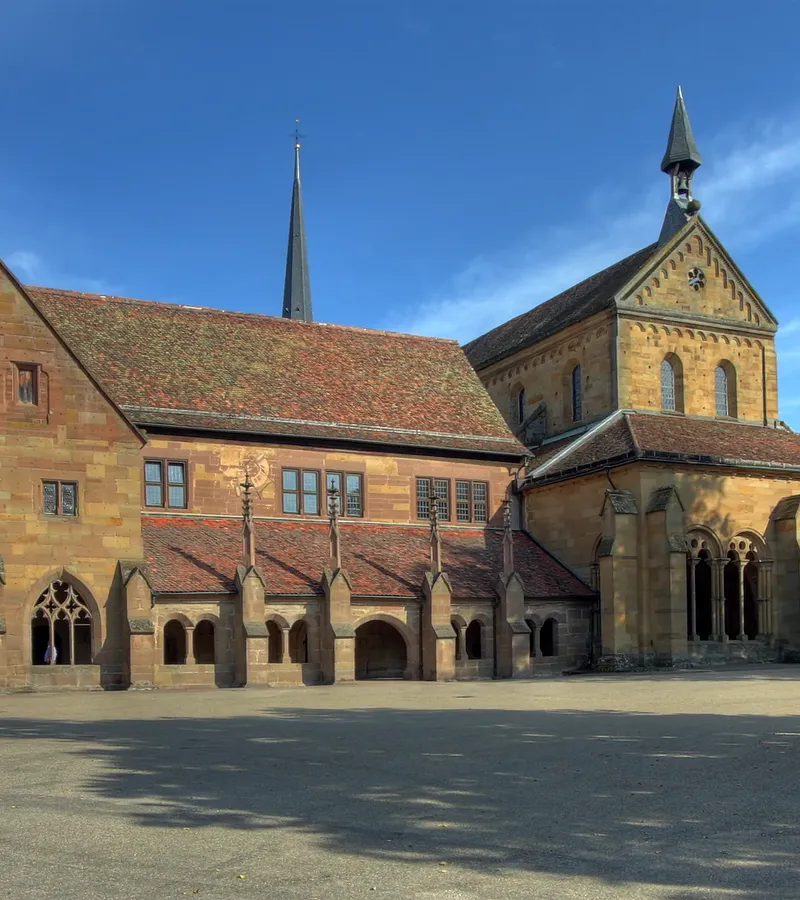
Monastery landscape and medieval building culture.
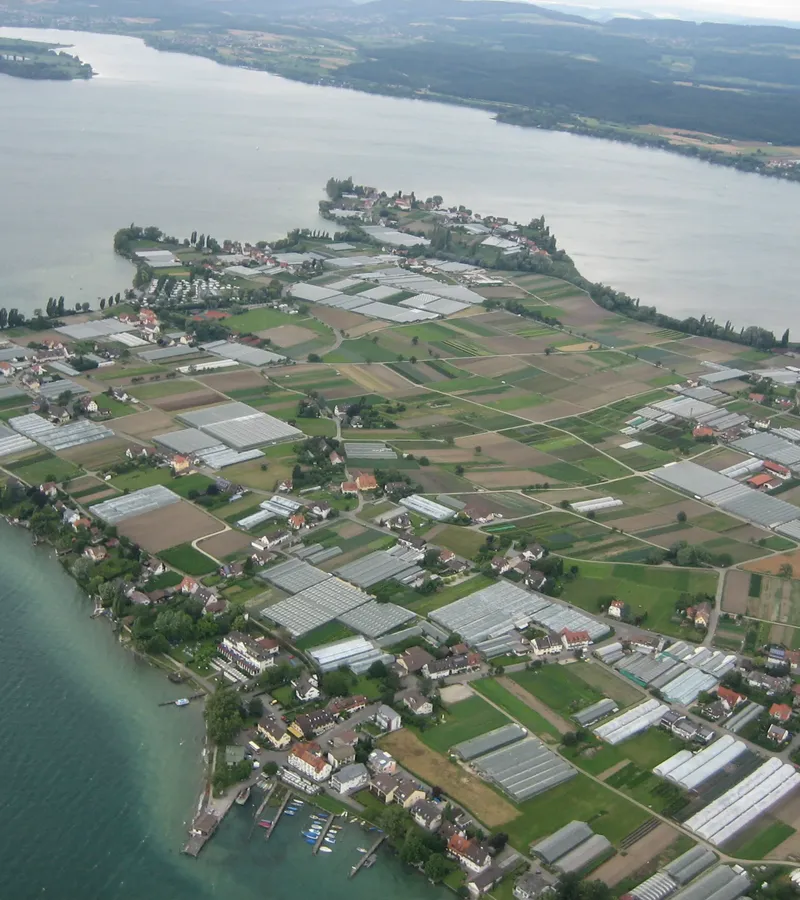
Monastery island in Lake Constance and center of medieval book art.
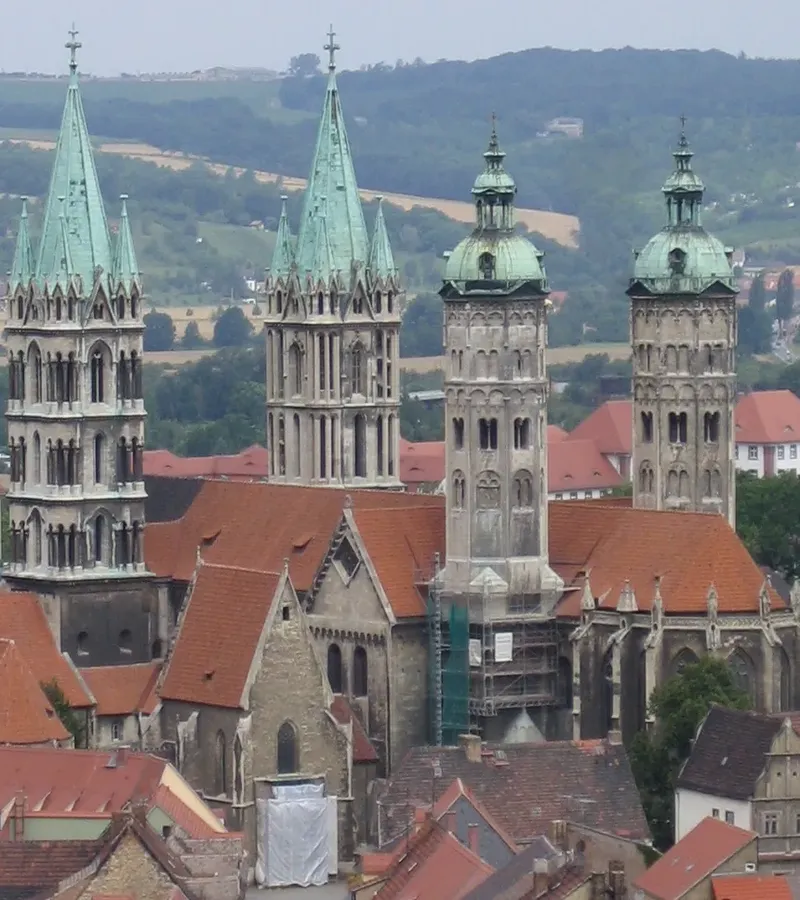
Medieval cathedral with famous donor figures. Also a UNESCO World Heritage Site
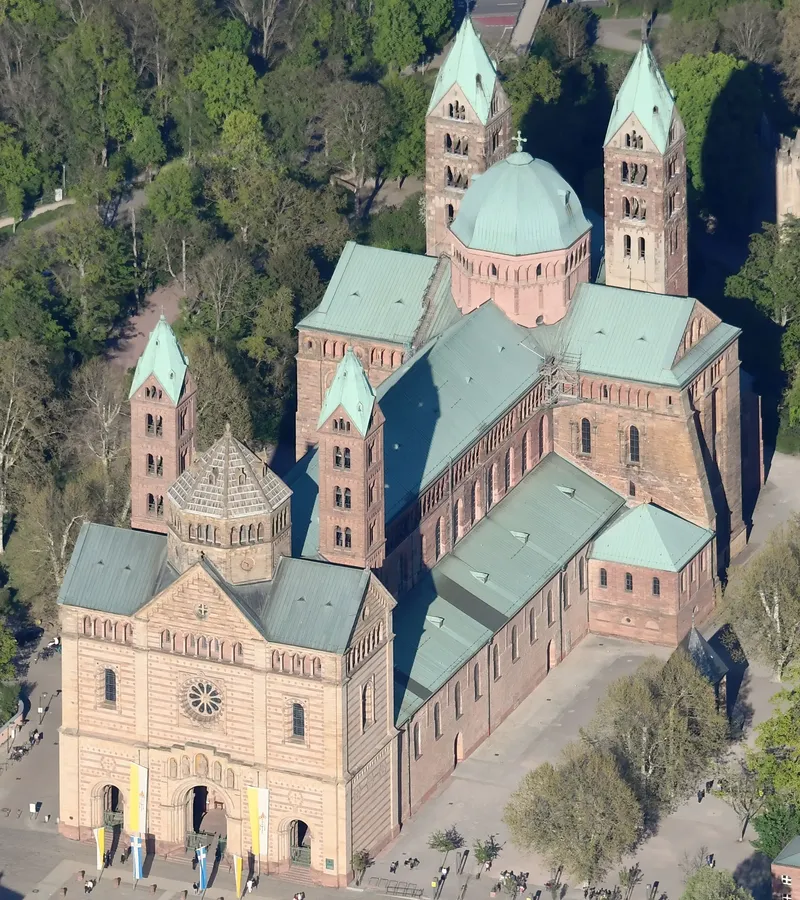
Romanesque imperial cathedral and UNESCO World Heritage Site.
Gothic cathedral and one of the most famous buildings in Germany.
UNESCO World Heritage city with Ottonian history and half-timbered buildings.
Medieval town with a rebuilt town center.
Former imperial abbey and UNESCO World Heritage Site.
Carolingian UNESCO World Heritage Site and important monastery town.
Monastery landscape and medieval building culture.
Monastery island in Lake Constance and center of medieval book art.
Medieval cathedral with famous donor figures. Also a UNESCO World Heritage Site
Romanesque imperial cathedral and UNESCO World Heritage Site.
In the late Middle Ages, the emperor’s influence over the numerous princes and cities steadily waned, leading to the emergence of many smaller, independent principalities and cities. At the same time, the influence of the Church declined, and tensions arose between the papacy and the emperor. Many of the castles that still stand today were built during this period, serving as residences for nobles or as border fortifications in times of war.
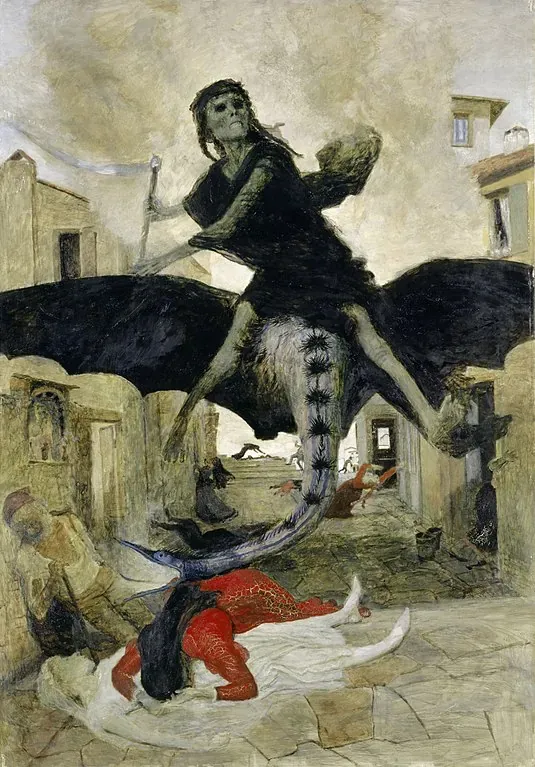
The Black Death, which ravaged Europe in the mid-14th century, along with famines, decimated the population by a third. At this time, pogroms against Jews also occurred, as this distinct population (Jews often spoke their own language and lived in an unassimilated manner) was suspected of being responsible for the problems. The nobility increasingly lost its influence, and the urban middle class gained in importance.
The invention of the printing press by Johannes Gutenberg in the mid-15th century helped spread knowledge and culture, paving the way for the later Reformation and changes in European society.
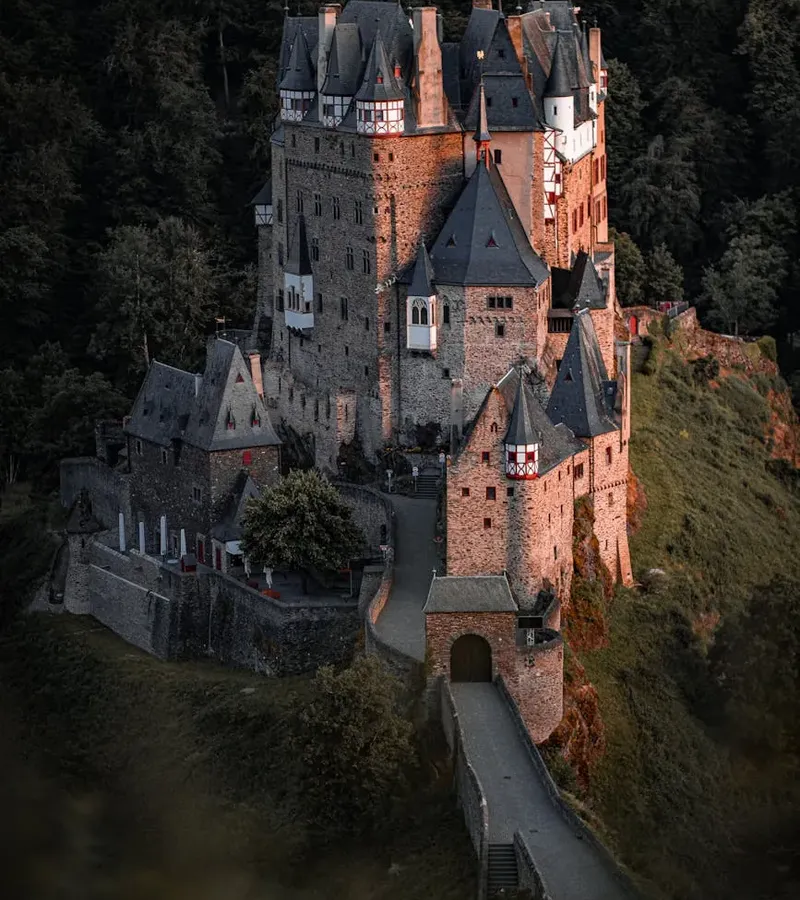
Fairytale castle in the forest that was never destroyed
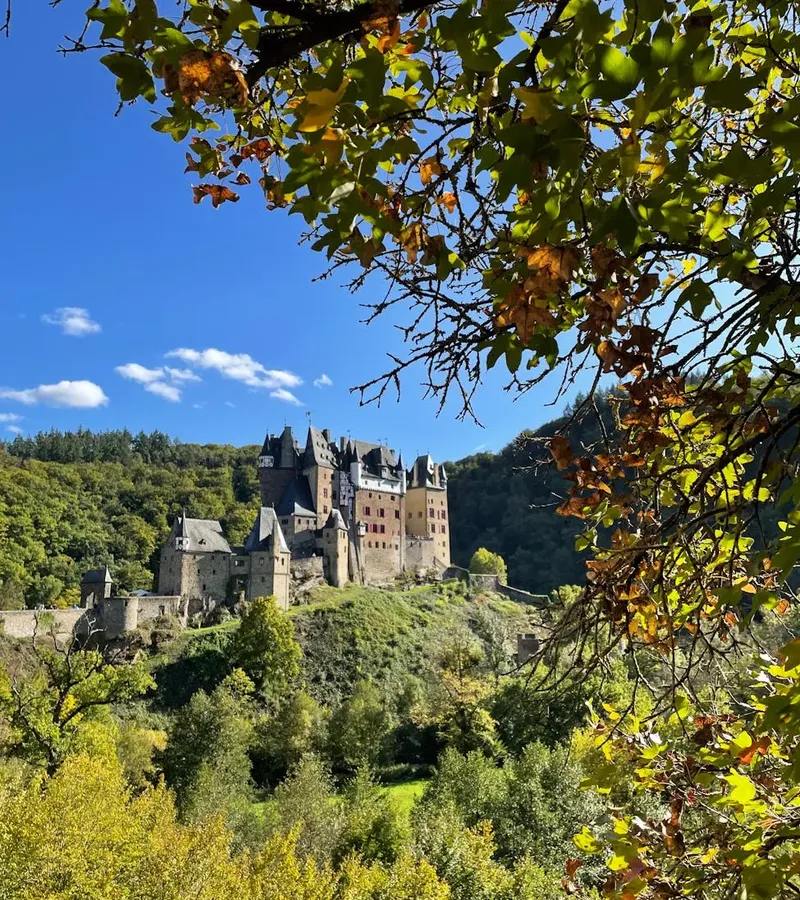
Castle landscape, wine villages and medieval towns.
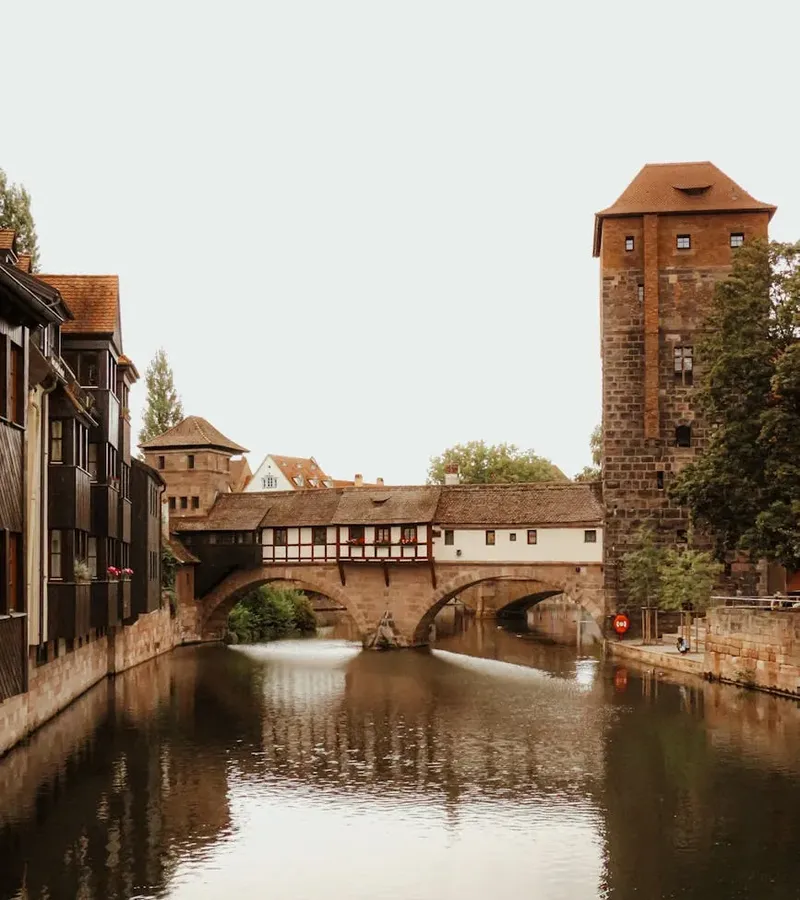
Medieval town with imperial castle and Nazi memorials.
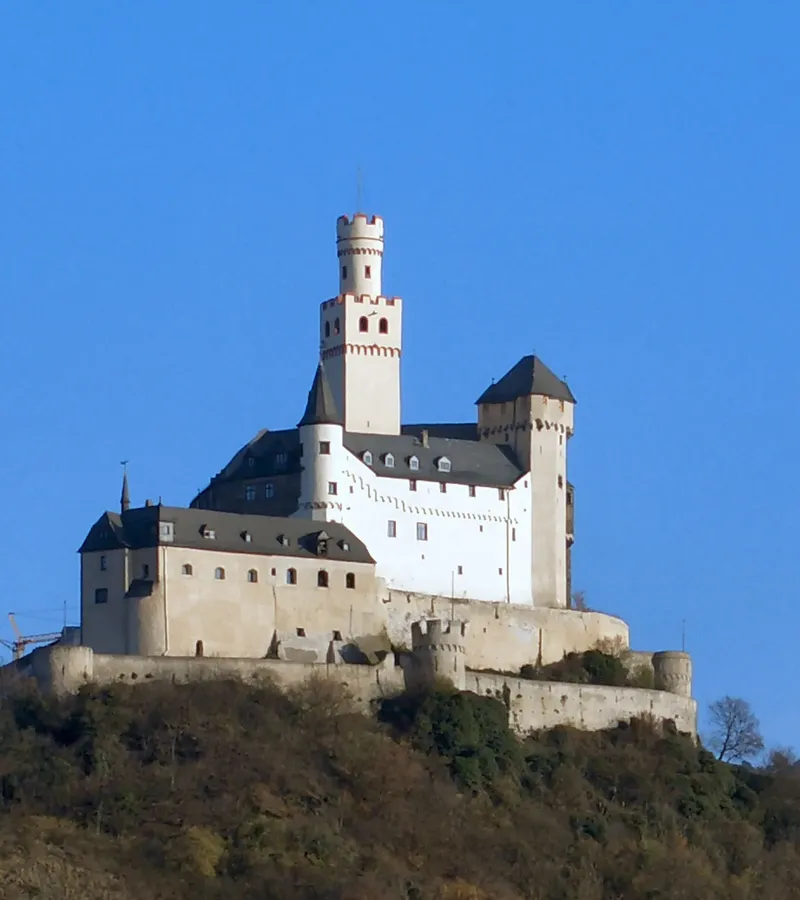
One of the best-preserved hilltop castles on the Middle Rhine.
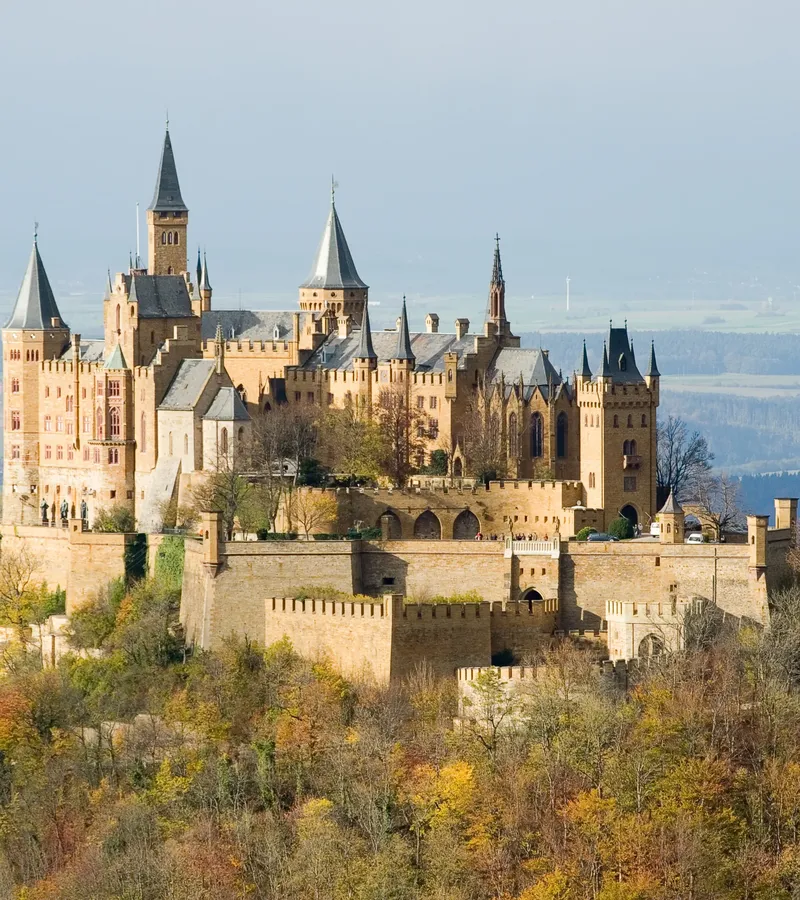
Ancestral castle of the Hohenzollerns with late medieval roots.
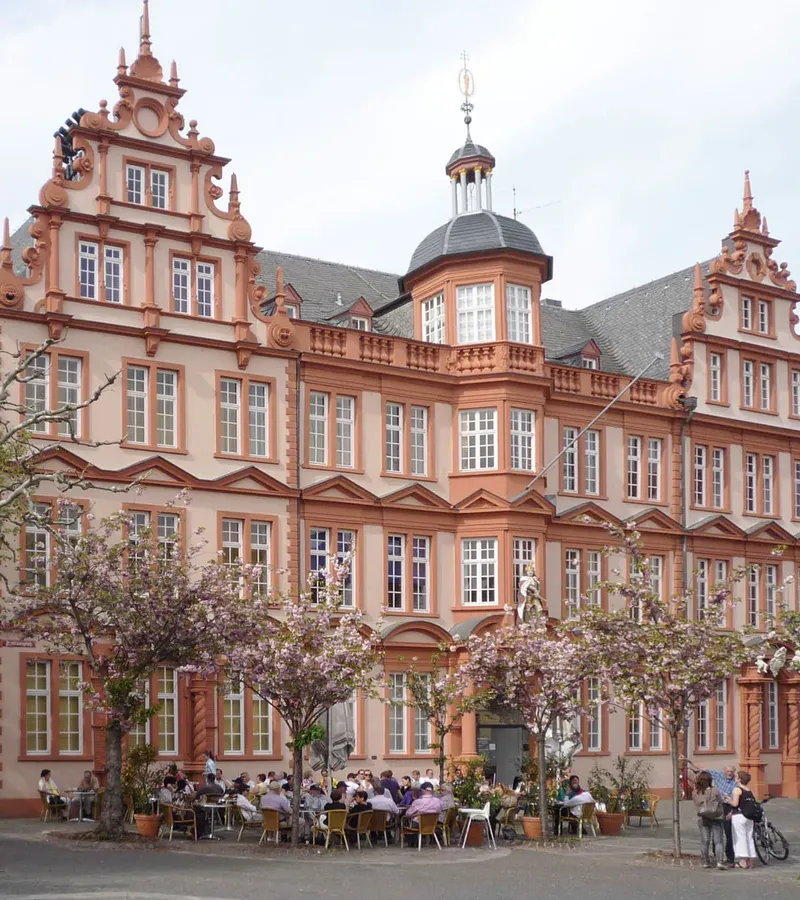
Book printing, media history and Mainz.
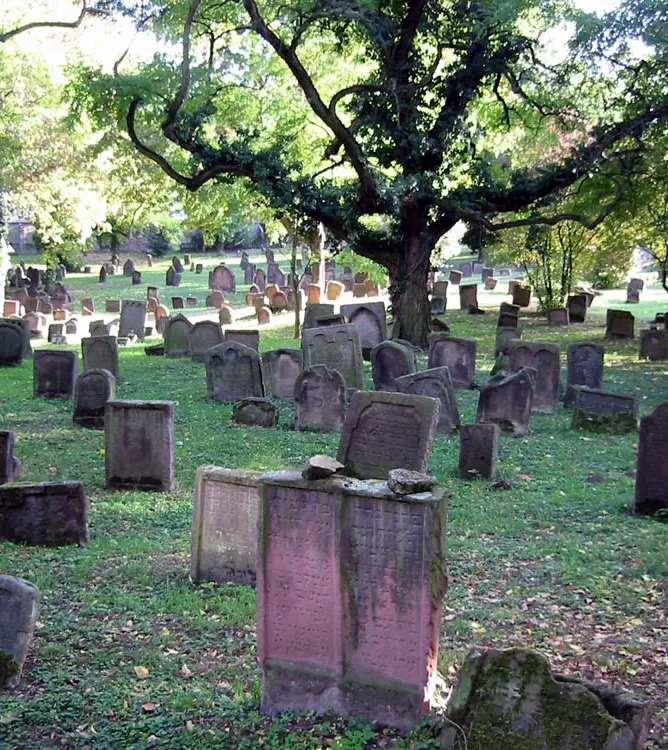
One of the most important Jewish cemeteries in Europe.
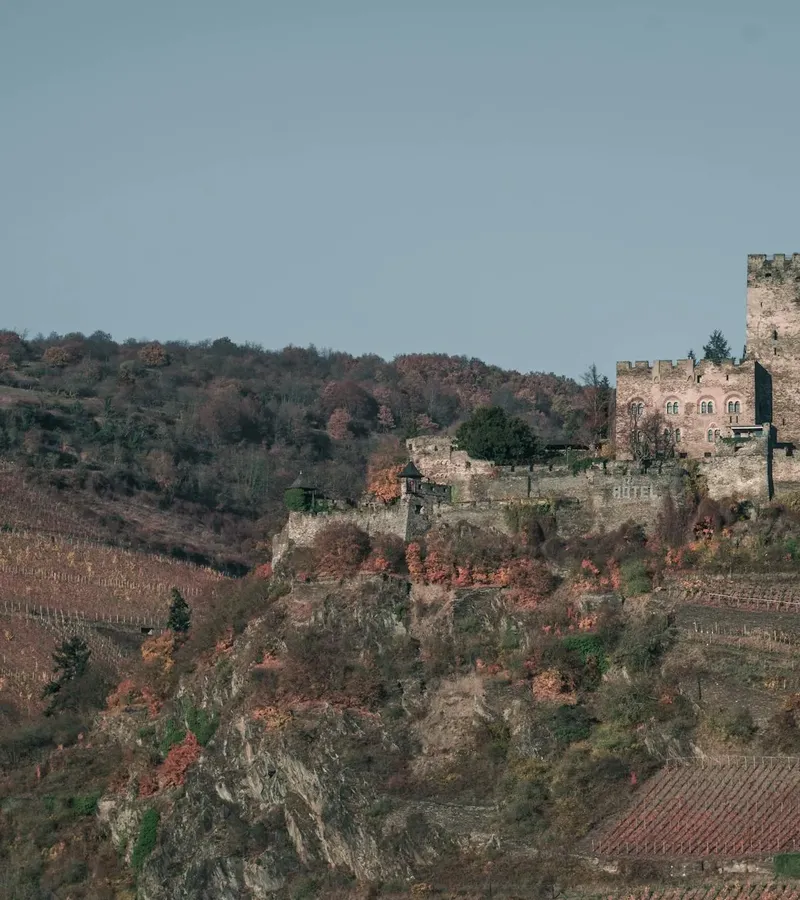
The Rhine region has the highest density of castles in Europe.
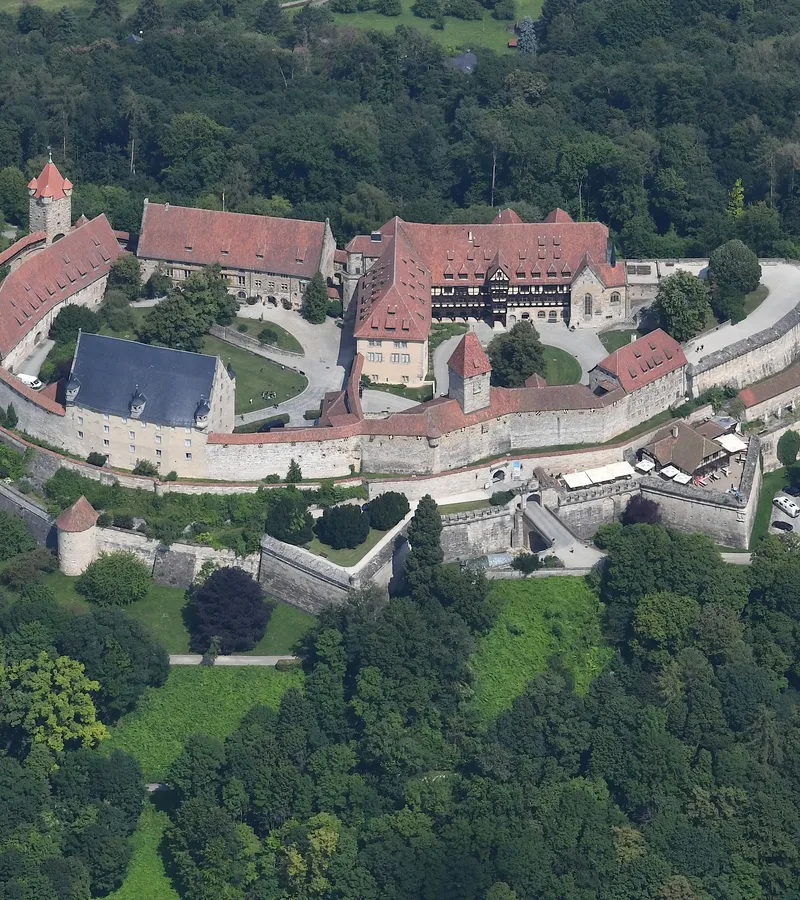
Large castle complex and late medieval defensive architecture.
Fairytale castle in the forest that was never destroyed
Castle landscape, wine villages and medieval towns.
Medieval town with imperial castle and Nazi memorials.
One of the best-preserved hilltop castles on the Middle Rhine.
Ancestral castle of the Hohenzollerns with late medieval roots.
Book printing, media history and Mainz.
One of the most important Jewish cemeteries in Europe.
The Rhine region has the highest density of castles in Europe.
Large castle complex and late medieval defensive architecture.
The early modern period in Germany was shaped by the impact of the Reformation and the emergence of Protestantism. In 1517, Martin Luther, outraged by the sale of indulgences, sparked a religious reform movement with his 95 Theses, which led to a schism in Western Christianity and prolonged religious conflicts. The Protestant faith spread particularly in the northern regions of Germany, while the south remained largely Catholic.
Religious tensions escalated into the Thirty Years' War (1618–1648), a devastating and bloody conflict between Catholic and Protestant powers that was also influenced by political interests. The war ended with the Peace of Westphalia in 1648, which reshaped the religious and political landscape of Europe and laid the foundation for the modern state.
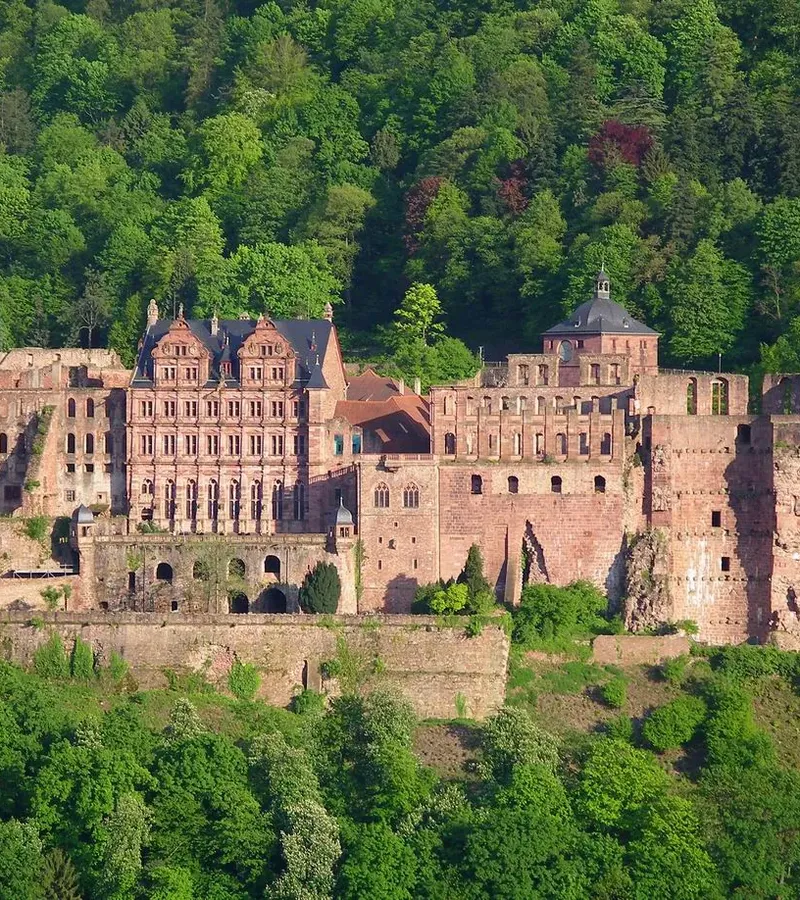
Residence, ruin and symbol of the early modern era.
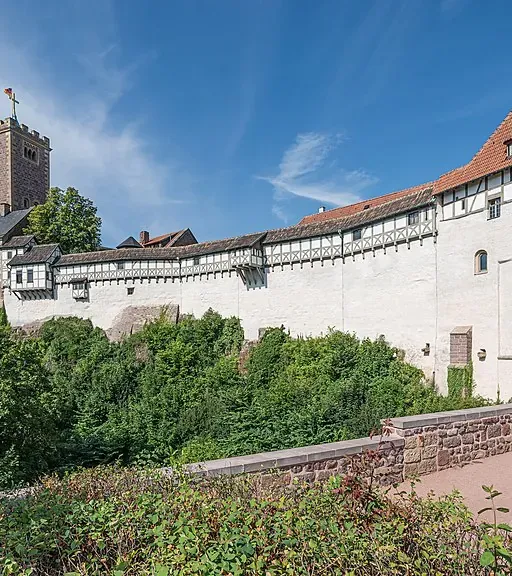
City of the Wartburg. This is where Luther translated the Biebel.
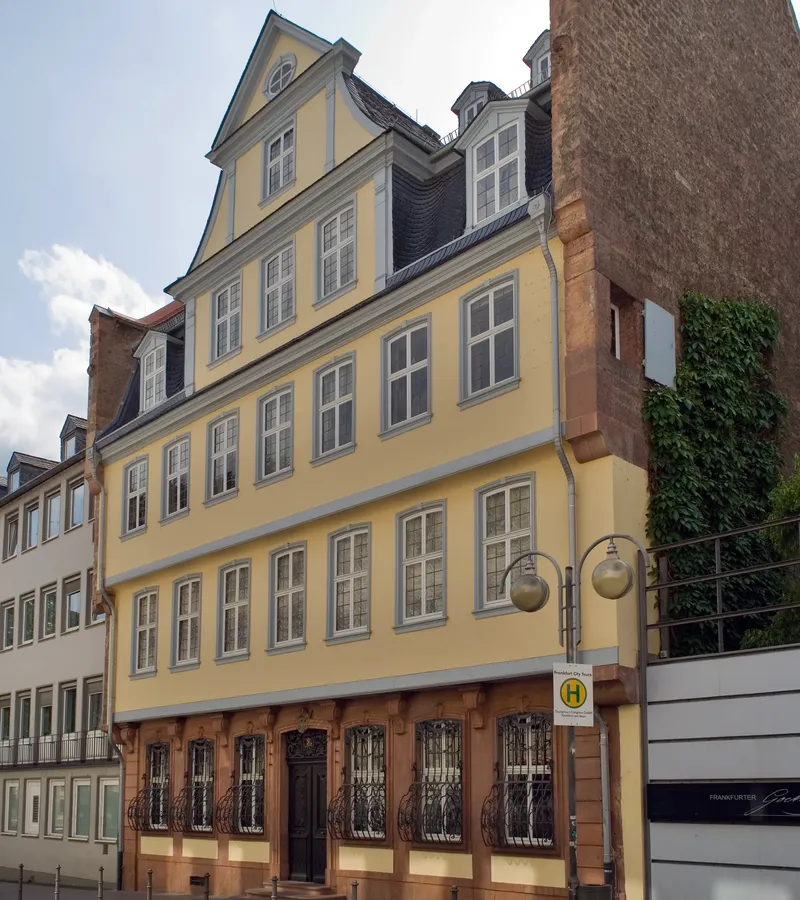
Goethe's birthplace and place of remembrance.
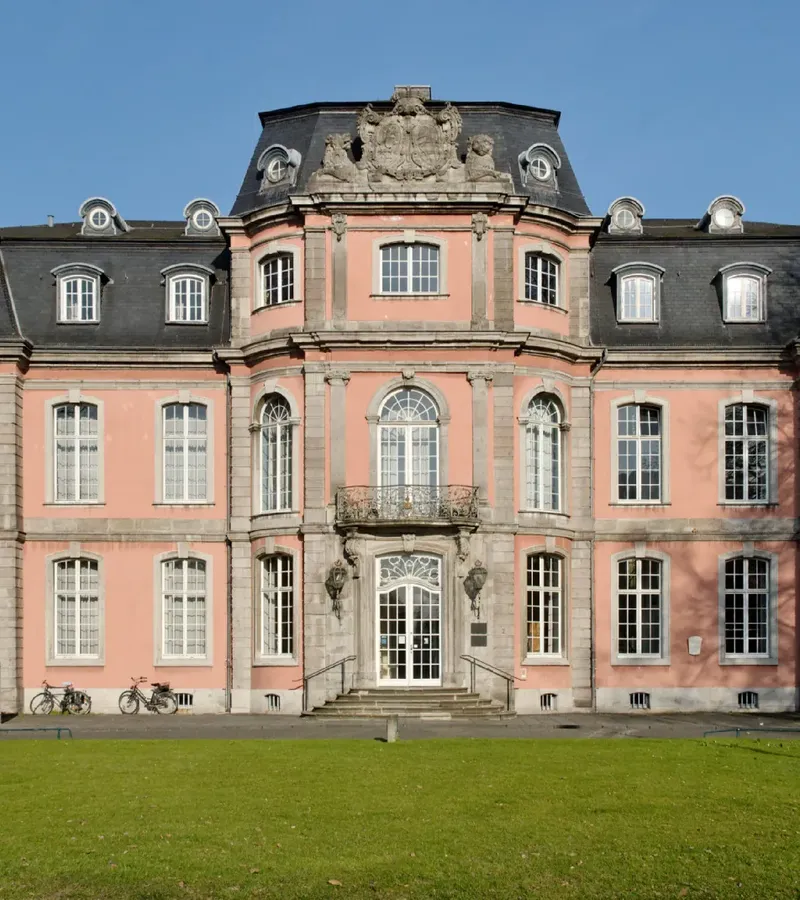
Literary and cultural history of the Goethe era.
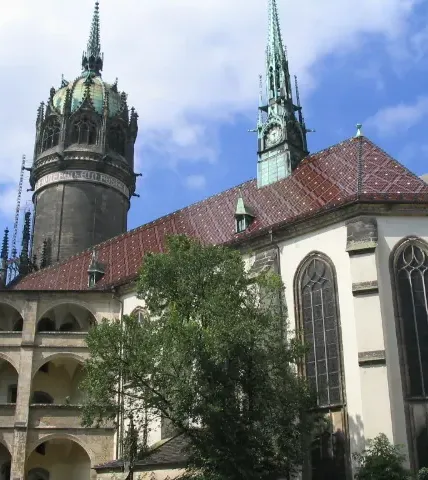
Central place in the history of the Reformation.
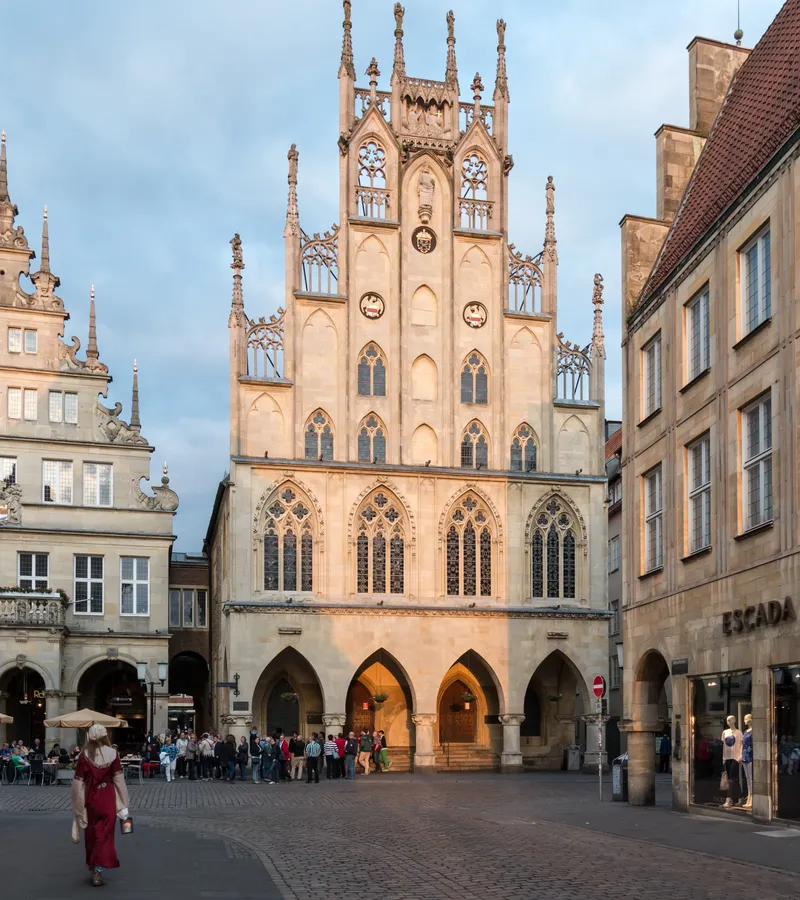
Site of the Peace of Westphalia, i.e. the end of the 30-year war.
Residence, ruin and symbol of the early modern era.
City of the Wartburg. This is where Luther translated the Biebel.
Goethe's birthplace and place of remembrance.
Literary and cultural history of the Goethe era.
Central place in the history of the Reformation.
Site of the Peace of Westphalia, i.e. the end of the 30-year war.
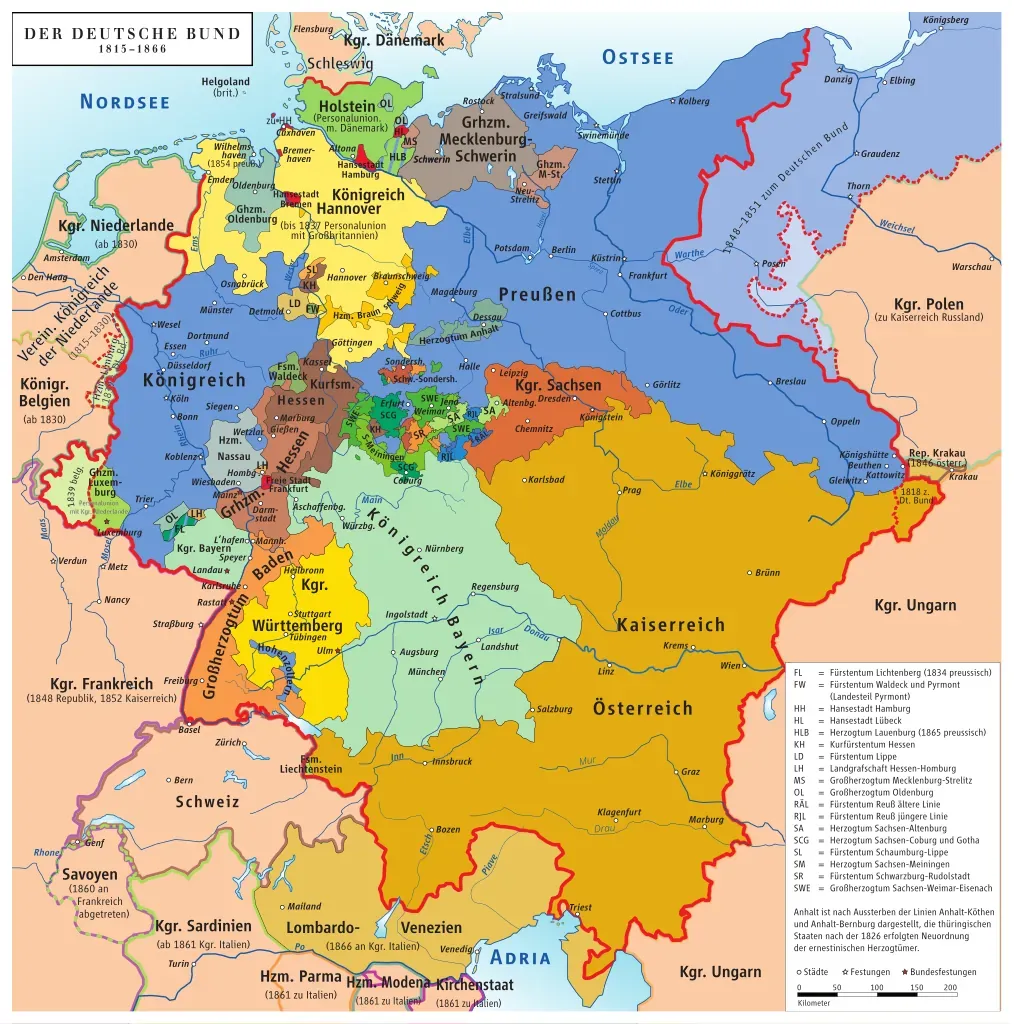
In the 18th century, Germany experienced the Enlightenment, an intellectual movement that emphasized reason, science, and individual rights. Philosophers such as Immanuel Kant and Johann Wolfgang von Goethe shaped the thinking of the time. At the same time, political theories emerged that challenged absolutism and the power of monarchs. The French Revolution (1789) had a profound impact on Germany. It inspired political and social changes and led to a series of reforms in the German states. Many small, fragmented principalities and kingdoms were transformed by the Napoleonic Wars (1803–1815). However, Napoleon was defeated and driven back at the Battle of Leipzig. The Congress of Vienna in 1815 reorganized Europe following the Napoleonic Wars and created the German Confederation, a loose confederation of German states.
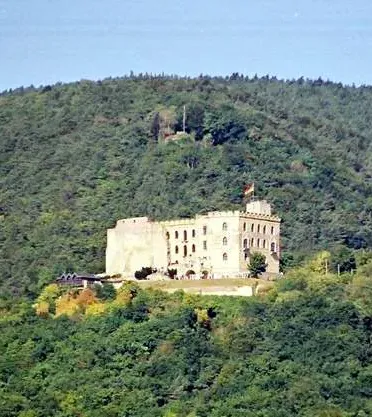
Symbol of the German democracy movement.
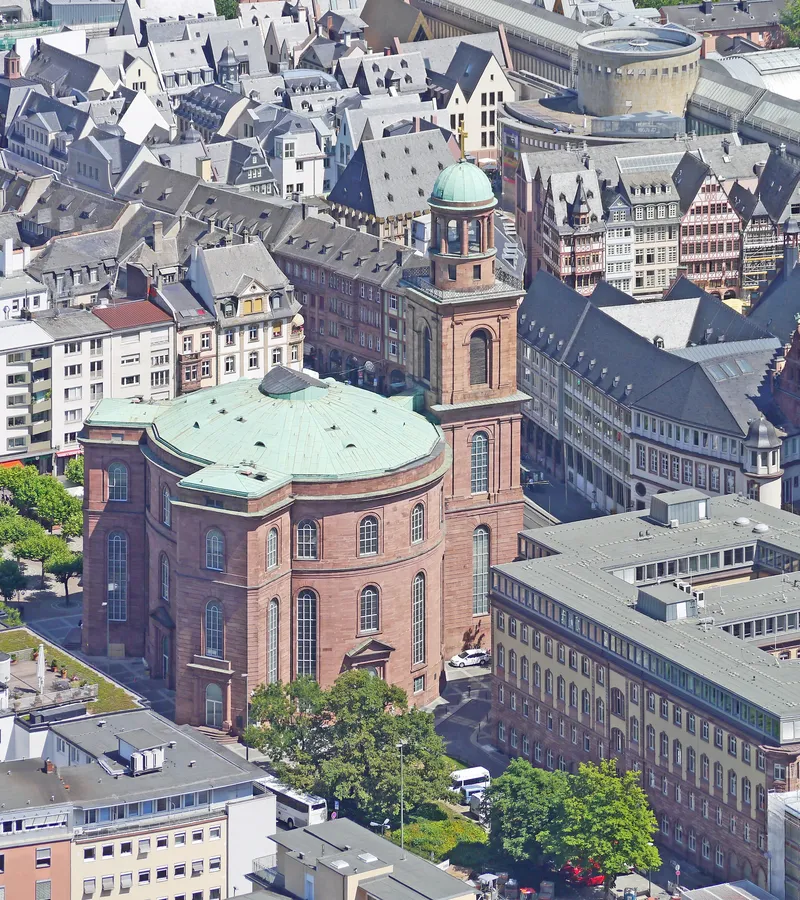
Symbol of the 1848 revolution and the history of German democracy.
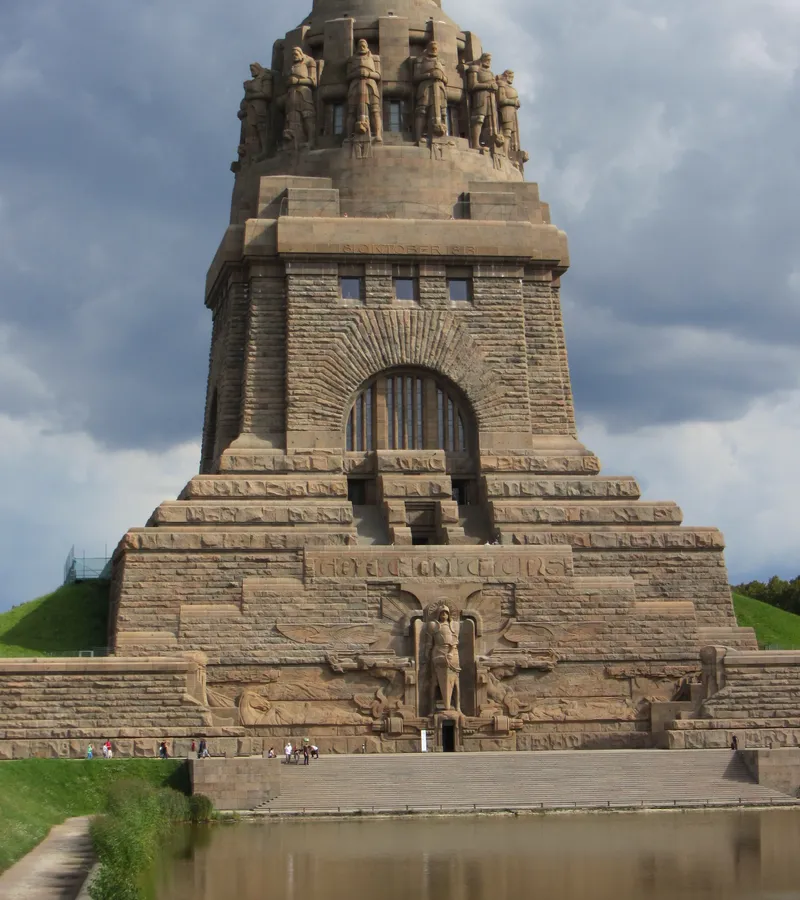
Remembrance of the wars of liberation and national images of history.
Symbol of the German democracy movement.
Symbol of the 1848 revolution and the history of German democracy.
Remembrance of the wars of liberation and national images of history.
In the first quarter of the 19th century, political and social discontent grew in Germany, leading to the revolutions of 1848. These revolutions called for national unity, liberal rights, and a constitution. Popular uprisings occurred in many German states, but the revolution failed as the monarchical forces retained their power. Nevertheless, this uprising fostered a growing sense of national identity and spurred reforms. Today, the Paulskirche (Frankfurt am Main)—the seat of the first German parliament in 1848—and Hambacher Castle (Rhineland-Palatinate)—the site of the Hambach Festival in 1832—serve as reminders of the revolution.
Another milestone was the founding of the German Empire in 1871, which was unified as a nation-state under the leadership of Otto von Bismarck following the victory over France in the Franco-Prussian War (1870–1871). Bismarck, who played a central role as Imperial Chancellor, succeeded in uniting a multitude of German principalities and kingdoms into a federal state. The founding of the Empire marked the beginning of industrialization and Germany’s development into one of Europe’s leading economic powers.
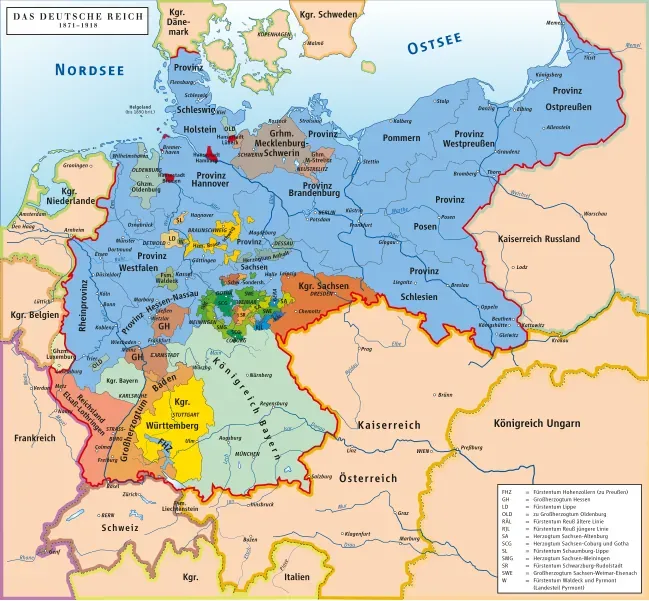
Industrialization also led to the growth of cities, where factories and new technologies shaped the world of work. The emergence of a labor movement and the demand for social and political rights began to reshape the political agenda.
As imperialism grew, the German Empire joined the international race for colonies beginning in the 1880s and acquired territories in Africa and the Pacific—including regions in what are now Namibia, Tanzania, Cameroon, Togo, Papua New Guinea, Micronesia, and Samoa. After World War I, however, Germany was forced to cede these colonies under the terms of the Treaty of Versailles.
However, the political landscape of the German Empire was marked by tensions between the monarchy and parliament, social unrest, and growing militarism. Bismarck’s foreign policy sought to maintain a balance among the European powers, but tensions and nationalism in Germany and the rest of Europe intensified, leading to the emergence of a complex system of alliances that ultimately culminated in World War I.
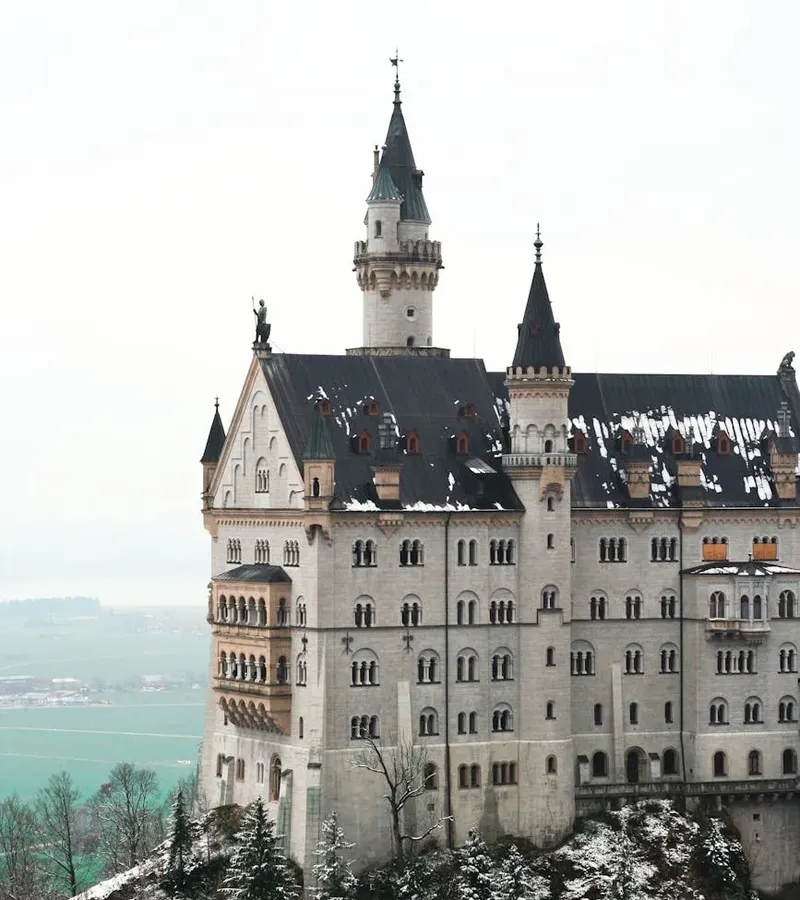
Symbol of monarchist splendor.
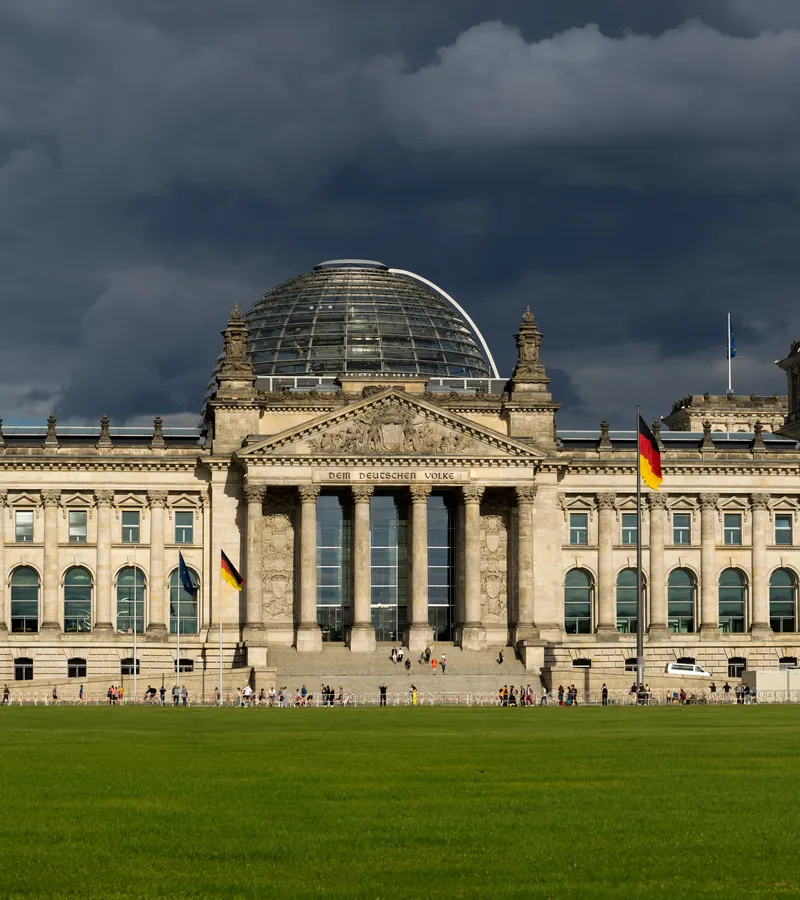
Seat of the Reichstag since 1894, today the Bundestag.
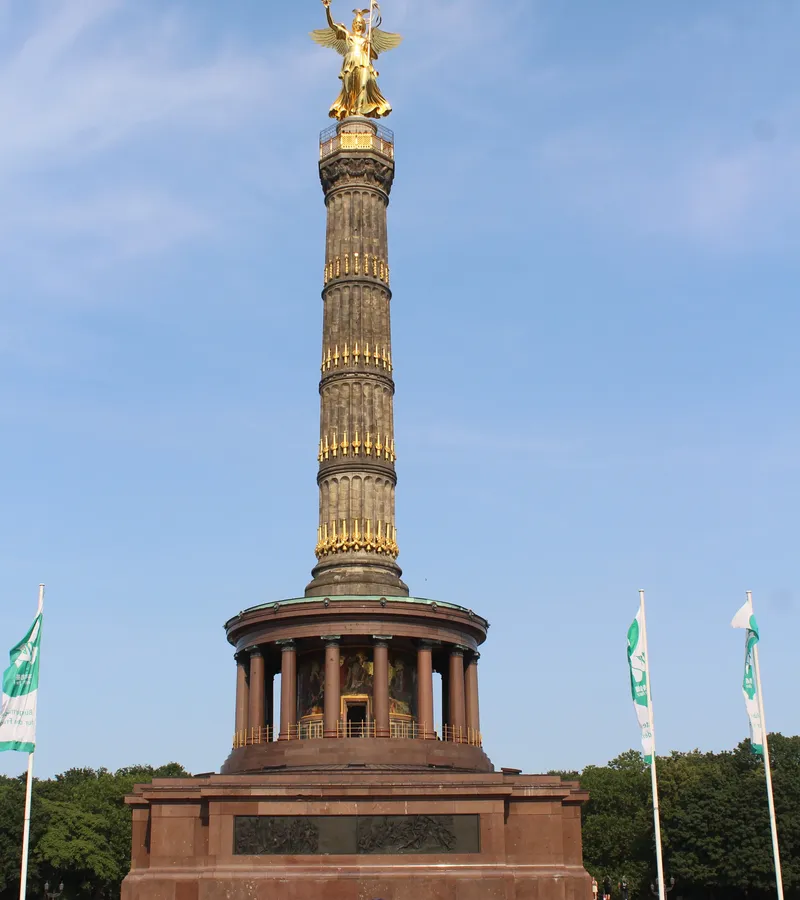
Built after the unification wars of 1864-1871.
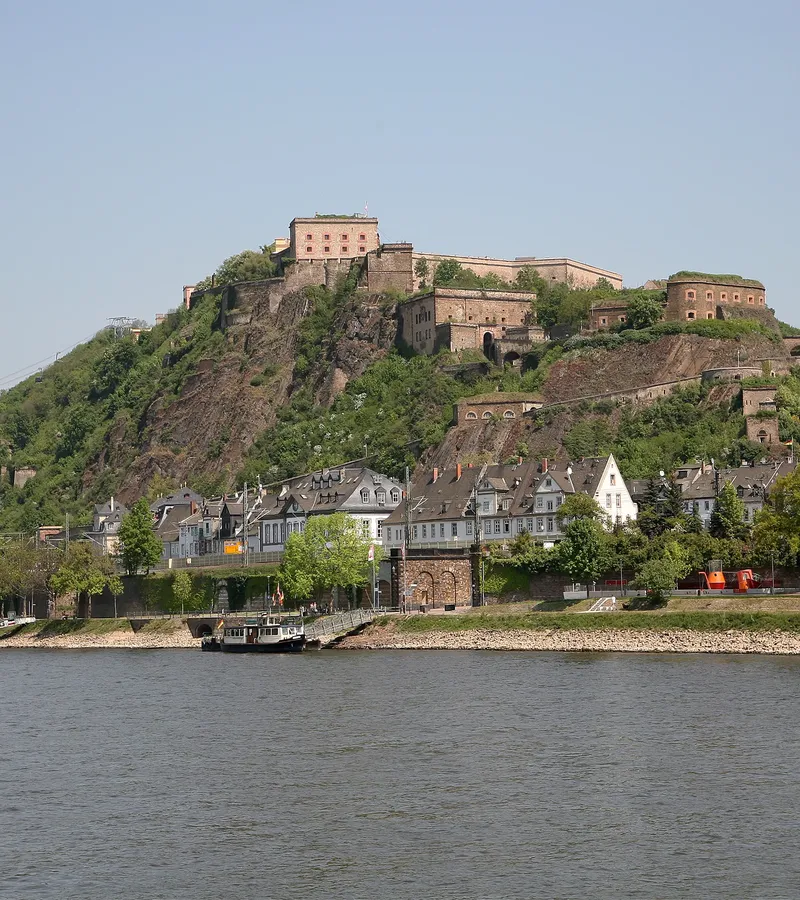
One of the largest surviving fortresses from this period.
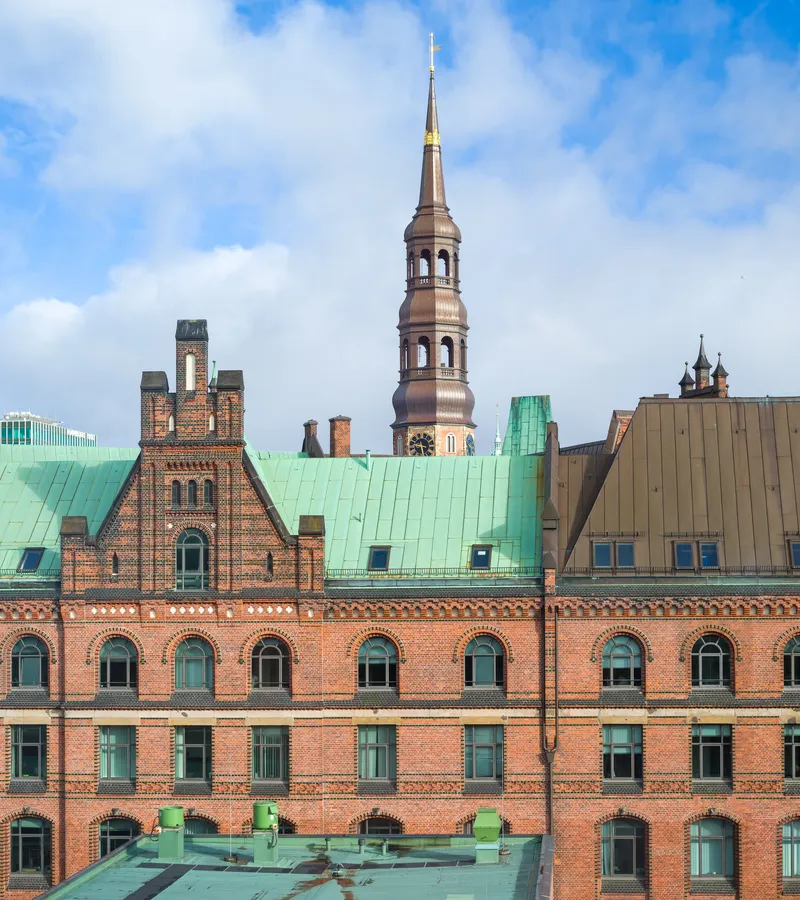
Built as a trading center during the imperial era.
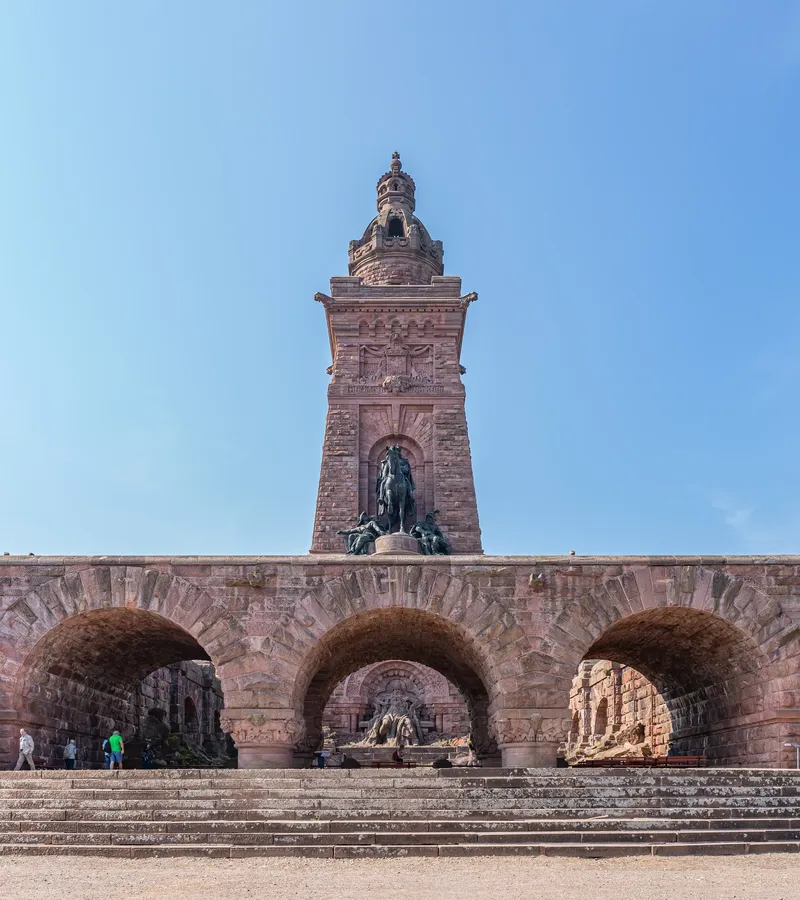
National monument to Kaiser Wilhelm I in Thuringia.
Symbol of monarchist splendor.
Seat of the Reichstag since 1894, today the Bundestag.
Built after the unification wars of 1864-1871.
One of the largest surviving fortresses from this period.
Built as a trading center during the imperial era.
National monument to Kaiser Wilhelm I in Thuringia.
The war began in the summer of 1914 following the assassination of the Austrian heir to the throne, Franz Ferdinand. As an ally of Austria-Hungary, Germany fought against the Entente powers (France, Great Britain, Russia, and later the United States). The war turned into a grueling war of attrition, particularly on the Western Front in France and Belgium. Millions of soldiers died in the trenches under extreme conditions.
In 1918, the situation for Germany continued to deteriorate. The Allies were advancing on all fronts, and the United States reinforced the pressure on the German lines with fresh troops. On November 9, 1918, the German Empire collapsed, and Kaiser Wilhelm II was forced to abdicate. Two days later, on November 11, 1918, the armistice was signed, bringing the war to an end.
While World War I left few physical traces in Germany itself, many monuments, cemeteries, and museums serve as reminders of the war’s victims and consequences. The most striking physical remnants, such as trenches and destroyed villages, are found in France and Belgium.
The Treaty of Versailles of 1919 laid out the terms of peace, imposing harsh conditions on Germany as the main loser and designating it as the sole instigator of the war. The country had to accept territorial losses (Alsace-Lorraine to France, West Prussia to Poland), disarmament, reparations payments, and an enormous war debt. These conditions led to deep discontent and political instability in the Weimar Republic, which emerged in 1919 as Germany’s new democratic government following the end of the German Empire.
The Weimar Republic was the first democracy in German history and was established after the fall of the German Empire. Its political structure was unstable, marked by strong political extremists on the left (Communists) and right (Nationalists). Although the Weimar Constitution guaranteed democratic rights, the government was constantly confronted with crises, including hyperinflation (1923), the Great Depression (1929), and social unrest.
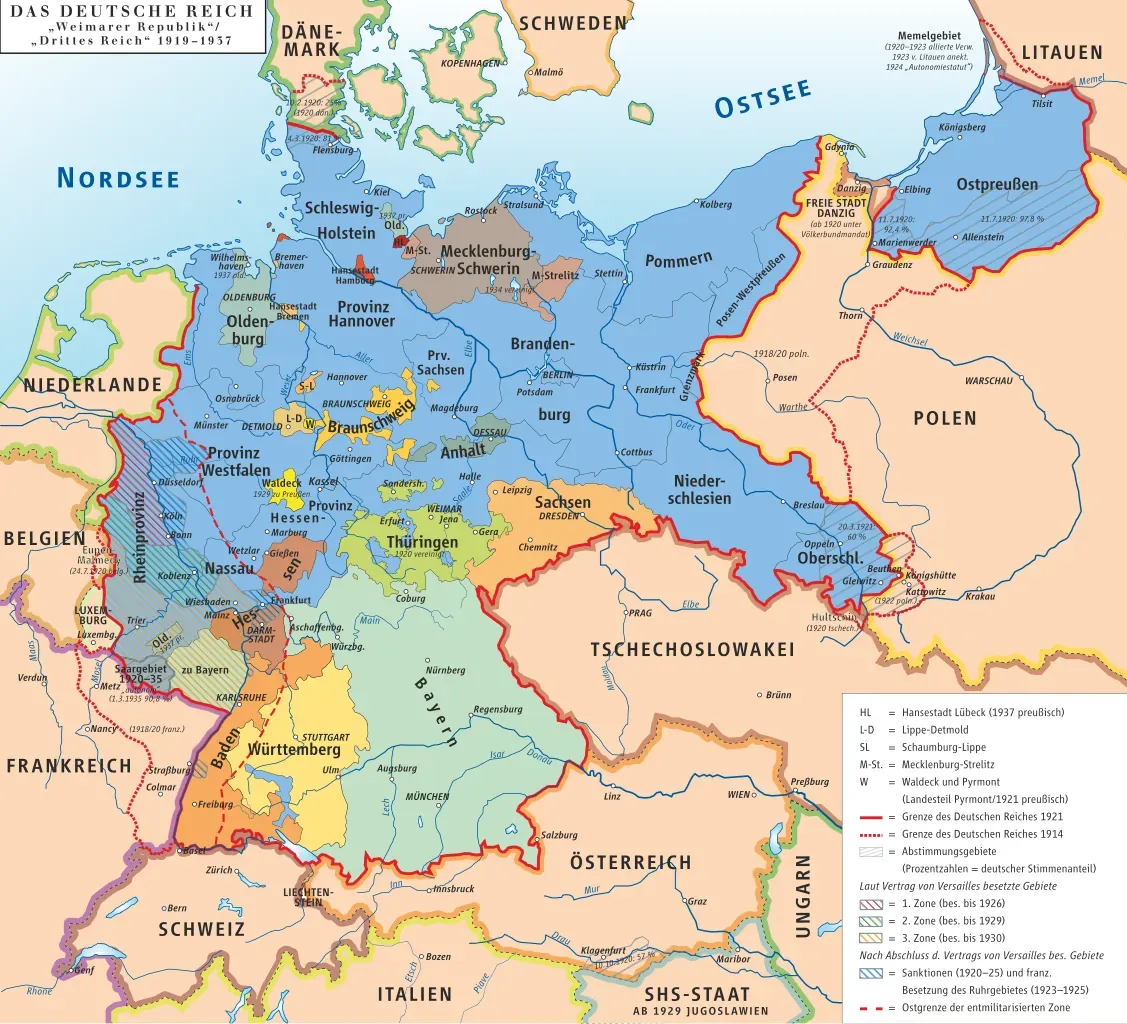
Despite its difficulties, the Weimar Republic experienced a cultural renaissance in the late 1920s, giving rise to a world-renowned era in literature, art, theater, and film. However, economic instability and political radicalization led to radical groups, particularly the National Socialists under Adolf Hitler, gaining influence.
In the early 1930s, Germany experienced a severe economic and social crisis due to the Great Depression. Unemployment and poverty were widespread. This created a favorable climate for extremist parties that promised to save the country. Adolf Hitler’s National Socialist German Workers’ Party (NSDAP), founded in 1920, gained massive support during this period.
Hitler exploited the political uncertainties and dissatisfaction with the Weimar Republic to convince the people of his vision of a strong, nationalist Germany. In 1932, the NSDAP won 33% of the vote in the Reichstag elections, and in 1933, Hitler was appointed Reich Chancellor by President Hindenburg. He soon seized absolute power and began to dismantle democratic institutions, suspend the constitution, and suppress political opponents.
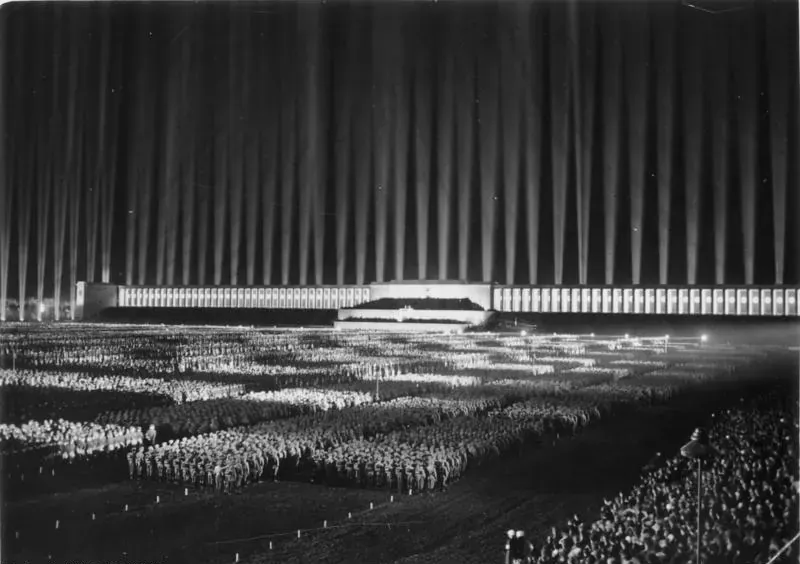
After Hitler seized power, the Nazification of Germany began. The regime launched an aggressive propaganda campaign that promoted the image of a “reborn” Germany. Political opponents (especially communists), Jews, Sinti and Roma, homosexuals, and other minorities were persecuted. In 1935, the Nuremberg Laws were enacted, which established the discrimination and disenfranchisement of Jews. Many Jews subsequently attempted to leave Germany, which was not easy, as there was no right to asylum at the time. Others hoped that this was merely a phase that would eventually pass. Hitler pursued an aggressive foreign policy aimed at expanding the German Reich. The annexation of Austria (Anschluss, 1938) and the dismantling of Czechoslovakia through the occupation of the Sudetenland and later the entire country (1939) were the first steps in this expansion.
The international community initially responded with appeasement, a policy of concessions aimed at preventing war. But Hitler’s demands for more territory in Europe became increasingly insatiable. In 1939, the German-Soviet Non-Aggression Pact was signed, allowing Germany to invade Poland without fear of Soviet intervention.
Medieval town with imperial castle and Nazi memorials.
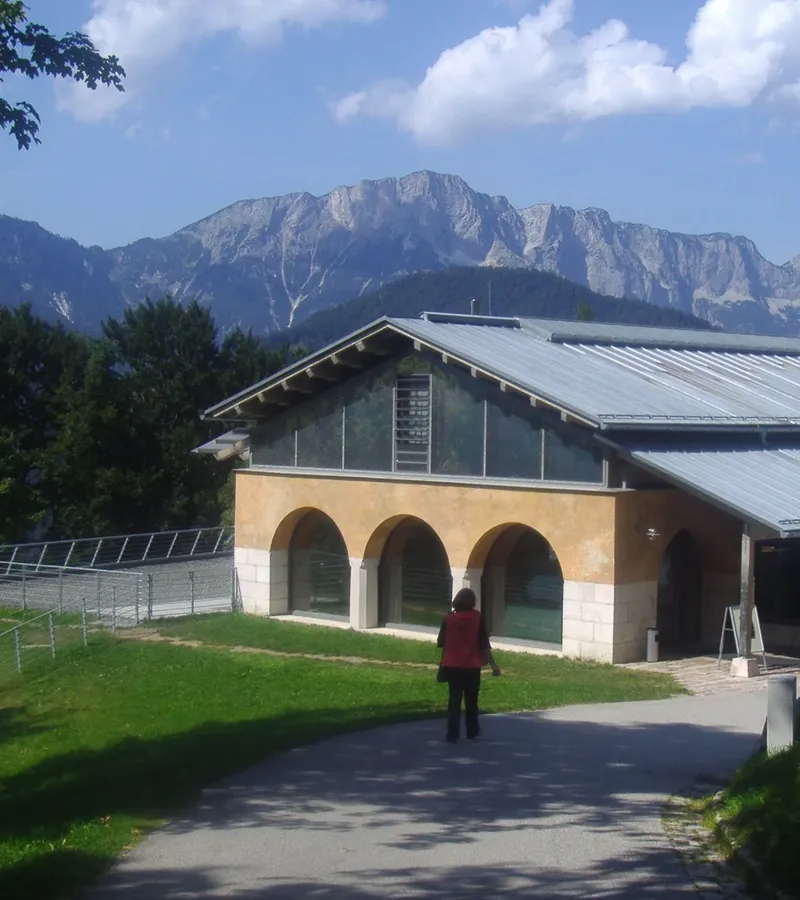
Exhibition on Obersalzberg and the Nazi regime.
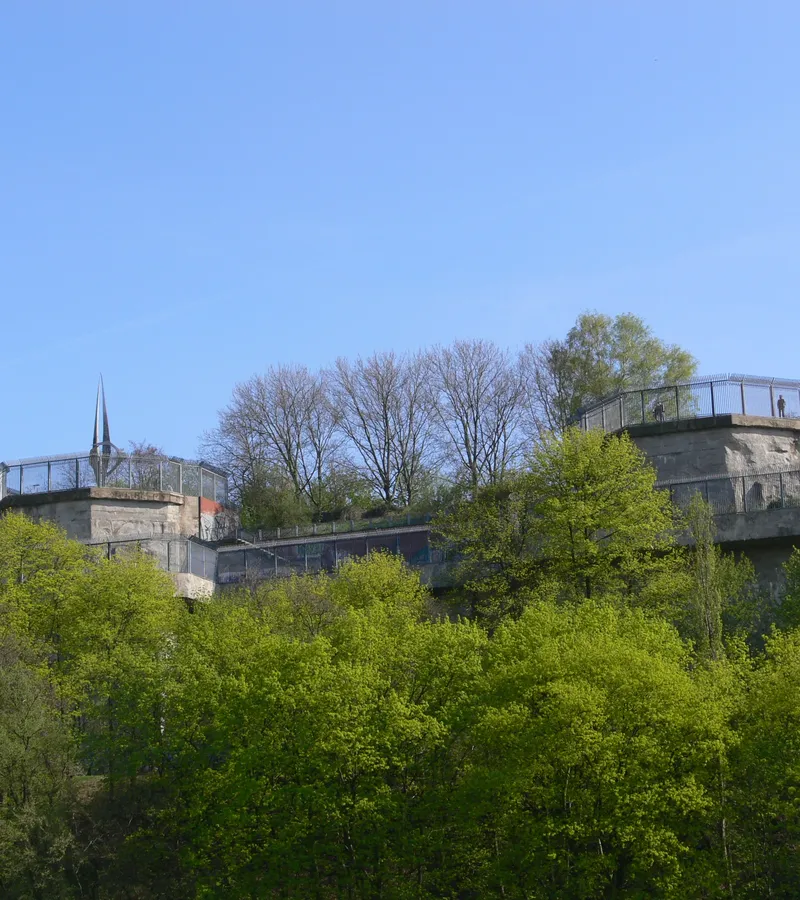
Preserved air raid and flak tower from the Second World War.
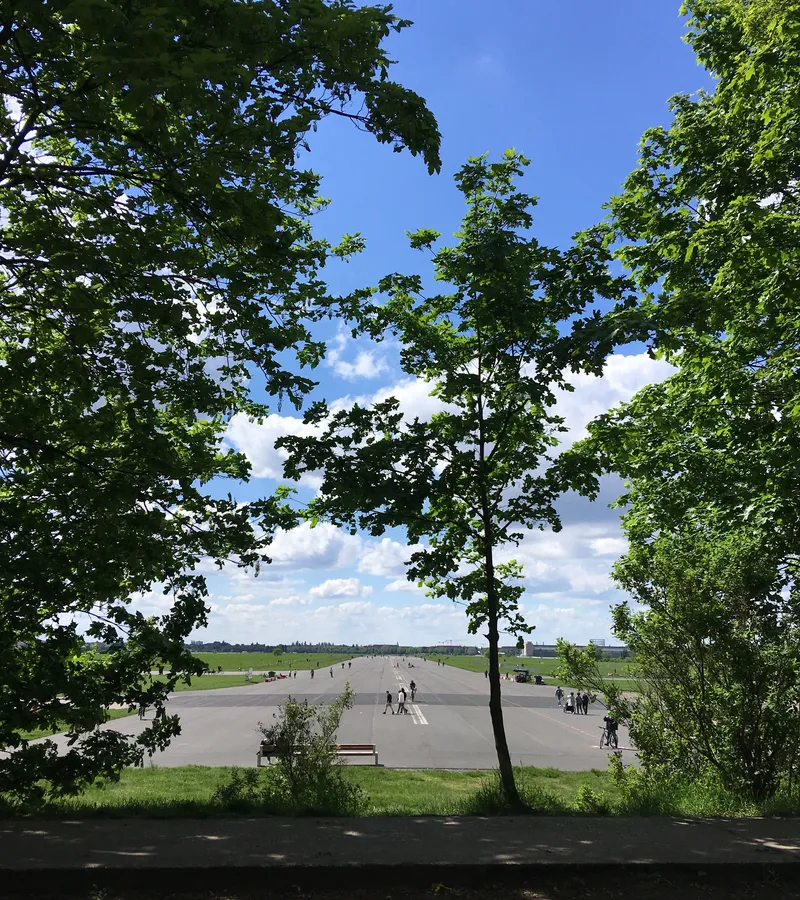
Monumental building from the Nazi era and later site of the Berlin Airlift.
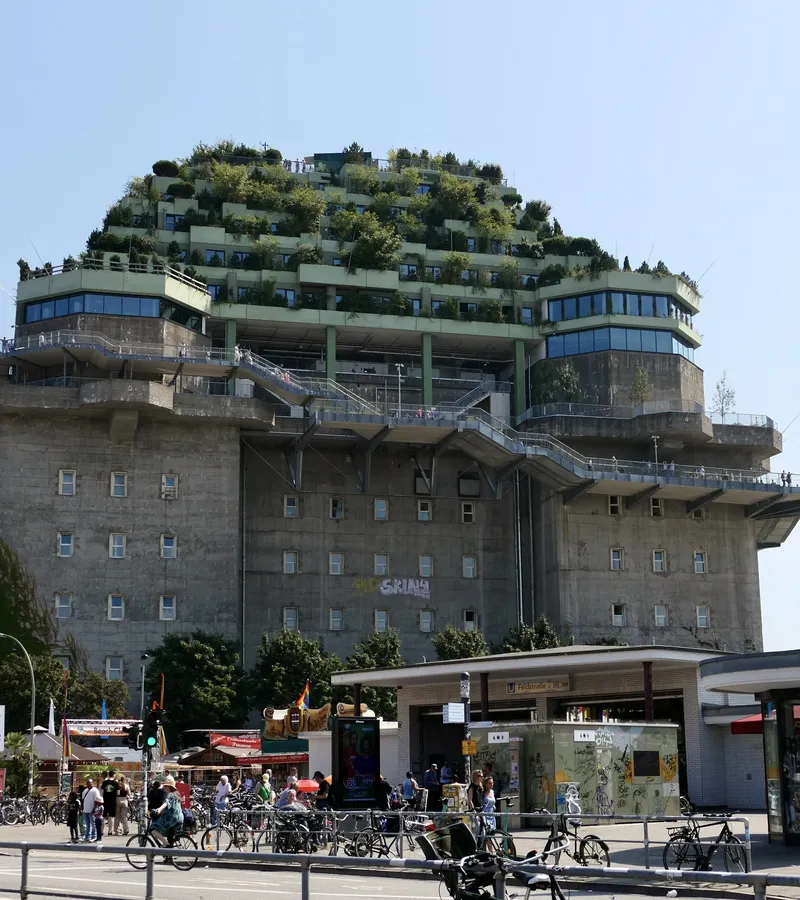
Former high-rise bunker and flak tower in the middle of Hamburg.
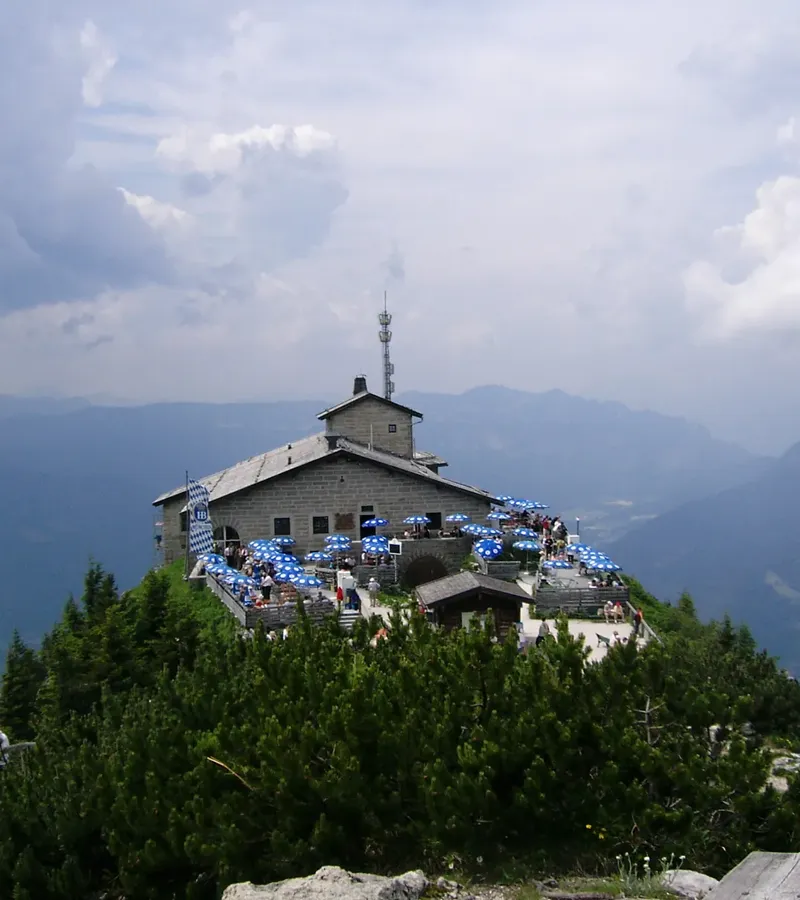
Hitler spent a lot of time here during the war.
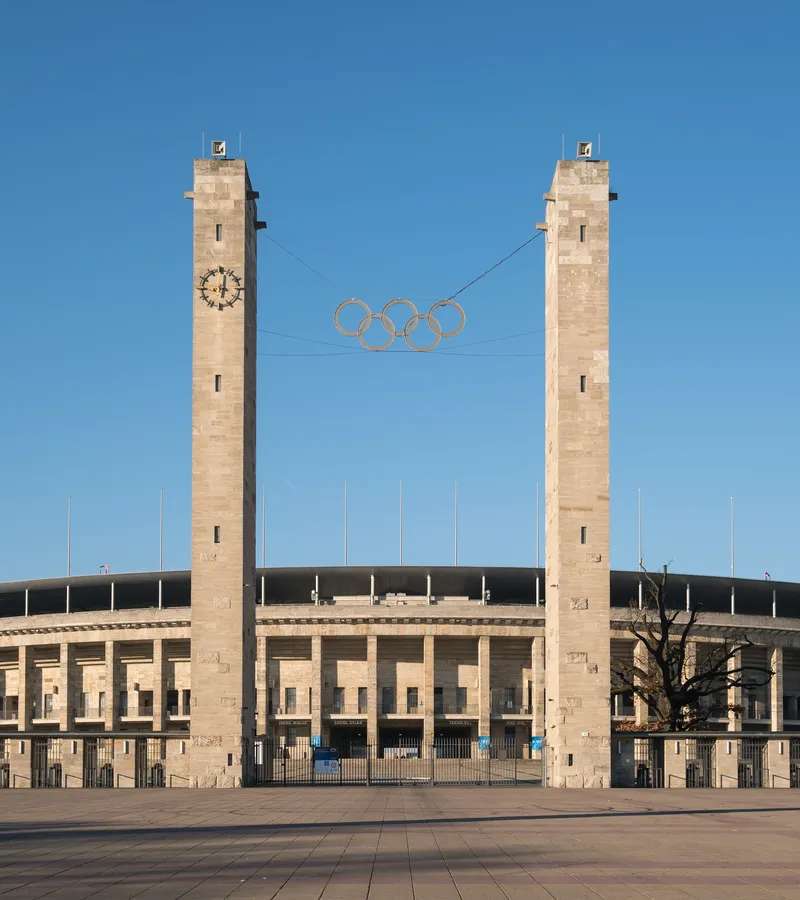
Building from the Nazi era and site of the 1936 Olympic Games.
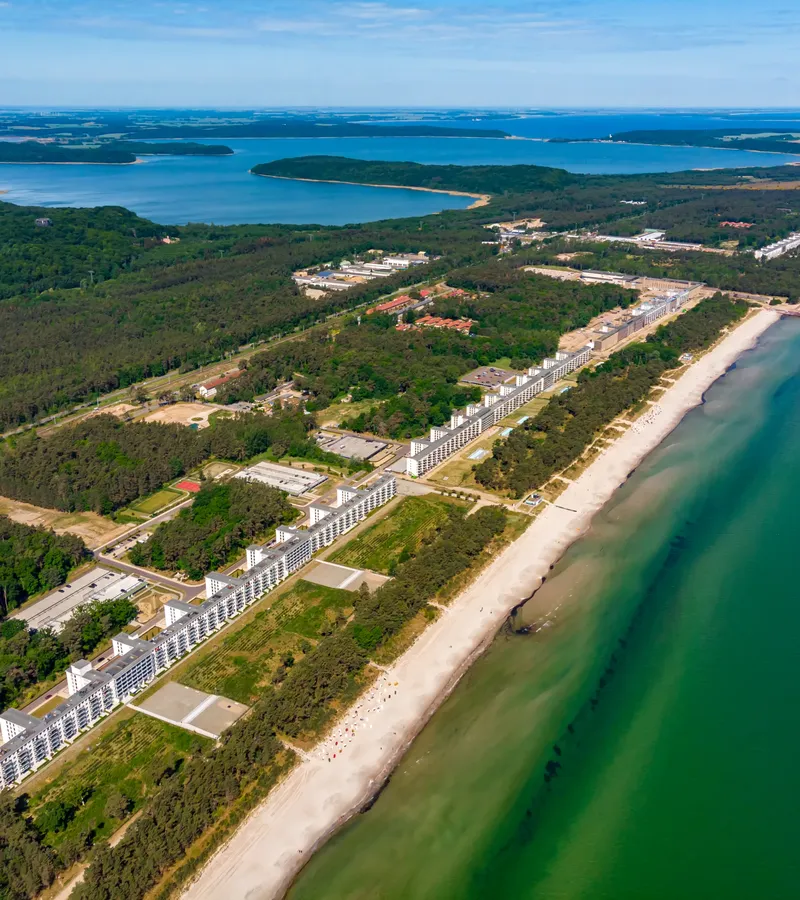
Nazi seaside resort on Rügen and today a place of remembrance.
Medieval town with imperial castle and Nazi memorials.
Exhibition on Obersalzberg and the Nazi regime.
Preserved air raid and flak tower from the Second World War.
Monumental building from the Nazi era and later site of the Berlin Airlift.
Former high-rise bunker and flak tower in the middle of Hamburg.
Hitler spent a lot of time here during the war.
Building from the Nazi era and site of the 1936 Olympic Games.
Nazi seaside resort on Rügen and today a place of remembrance.
World War II began on September 1, 1939, with the German invasion of Poland and quickly led to Britain and France declaring war on Germany. In the early years, the Wehrmacht achieved rapid successes, occupied large parts of Europe, and launched an invasion of the Soviet Union in 1941. After the defeat at the Battle of Stalingrad in 1943, the tide turned, and the Allies increasingly pushed back German forces. The Western Allies’ landing in Normandy in June 1944 accelerated the advance in the West, while the Red Army advanced from the East. In Germany, the war led to massive destruction, particularly due to Allied air raids that reduced cities such as Dresden, Hamburg, and Berlin to rubble. The Nazi dictatorship responded with brutal repression and intensified the Holocaust, in which over six million Jewish people were murdered. The war ended for Germany in 1945 with the Soviet capture of Berlin and Adolf Hitler’s suicide on April 30. On May 8, the German Wehrmacht surrendered unconditionally. Incidentally, the victorious powers of World War II (the U.S., the U.K., France, Russia, and China) have remained the permanent members of the United Nations Security Council since 1946.
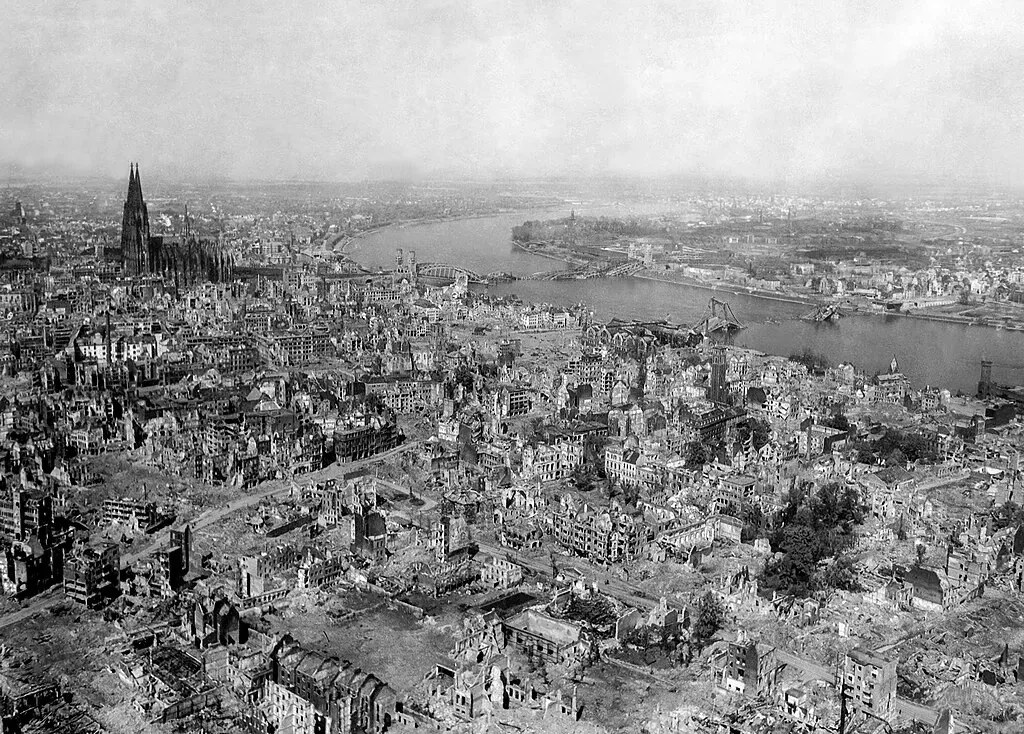
During the Nazi regime, approximately 66–75% of the Jewish population and 25–50% of the Roma population in Europe were murdered. The victims included not only Germans but also the populations of the occupied territories (especially in Eastern Europe). In Germany, a particularly large number of communists (100,000–250,000) were also murdered. In addition to numerous memorial sites, Germany also has “stumbling stones” at the former homes of victims, intended to commemorate their fate. The app provides information about the biographies of individual victims.
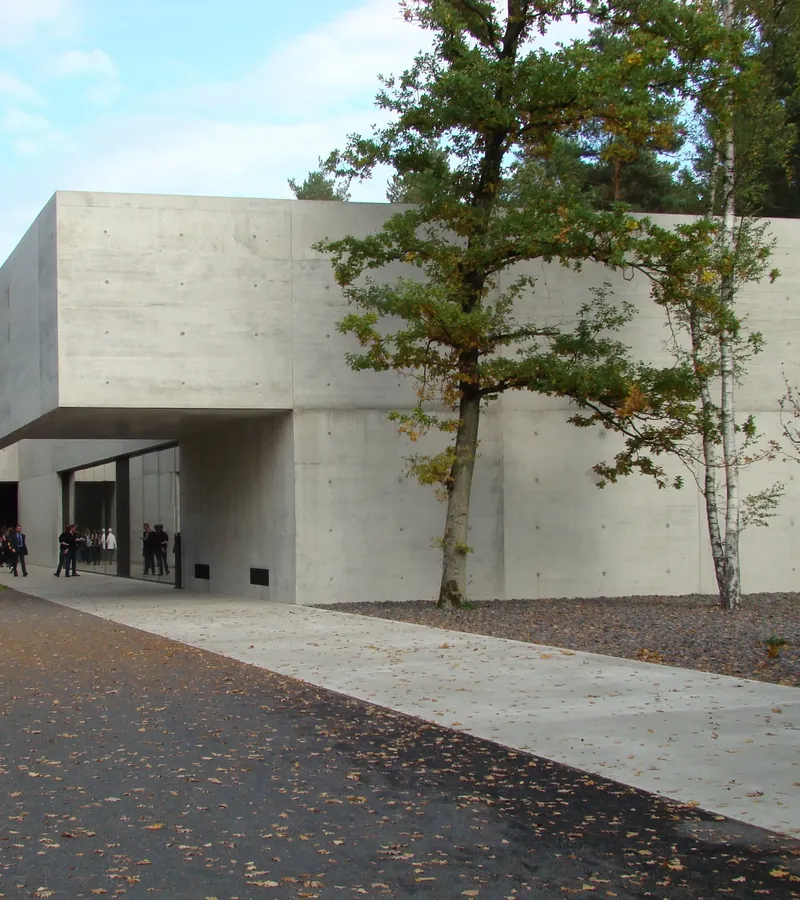
Memorial site in Lower Saxony.
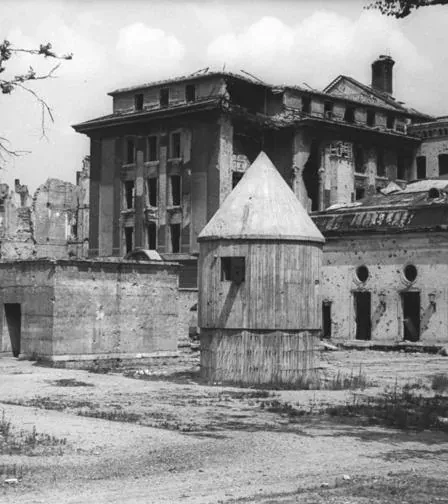
Site of the end of the Nazi leadership in Berlin.
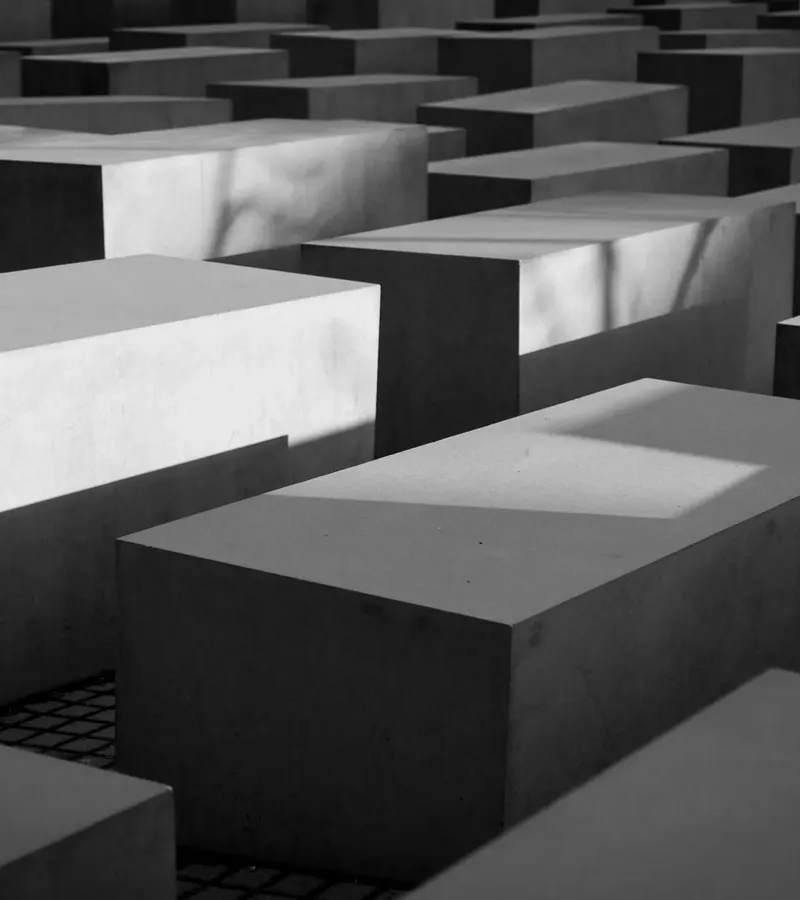
Central place of remembrance for the murdered Jews of Europe.
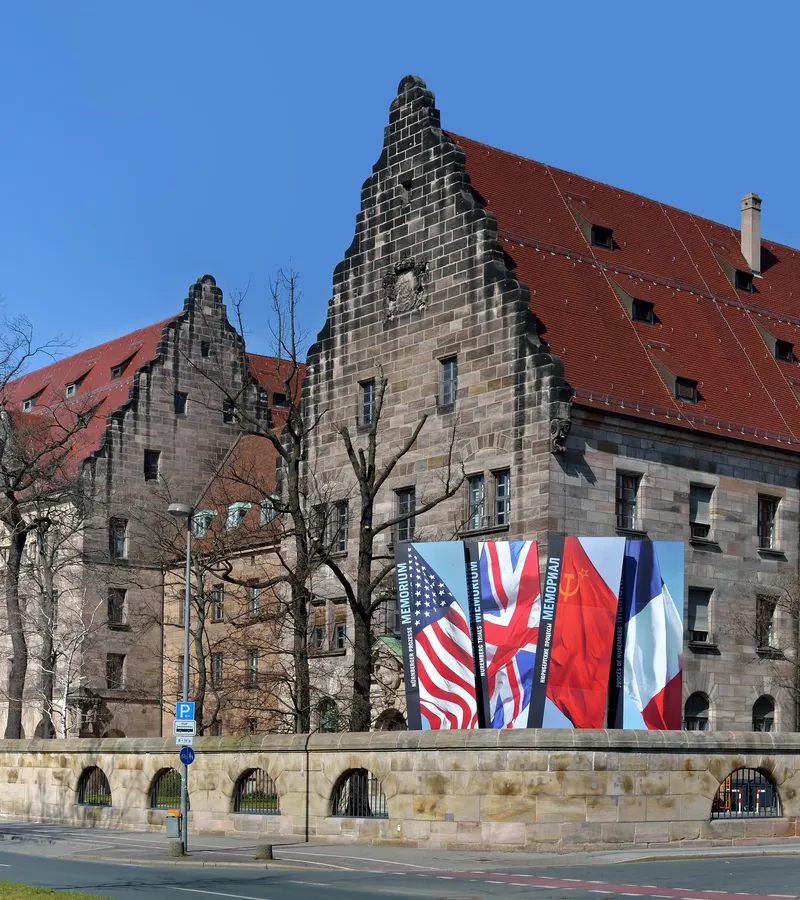
Site of the Nuremberg Trials.
Hitler spent a lot of time here during the war.
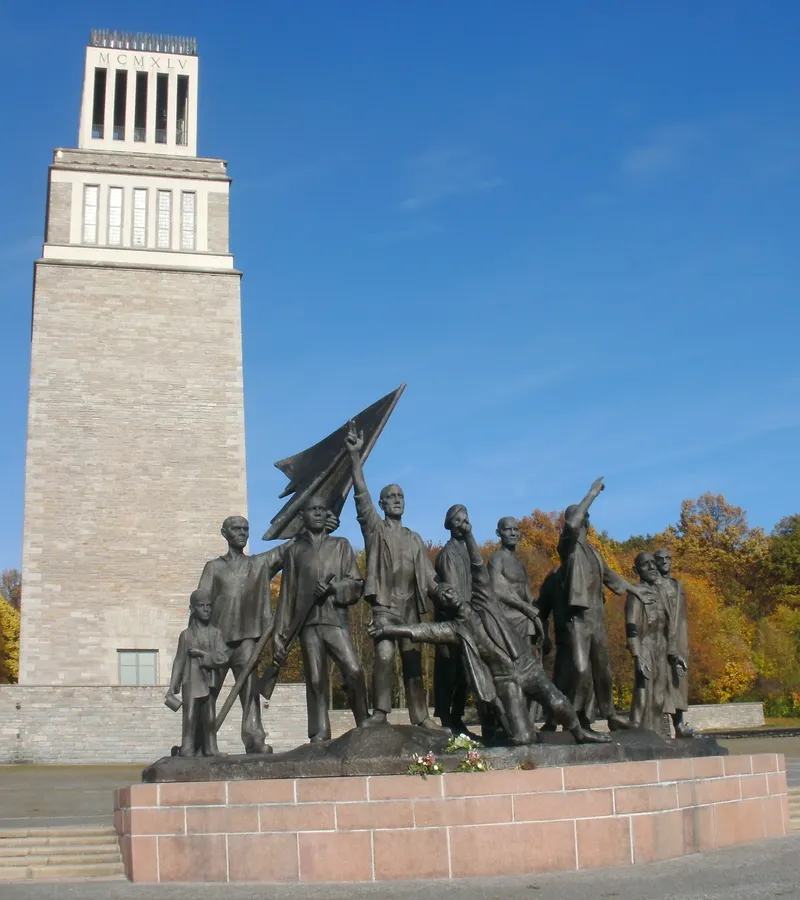
Memorial site near Weimar.
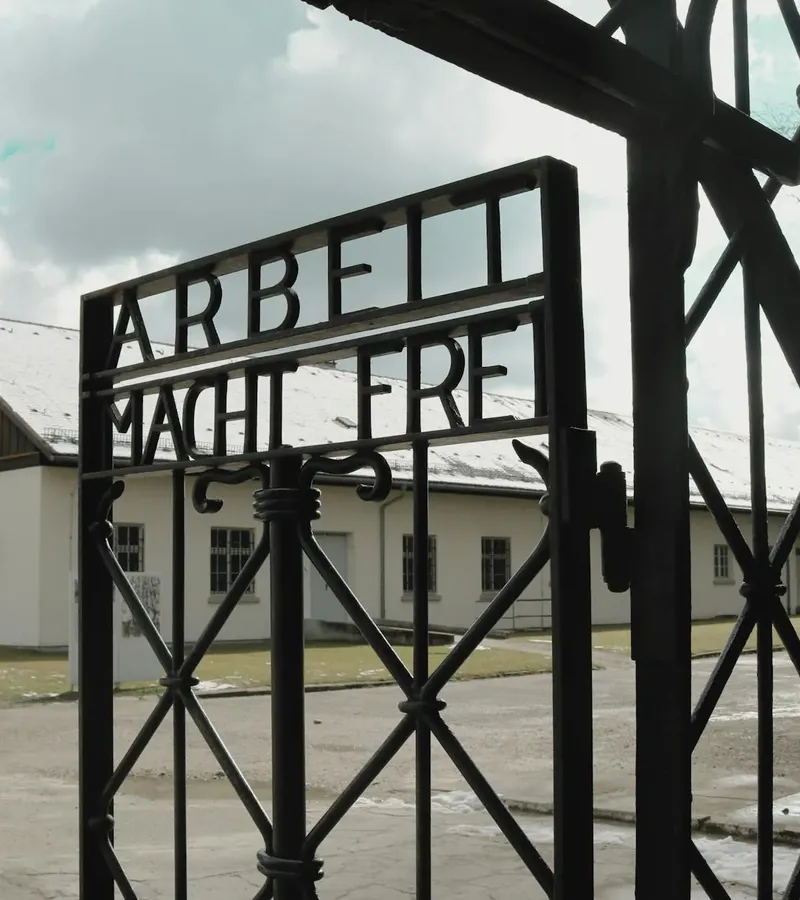
Memorial on the site of the former concentration camp.
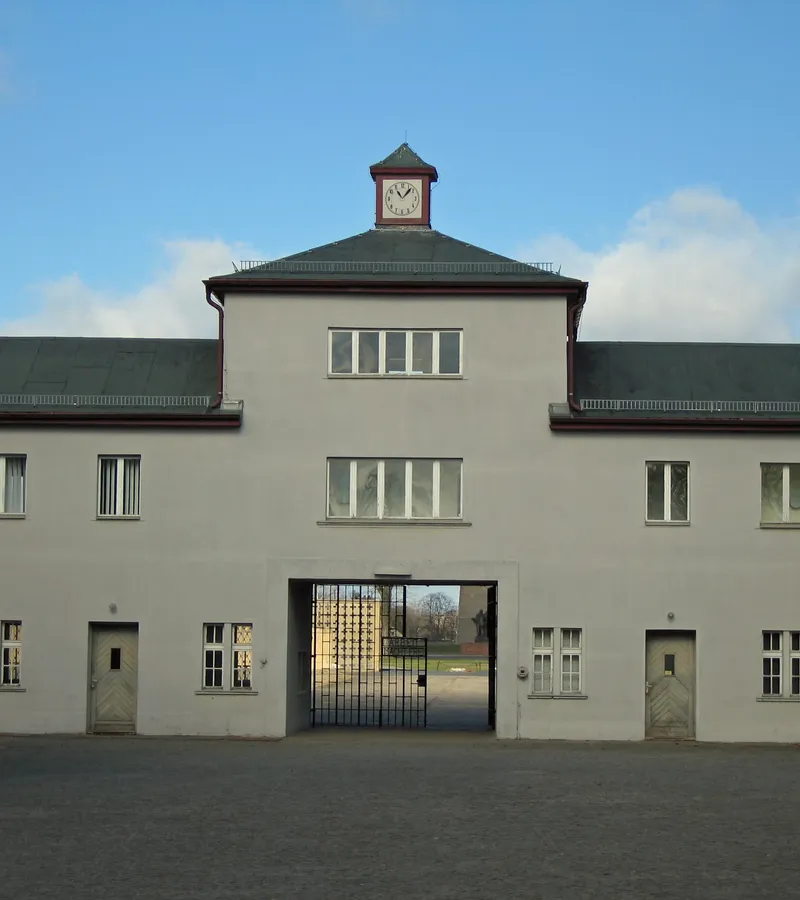
Memorial in Oranienburg near Berlin.
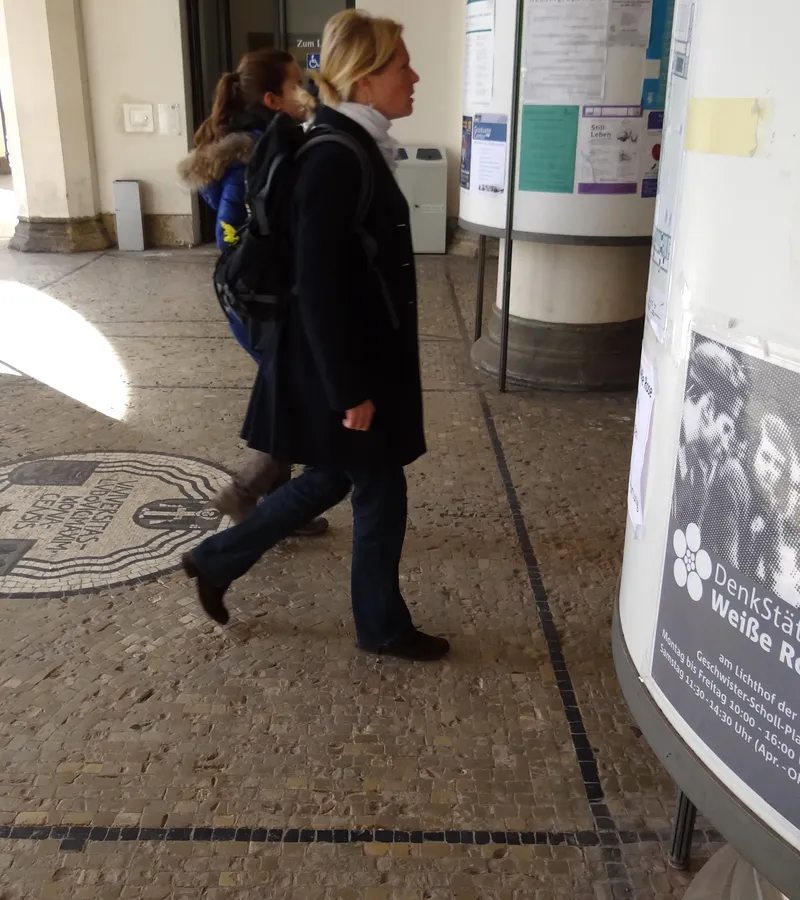
Remembrance of the resistance group in Munich.
Memorial site in Lower Saxony.
Site of the end of the Nazi leadership in Berlin.
Central place of remembrance for the murdered Jews of Europe.
Site of the Nuremberg Trials.
Hitler spent a lot of time here during the war.
Memorial site near Weimar.
Memorial on the site of the former concentration camp.
Memorial in Oranienburg near Berlin.
Remembrance of the resistance group in Munich.
World War II ended on May 8, 1945, with Germany’s unconditional surrender. The country was heavily damaged, and millions of people were dead or injured. The Allies (the United States, the United Kingdom, France, and the Soviet Union) divided Germany into four occupation zones, with each of the four major powers controlling one zone.
Berlin, the capital, was also divided into four sectors, even though it was located deep within the Soviet zone. This division was originally intended to be temporary, but political tensions between the Western Allies and the Soviet Union soon led to a permanent division.
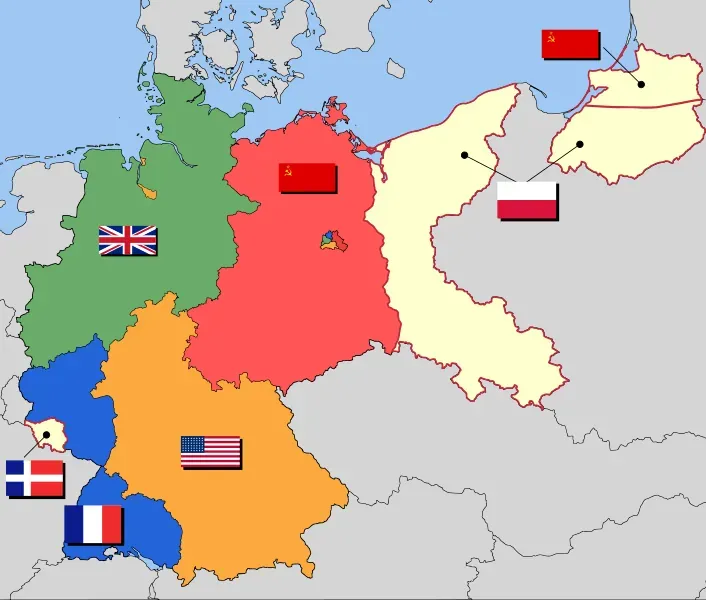
As a result of World War II, Germany lost about a quarter of its pre-war territory. The greatest territorial losses were in the eastern regions (East Prussia, Silesia, Pomerania, East Brandenburg, Kaliningrad, and the Sudetenland), which were ceded to Poland and the Soviet Union. Another loss was Alsace-Lorraine, which went to France. Between 12 and 14 million Germans were expelled from the lost territories, leading to an additional housing shortage in the rest of Germany.
These territorial losses were decided upon in the Potsdam Agreement (1945) and were not recognized under international law until the Two Plus Four Treaty (1990).
In 1949, Germany was formally divided into two states:
This division reflected the Cold War, which split the world into two ideological blocs: the Western bloc, led by the United States and its allies, and the Eastern bloc, led by the Soviet Union. The division is somewhat similar to the one between North and South Korea today, although North Korea is a far more restrictive dictatorship than the GDR was at the time.
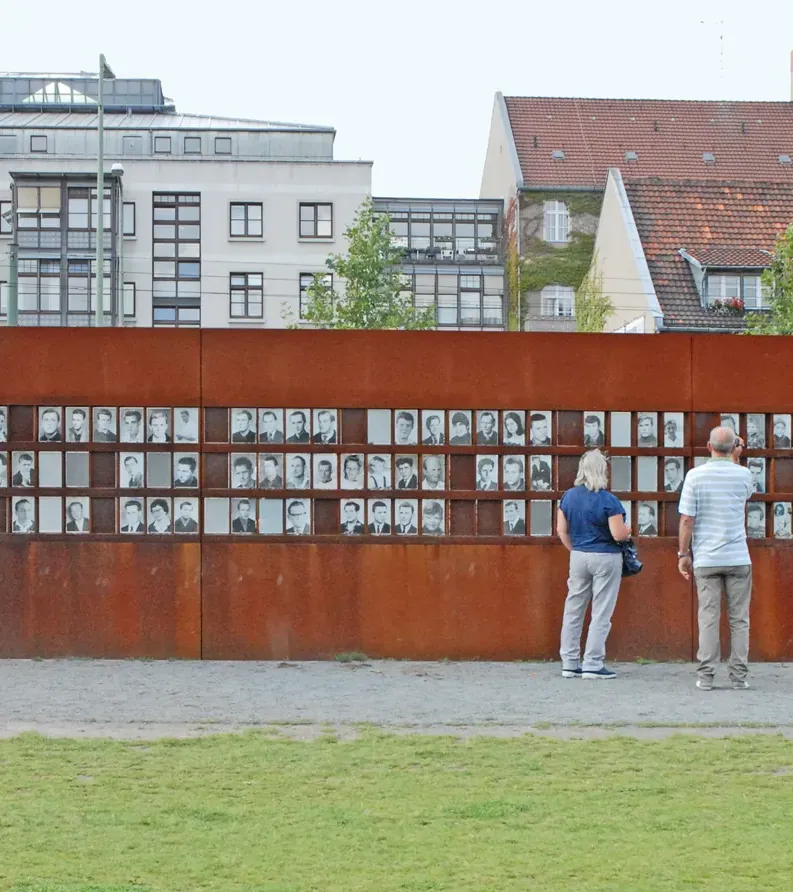
Documentation and memorial to the division of Berlin.
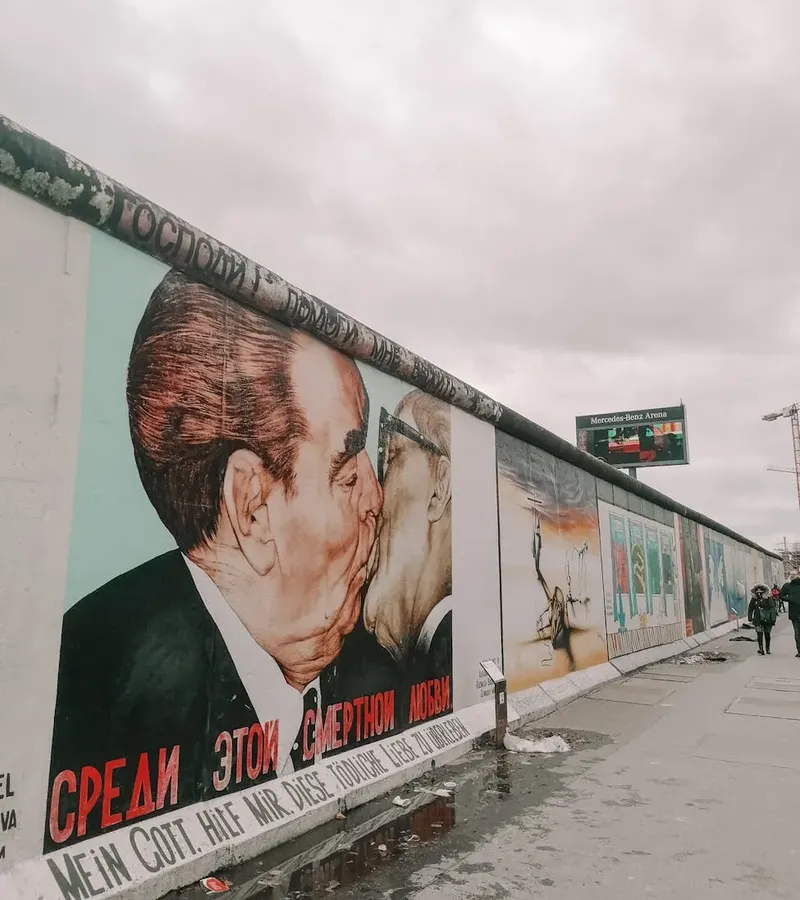
Preserved piece of the Berlin Wall with works of art.
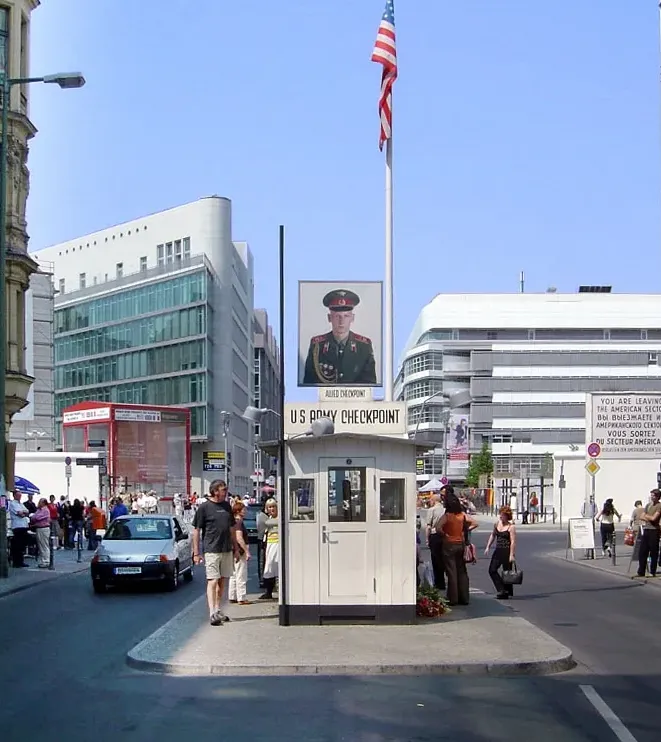
Former border crossing and symbol of the Cold War.
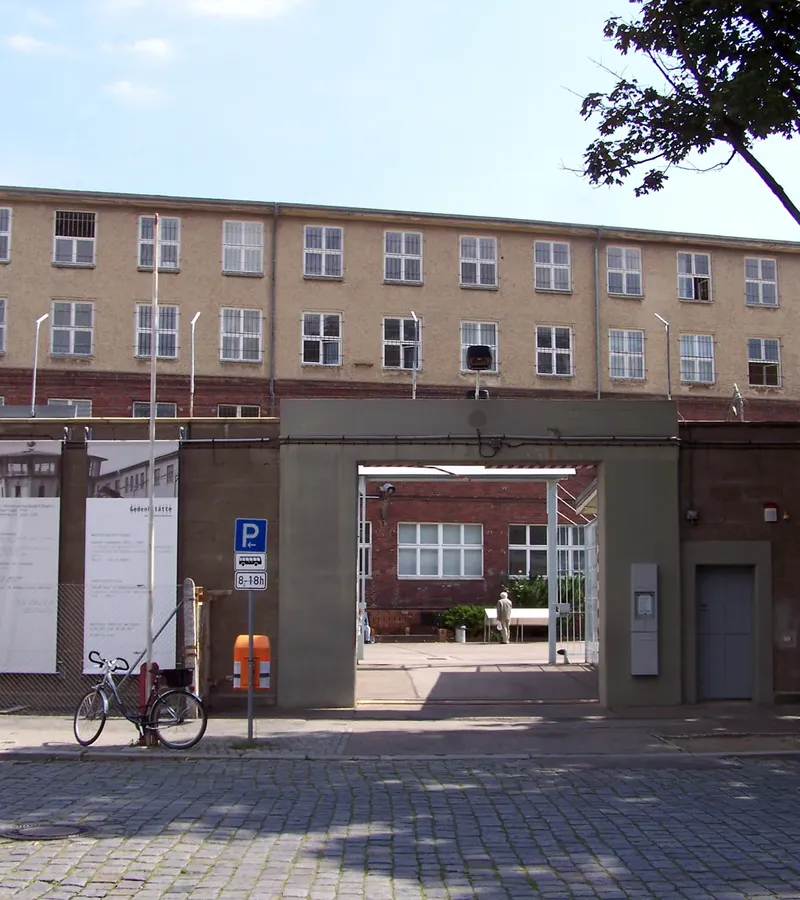
Former Stasi prison and memorial to the history of the GDR.
Documentation and memorial to the division of Berlin.
Preserved piece of the Berlin Wall with works of art.
Former border crossing and symbol of the Cold War.
Former Stasi prison and memorial to the history of the GDR.
In the 1950s and 1960s, the Federal Republic of Germany experienced a remarkable economic miracle, fueled by postwar reconstruction and the Marshall Plan, which provided Western aid to revive the economy. This led to rapid industrialization, a rise in living standards, and the emergence of a broad middle class.
The political landscape was initially dominated by conservative forces under Konrad Adenauer, but in the 1960s, the social-liberal coalition under Willy Brandt gained influence. Brandt’s Ostpolitik, which aimed to build closer ties with the East, led to a thaw in relations with the GDR and the Soviet Union.
Life in the GDR was heavily influenced by state control. The SED (Socialist Unity Party of Germany) ruled with an iron fist, and there was little political freedom, but extensive surveillance by the Stasi (State Security). However, the government also promoted social services such as free education and healthcare and sought to create its own brand of socialist prosperity. A particularly large number of people with college degrees fled from the GDR to the FRG, which was initially quite easy, especially in Berlin. With the construction of the Berlin Wall, the GDR put a stop to this possibility. Furthermore, the population was granted exit permits to the West only in exceptional cases (e.g., the wedding of close relatives), and even then only for part of the family.
The Berlin Wall was arguably the most visible symbol of the division. It was built in 1961 to prevent people from fleeing from East Germany to the West. A wall had previously existed between what are now the old and new federal states, but until then it had been easy to cross from the communist part of Berlin to the West German part. Families were separated, and people who tried to flee risked their lives, as they were shot at by GDR soldiers.
Both sides engaged in intense propaganda. In the GDR, Western media were labeled “enemy broadcasters,” and capitalism was portrayed as exploitative. In West Germany, the restrictions in the GDR were highlighted as oppression and a lack of freedom. “Der Schwarze Kanal,” a GDR television program, commented on Western reports in a strongly ideological tone. In the GDR, Marxism was a required course in every academic discipline.
Both sides employed spies. The East German State Security (Stasi) had infiltrated agents into Western government agencies and companies, while the West attempted to gather information about the East German regime. A famous case was that of Günter Guillaume, who infiltrated the inner circle of West German Chancellor Willy Brandt as a spy and contributed to his resignation in 1974.
At the Olympic Games, West Germany and East Germany competed with their own teams, which was seen as a symbol of the division. East Germany ran an intensive doping program to achieve international success and portray the socialist system as superior.
The GDR supported radical left-wing groups in the West, including the RAF (Red Army Faction). Terrorists such as Inge Viett and Susanne Albrecht went into hiding in the GDR and were given new identities there. In addition, the Stasi provided logistical support for attacks and training camps for extremists.
The fall of the Berlin Wall in 1989 and the protests in the GDR led to the reunification of Germany in 1990. On October 3, 1990, Germany was officially reunified when the GDR joined the FRG, and the country once again existed as a unified state. This process was made possible by the collapse of the Soviet Union and the changes in Eastern Europe.
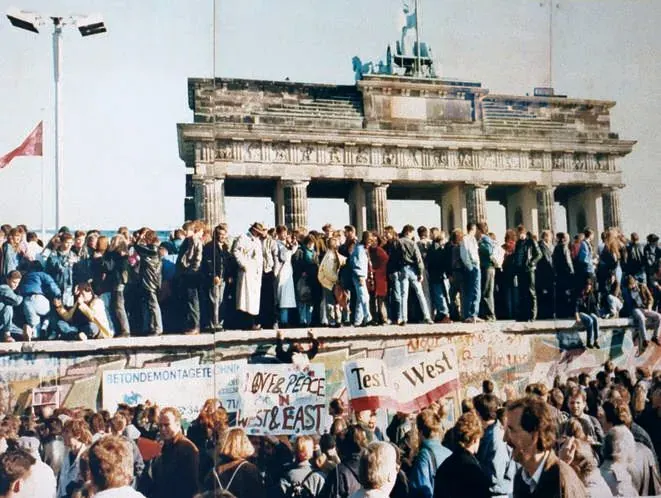
After reunification, Germany faced the challenge of integrating the different political and economic systems of the two parts of the country. The East-West divide and the disparities between the prosperous western states and the economically weaker eastern states led to tensions, but also to significant investment in the eastern part of the country. Since many East German businesses could not keep up with the West German economy or did not receive investment, they were forced to close, leading to high unemployment in the East. Many East Germans had to reorient themselves professionally or moved to the West.
Germany joined the European Union in 1991 and became part of the European Economic and Monetary Union in 2002. It has emerged as a leading economic power in Europe and a key player in international political and economic affairs.
In the 21st century, Germany has established itself as one of Europe’s leading economic powers and plays a central role in the European Union. Since reunification in 1990, the country has continued to evolve and now faces new challenges such as climate change, digitalization, and demographic change. Particularly significant were the 2008 financial crisis, the 2015 refugee crisis, and the COVID-19 pandemic, which posed economic and social challenges for the country. Germany is increasingly focusing on renewable energy and immigration. At the same time, political and social debates about migration, social justice, and Germany’s role in the world are at the forefront.