Dornburg Castles
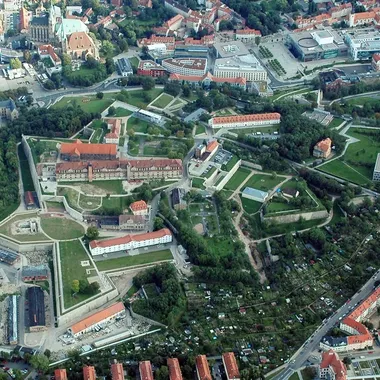
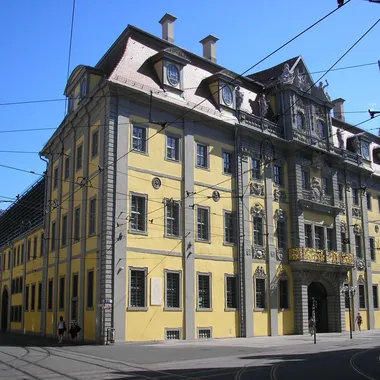
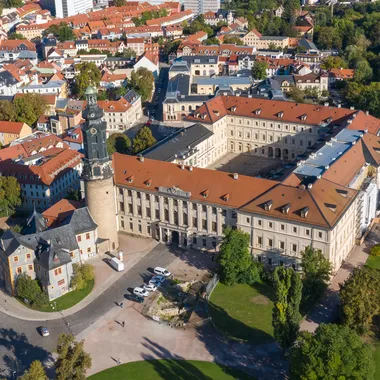
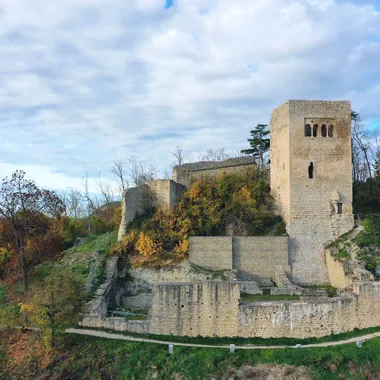
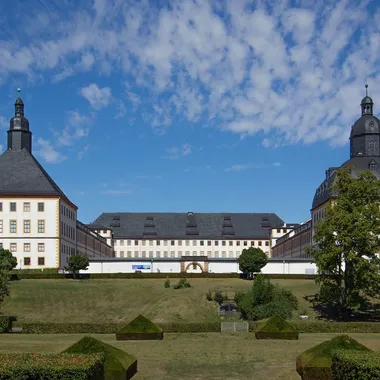
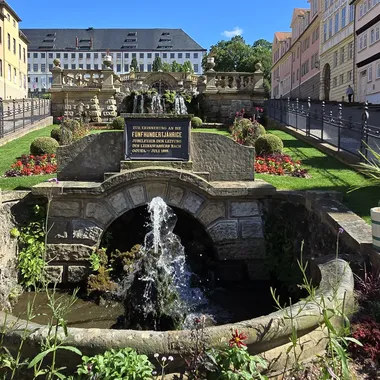
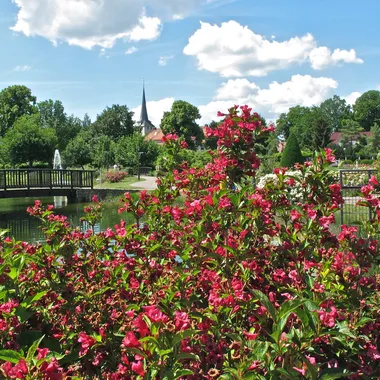
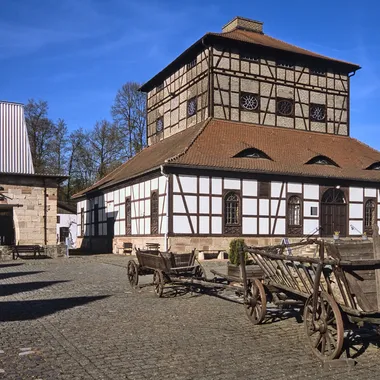
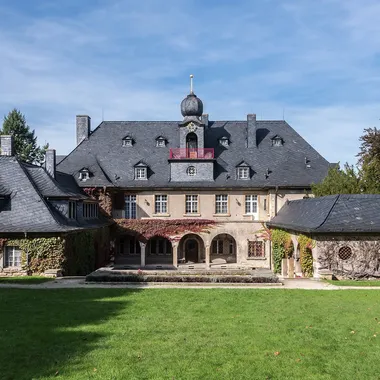
The picturesque Dornburg castles are located near Weimar.
Population: 2,170,000
Thuringia, the "green heart of Germany", impresses with its dense forests, historic cities and cultural highlights
From Wartburg Castle in Eisenach to the “City of Classics,” Weimar, and on to the Rennsteig in the Thuringian Forest, the state offers the perfect blend of nature, history, and culture. Thuringia also boasts culinary specialties, such as the famous Thuringian bratwurst and hearty Thuringian dumplings, which are a must on any menu.
The picturesque Dornburg castles are located near Weimar.
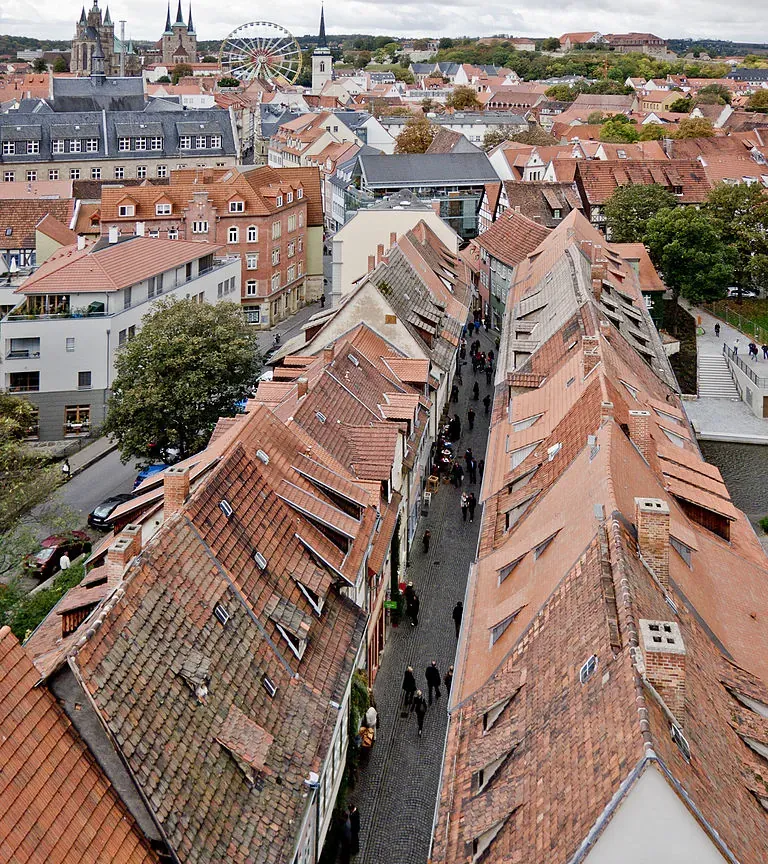
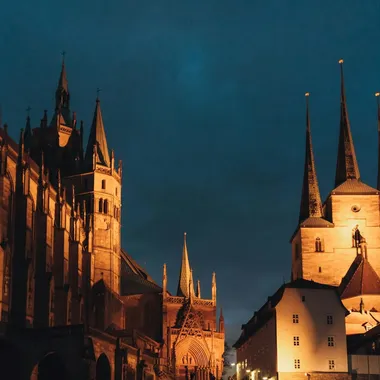
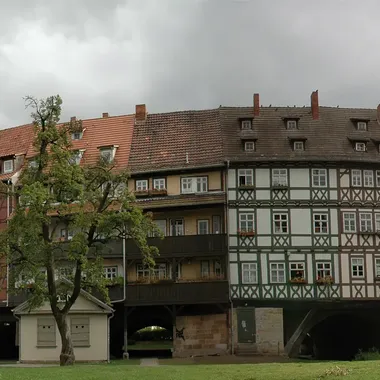
The capital city of Erfurt impresses with its well-preserved medieval old town, the imposing Erfurt Cathedral and the unique Krämerbrücke bridge.
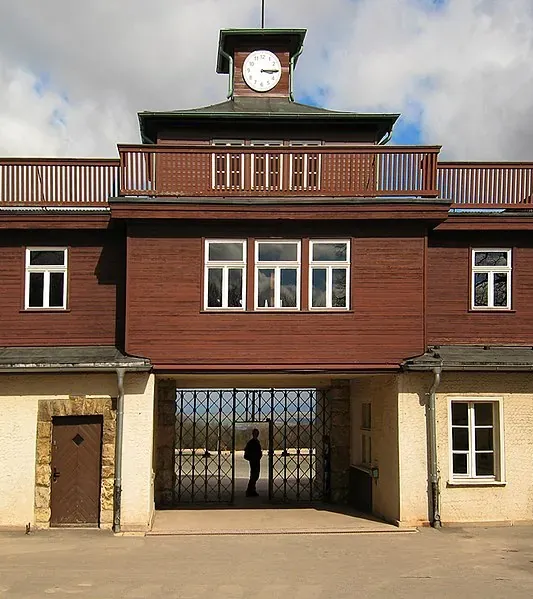
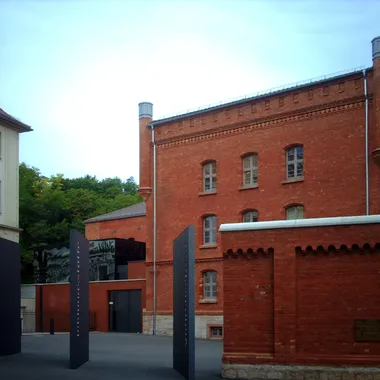
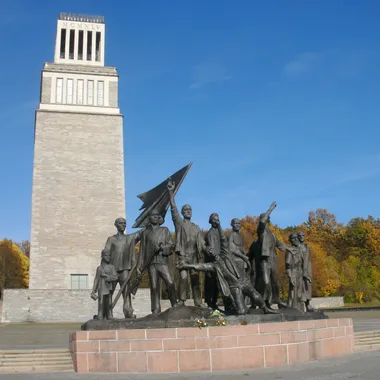
The former concentration camp memorial near Weimar commemorates the crimes of the Nazi era and offers moving insights into history.
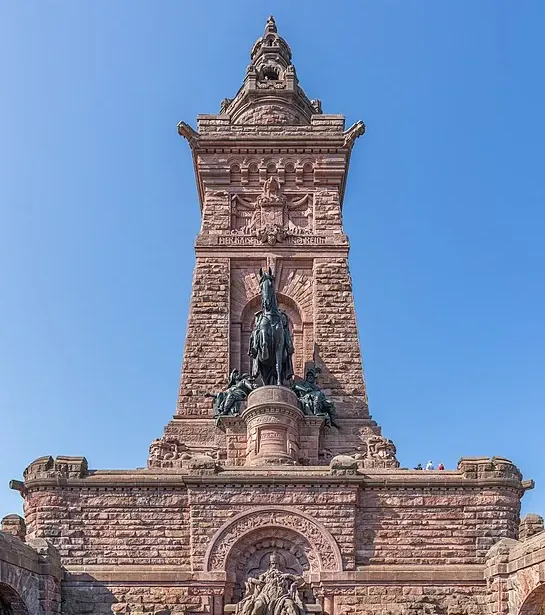
The national monument commemorates Emperor Barbarossa and is a popular excursion destination due to its location in the middle of the mountains.
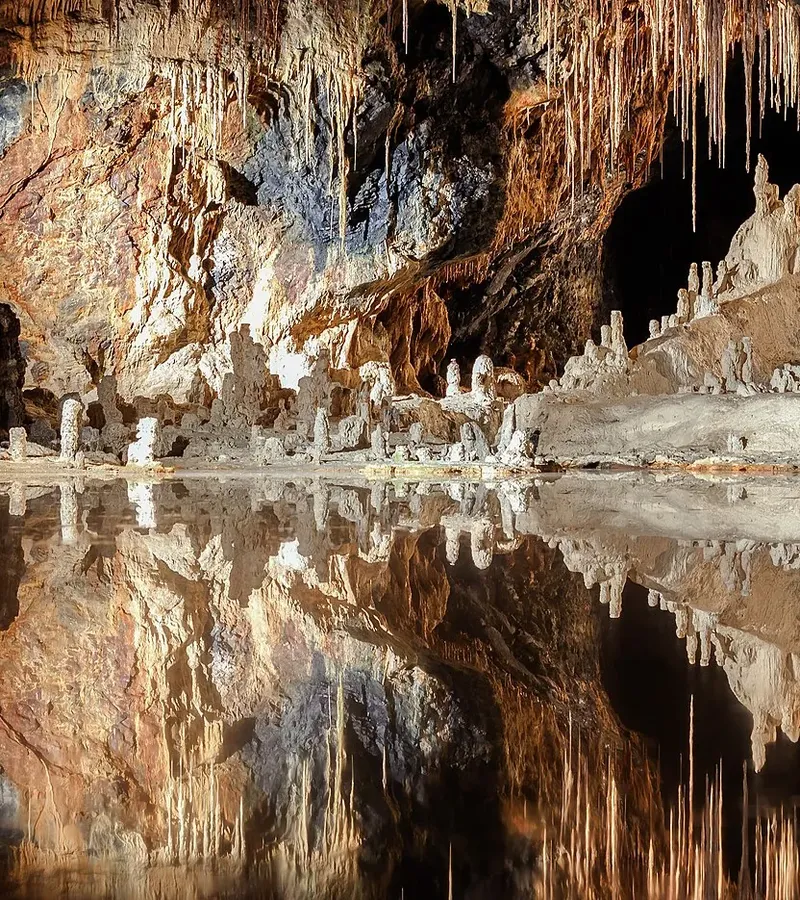
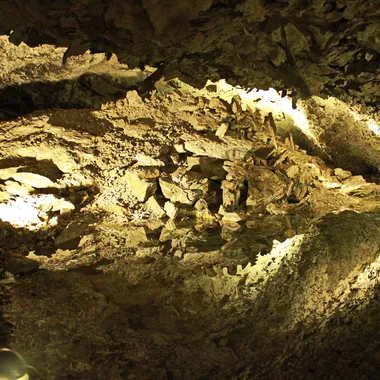
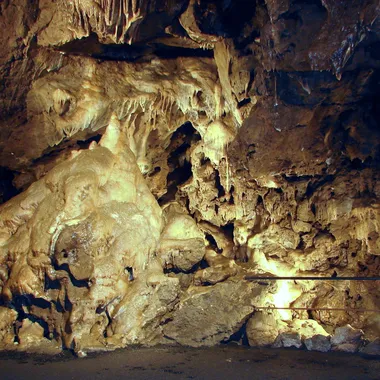
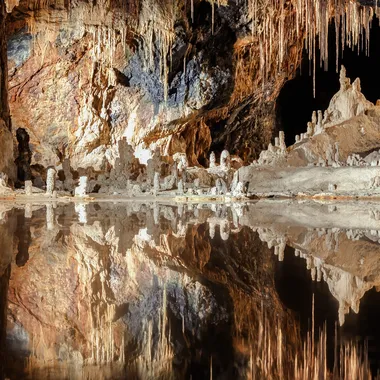
The stalactite caves are among the most colorful in the world and offer a magical experience deep underground.
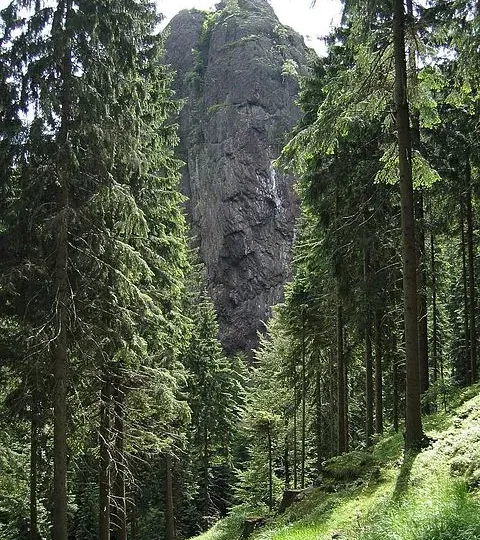
The Thuringian Forest is a paradise for hiking fans, with the legendary Rennsteig, Germany's oldest long-distance hiking trail, and the mystical Dragon Gorge near Eisenach.
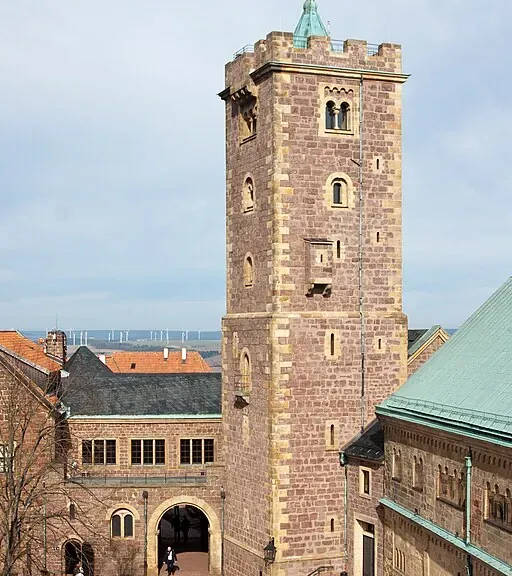
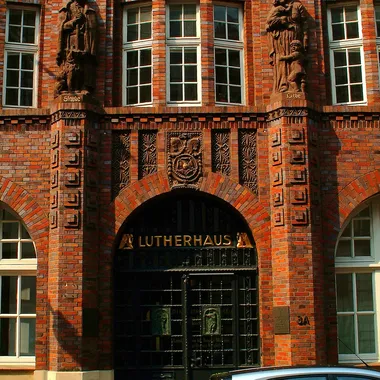
This is where Martin Luther translated the New Testament into German.
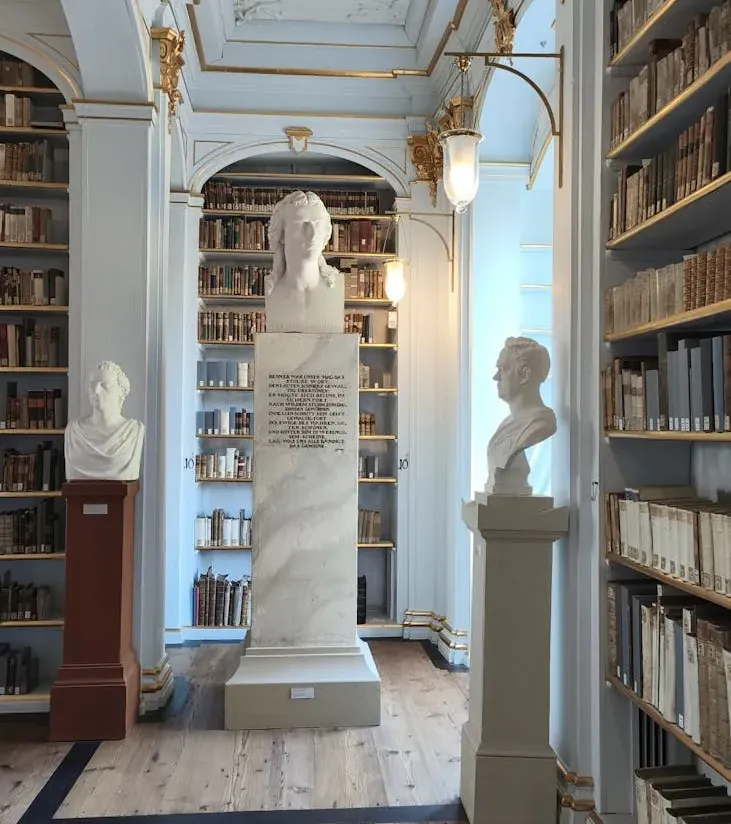
Greats such as Johann Wolfgang von Goethe and Friedrich Schiller worked here, giving the city its reputation as the cradle of Weimar Classicism.
The picturesque Dornburg castles are located near Weimar.
The capital city of Erfurt impresses with its well-preserved medieval old town, the imposing Erfurt Cathedral and the unique Krämerbrücke bridge.
The former concentration camp memorial near Weimar commemorates the crimes of the Nazi era and offers moving insights into history.
The national monument commemorates Emperor Barbarossa and is a popular excursion destination due to its location in the middle of the mountains.
The stalactite caves are among the most colorful in the world and offer a magical experience deep underground.
The Thuringian Forest is a paradise for hiking fans, with the legendary Rennsteig, Germany's oldest long-distance hiking trail, and the mystical Dragon Gorge near Eisenach.
This is where Martin Luther translated the New Testament into German.
Greats such as Johann Wolfgang von Goethe and Friedrich Schiller worked here, giving the city its reputation as the cradle of Weimar Classicism.
79 sights
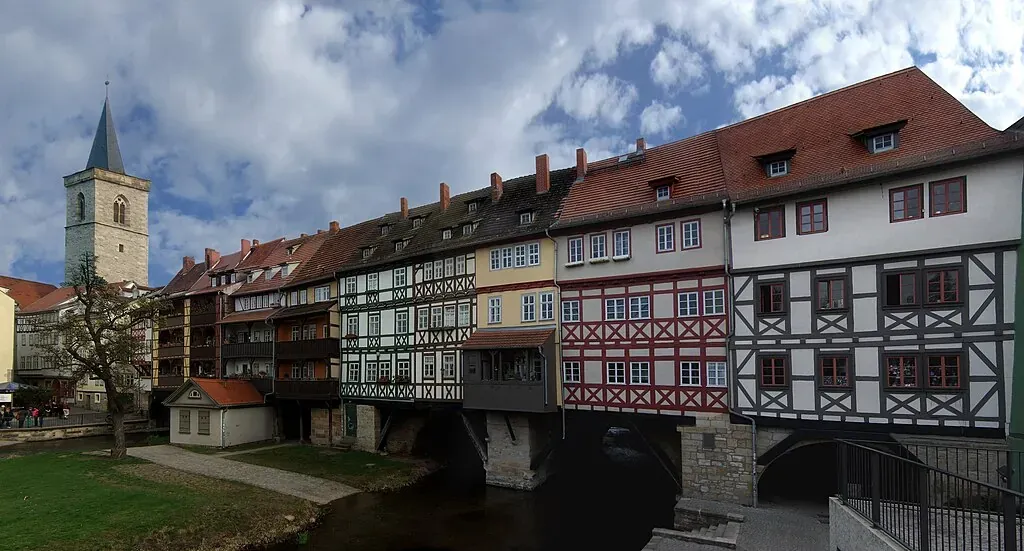
Erfurt, the state capital of Thuringia, combines history, culture and urban life
Erfurt, the capital of the state of Thuringia, is one of Germany’s most beautiful historic cities and also a vibrant university town home to the University of Erfurt. With one of Germany’s best-preserved medieval old towns, it captivates visitors. Half-timbered houses, winding alleys, and magnificent churches define the cityscape of this place that stands as the heart of Thuringia.
Erfurt’s Old Town is a veritable open-air museum, with every alleyway telling a new story. From the Fish Market, where magnificent Renaissance buildings such as City Hall and the “Haus zum Breiten Herd” can be admired, to the quiet corners along the Gera River—the Old Town is a successful blend of history and modernity.
Augustinian Monastery
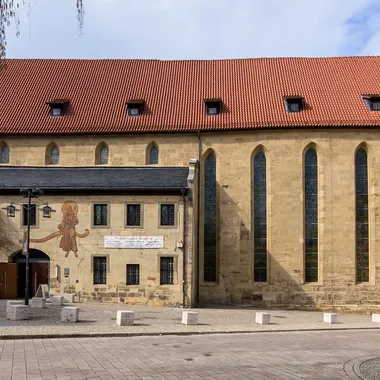
The Augustinian monastery is a place of particular significance for the Reformation. Martin Luther lived here as a monk before publishing his theses. The complex impresses with its simple beauty and offers an atmosphere of contemplation. Today, the monastery serves as a conference center and museum. Visitors can explore the historic library, Luther's cell and the Gothic church.
Andreasstrasse Memorial and Education Center
Andreasstraße stands as a reminder of the repression of the GDR dictatorship. Political prisoners were detained and interrogated in this former remand prison of the Ministry of State Security (Stasi). Today, the memorial and educational site serves as a place of reappraisal and remembrance. A permanent exhibition provides information about the methods used by the Stasi and the resistance against the dictatorship. The preserved prison cell is particularly impressive, giving visitors an oppressive insight into life back then.
Old Synagogue
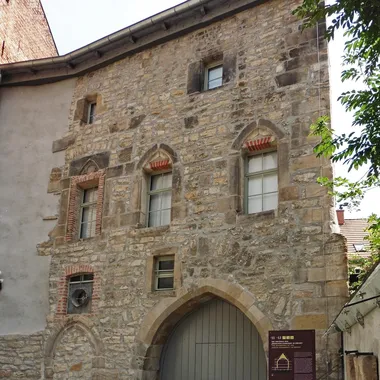
The Old Synagogue is a unique testimony to Jewish life in the Middle Ages and one of the oldest surviving synagogues in Europe. Built in the 11th century, it survived centuries of eventful history and was later used as a warehouse, dance hall and bowling alley. However, the Jewish community was wiped out in progroms in the 14th century. Today it houses a museum that sheds light on the history of Erfurt's Jewish community.
Petersberg Citadel
Petersberg Citadel, one of the largest baroque city fortresses in Europe, towers majestically over Erfurt's old town. Built in the 17th century, it served both as a defensive structure and a symbol of power. Visitors can explore the impressive casemates, underground defensive structures, or enjoy the breathtaking view of the city on a walk along the fortress walls. Today, the citadel is a popular venue for cultural events and a symbol of Erfurt's strategic importance in times gone by.
Topf & Sons Place of Remembrance
The Topf & Sons memorial site is an important place of confrontation with the National Socialist past. The company was involved in the construction of the crematoria in concentration camps and symbolizes the entanglement of technology and inhumanity. The exhibition sheds light on the role of the engineers and workers who were involved in the implementation of the Holocaust and encourages reflection on moral responsibility.
Anger Museum
The Angermuseum, Erfurt's art museum, is located in a magnificent baroque building on the centrally located Angerplatz. The collection includes works from the Gothic to the modern era. Particularly worth seeing are the medieval altars and paintings as well as the impressive collection of glass art. One highlight is the expressionist cycle of paintings by the artist Erich Heckel, which is a particular focus of the museum.
Erfurt Cathedral and St. Severus Church
Erfurt Cathedral, also known as St. Mary's Cathedral, sits majestically on the Domberg and is one of the city's most important sights. Its origins date back to the 8th century. Particularly impressive is the Gothic choir window, which is one of the largest of its kind in Europe, as well as the famous Gloriosa, the largest free-swinging medieval bell in the world. Right next to the cathedral is the Severi Church, which together with the cathedral forms a unique ensemble. The steps between the two buildings offer one of the most beautiful photo opportunities in Erfurt.
Merchants' Bridge
The Krämerbrücke is the undisputed highlight of Erfurt. It is the longest continuously built and inhabited bridge north of the Alps and a true jewel of medieval architecture. Originally built of wood, it was replaced by a stone structure in 1325. Today, the houses on the bridge house small boutiques, galleries and craft stores that invite you to browse. A walk across the bridge is a must, especially if you want to enjoy the view of the River Gera.
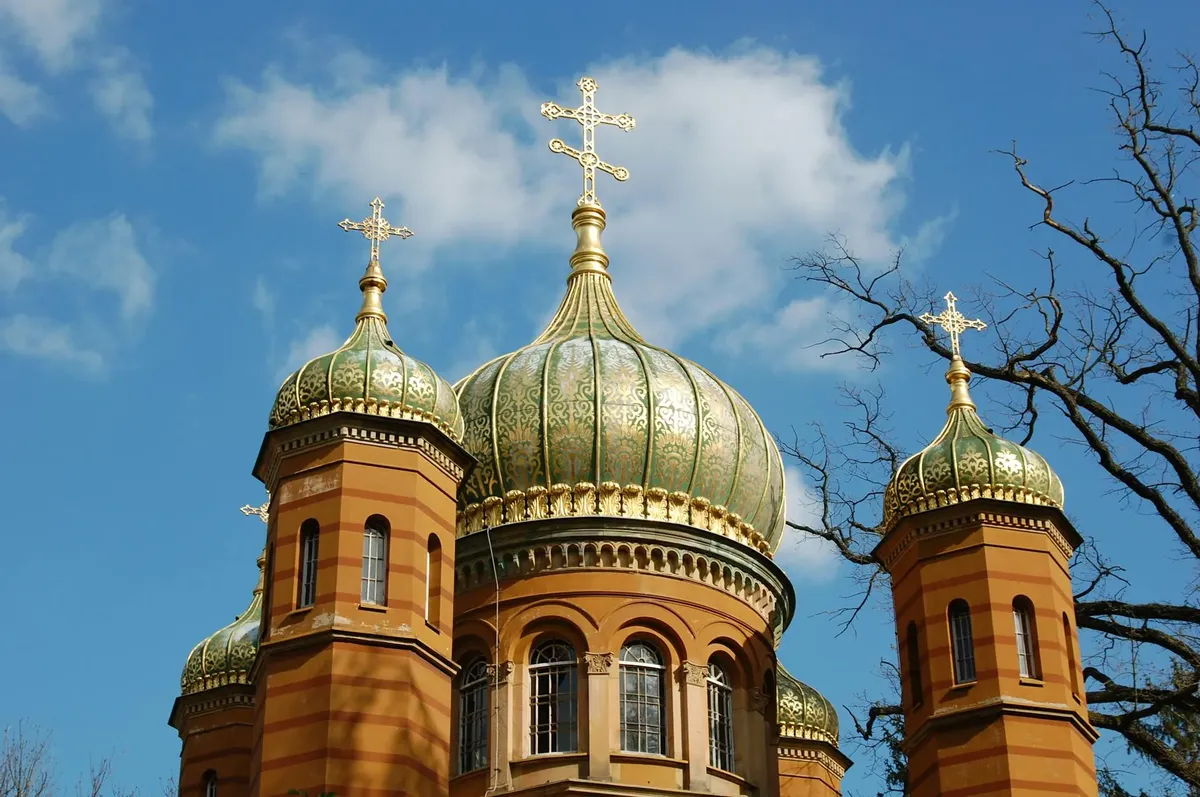
Weimar is one of the most important cultural cities in Germany and combines the splendor and abyss of German history in a very small space
Weimar is famous as the place where Johann Wolfgang von Goethe and Friedrich Schiller worked, as the cradle of Weimar Classicism, and as the birthplace of the Bauhaus. As such, the city epitomizes some of the greatest achievements in German cultural and intellectual history.
At the same time, Weimar serves as a reminder of humanity’s darkest chapters: the nearby Buchenwald Memorial brings the crimes of National Socialism into sharp focus and stands as a deliberate, stark contrast to the city’s cultural flourishing.
Today, Weimar is above all a vibrant cultural and university city that actively carries its historical heritage into the present.
Buchenwald Memorial
On the Ettersberg, just a few kilometers from Weimar, lies the Buchenwald Memorial, one of the most important national memorials to the crimes of National Socialism. From 1937 to 1945, the Buchenwald concentration camp was the scene of unspeakable atrocities in which over 56,000 people died.
Today, the memorial is a place of remembrance and education. In addition to the remains of the camp, such as the gate building with the cynical lettering "To each his own", visitors can view the permanent exhibition, which documents the stories of the victims and explains the system of camp imprisonment. The Buchenwald memorial complex, erected in the 1950s, is an impressive reminder of the liberation of the camp by the Allies in 1945. The memorial is a place of reflection and deep confrontation with history.
Park an der Ilm and Goethe's Garden House
The Park an der Ilm, an English-style landscape park, extends over 48 hectares along the River Ilm. Goethe himself played a decisive role in the design of the park, which today represents a perfect interplay of nature and art.
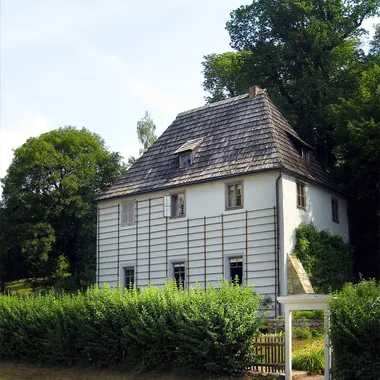
A walk leads past romantic bridges, meadows and artistic monuments. Particularly worth seeing is Goethe's garden house, which served as the poet's retreat and is now open to the public as a museum. The historical connection between man and nature, which Goethe valued so highly, is reflected in every corner of the park. It is a place of peace and inspiration, ideal for an afternoon stroll or a picnic.
Bauhaus Museum Weimar
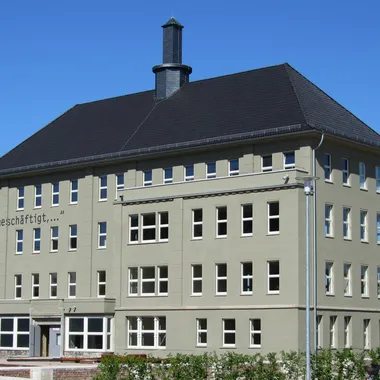
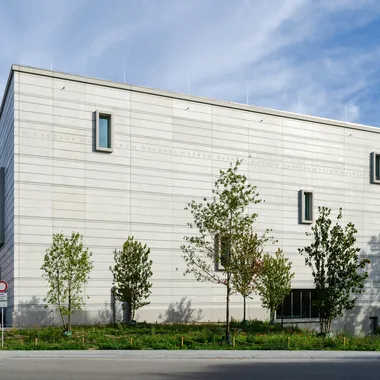
The Bauhaus Museum Weimar presents the beginnings of the most influential art and design school of the 20th century. Founded by Walter Gropius in Weimar in 1919, the Bauhaus influenced modern architecture, art and design worldwide. The museum exhibits original works from the early phase of the Bauhaus, including furniture, graphics and sculptures. The minimalist architecture of the building itself reflects the ideals of the Bauhaus movement and makes the visit an aesthetic experience.
Tiefurt House and Park
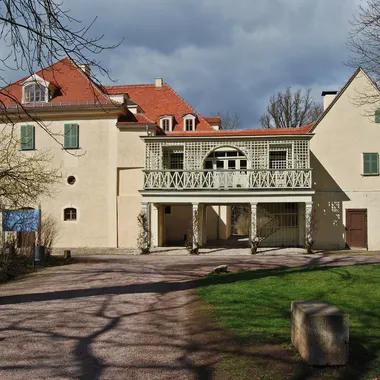
The tranquil Tiefurt Castle, once the summer residence of Duchess Anna Amalia, is a real insider tip. The small castle is nestled in an idyllic park on the River Ilm, which invites you to stroll and linger. The interior of the palace has been lovingly restored and conveys a picture of courtly life in the 18th century. The park, which is home to romantic pavilions and monuments, is a place of tranquillity and inspiration and reflects the romantic landscape of Weimar Classicism.
Town Church of St. Peter and Paul
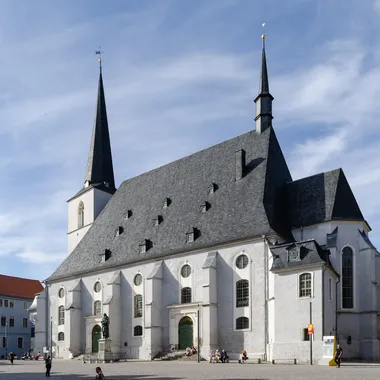
The town church of St. Peter and Paul, better known as the Herderkirche, is an important landmark in Weimar. The church is famous for the Cranach Altarpiece, an impressive work from the Reformation period depicting scenes from the life of Christ. Johann Gottfried Herder, one of the most important representatives of the German Enlightenment, worked here as a pastor and his tomb is located in the church. The simple, Gothic architecture and impressive stained glass windows make the Herderkirche a place of contemplation and inspiration.
Weimar House
The Weimar Haus is a multimedia experience museum that tells the story of Weimar in an entertaining way. Visitors can travel through the centuries in elaborately designed scenes - from the Stone Age to Weimar Classicism and the modern age. Wax figures, light and sound effects and interactive stations make the tour an experience for the whole family. The museum is an excellent introduction to the city and its history.
New Weimar Museum
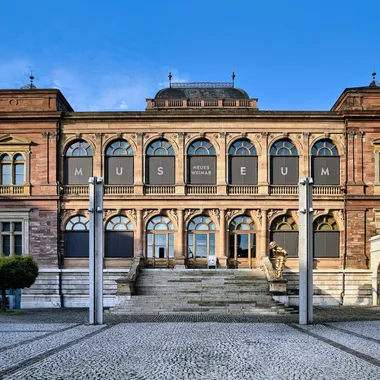
The Museum Neues Weimar is dedicated to modern art and exhibits works by important artists such as Max Beckmann, Edvard Munch and Henry van de Velde. The collection highlights the close connection between Weimar Classicism and the avant-garde of the early 20th century. The presentation of paintings and sculptures that document the transition from traditional to modern art is particularly exciting.
Schillers Residence
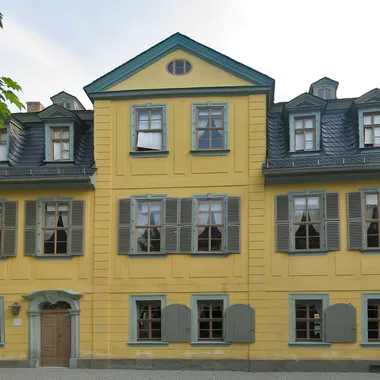
Friedrich Schiller's home is another important site of Weimar Classicism. Schiller lived and worked here until his death in 1805. The rooms are furnished true to the original and provide an insight into the everyday life of the poet, who became famous for works such as "The Robbers" and "William Tell". The exhibition is dedicated to Schiller's literary work, his friendship with Goethe and his influence on German literature.
Duchess Anna Amalia Library
The Duchess Anna Amalia Library, a UNESCO World Heritage Site, is one of Weimar's most famous landmarks. founded in 1761 by Duchess Anna Amalia, it became the cultural center of Weimar Classicism. Particularly impressive is the Rococo Hall, an architectural masterpiece that is one of the most beautiful historic library rooms in the world. After a devastating fire in 2004, the library was restored and now houses over one million books, including precious manuscripts and first editions.
House of the Weimar Republic
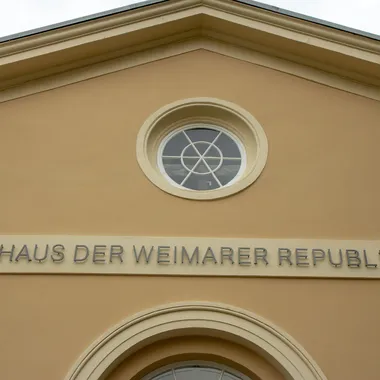
The House of the Weimar Republic is a place of historical and political significance. It stands on the site where the first German democracy, the Weimar Republic, was founded in 1919. The interactive exhibition provides an overview of the political, social and cultural challenges of this period. It highlights both the achievements and the weaknesses of the young republic and builds a bridge to the present day. Exciting media installations and historical exhibits bring the exhibition to life and encourage visitors to reflect on democracy and the threats to it.
Weimar City Palace
The Weimar City Palace, situated on the edge of the park on the Ilm, is one of the city's most magnificent buildings. Once the residence of the Dukes of Saxe-Weimar-Eisenach, it now serves as a museum and displays impressive collections of European art from the Middle Ages to the 19th century. The magnificent living rooms and the spacious banqueting hall are particularly worth seeing. The city palace is also an important place of Weimar Classicism, as it is closely associated with Goethe and Schiller, among others. The view of the palace garden with its artistic sculptures rounds off the visit.
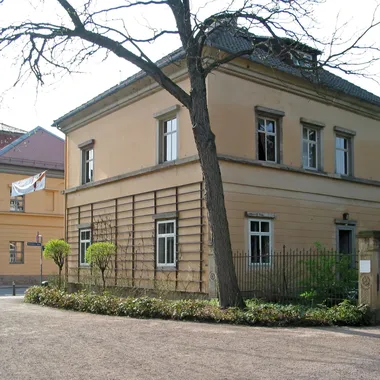
Liszt House
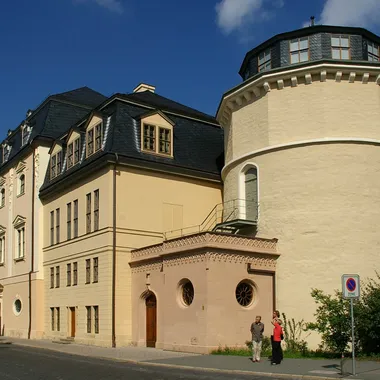
The Liszt House, the former summer residence of Franz Liszt, is a paradise for music lovers. The Hungarian composer and pianist lived and worked here from 1869 to 1886. Today, the house houses a museum that sheds light on the life and work of the musical genius. In addition to original furniture and personal items, historical musical instruments are on display. Liszt's grand piano, on which he composed many of his works, is particularly impressive. A visit to the Liszt House provides insights into Romanticism and the history of music in the 19th century.
Goethe National Museum
The Goethe National Museum is a must for all visitors. It includes Goethe's house on the Frauenplan and an extensive exhibition on the poet's life and work. The house, where Goethe lived for over 50 years, gives an authentic impression of the universal genius' everyday life. His study, art collection and library reflect Goethe's diverse interests. The adjoining exhibition sheds light on his literary works, his scientific research and his role as a statesman.
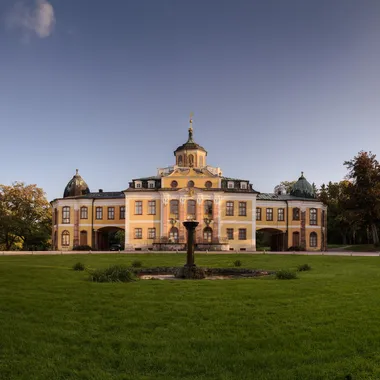
Belvedere Palace Weimar
Belvedere Palace, a baroque pleasure palace, is located just outside the city and is a real insider tip for fans of historical architecture and garden art. Originally built as the summer residence of the Dukes of Saxe-Weimar-Eisenach, it impresses with its magnificent interiors and an outstanding collection of arts and crafts and paintings. The surrounding English-style castle park invites you to take long walks and offers wonderful views of the countryside.
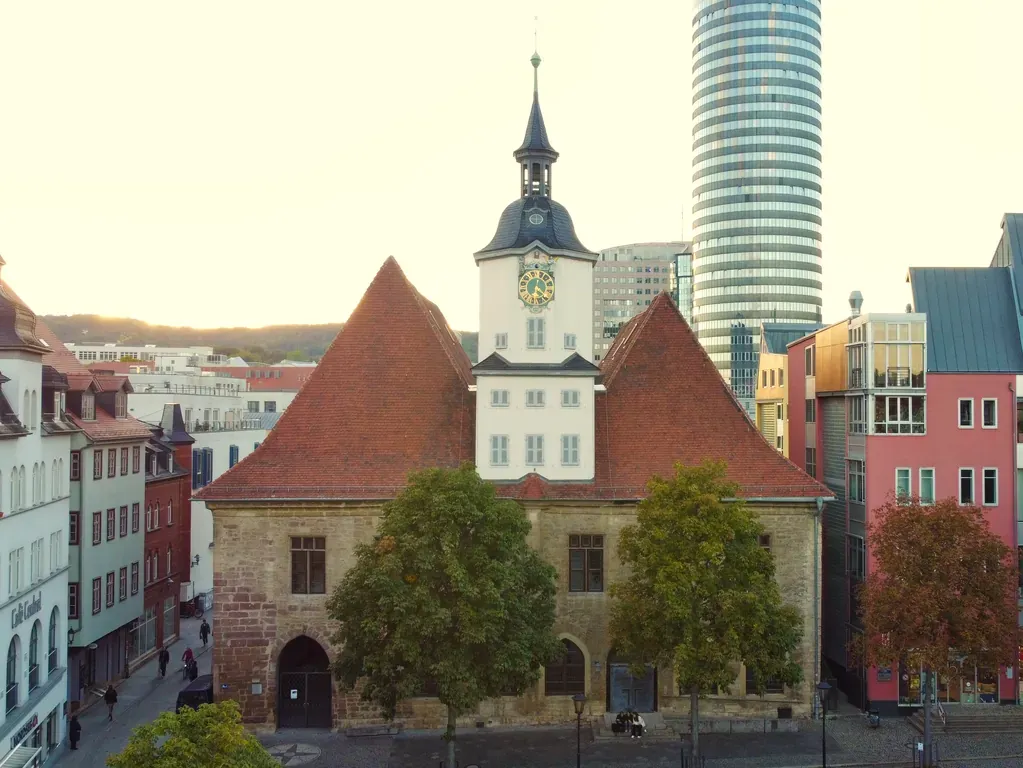
The traditional university town of Jena, nestled in the rolling hills of the Saale valley, combines science, culture and nature in a unique way
Famous as a hub of innovation and home to world-renowned companies such as Carl Zeiss, Jena is also a vibrant university town with an exceptionally high proportion of students.
Jena’s industrial and scientific significance can be traced back to figures such as Carl Zeiss, Ernst Abbe (optical scientist), and Otto Schott (chemist and glass technician). Together, they laid the foundation for the optical industry that continues to make Jena famous worldwide today. Modern technologies from this field are also crucial for the semiconductor industry—such as high-precision optical systems used in chip manufacturing.
The Old Town was heavily damaged during World War II and subsequently partially rebuilt in a modern style. Today, it presents a mix of reconstructed areas and modern architecture. Buildings from the GDR era—including typical prefabricated concrete structures—are also part of the cityscape, though in many places they blend into an increasingly revitalized and vibrant city center.
Not far from Jena lie the Dornburg Castles, an impressive ensemble of three castles overlooking the Saale Valley—a worthwhile destination for an excursion into the surrounding countryside.
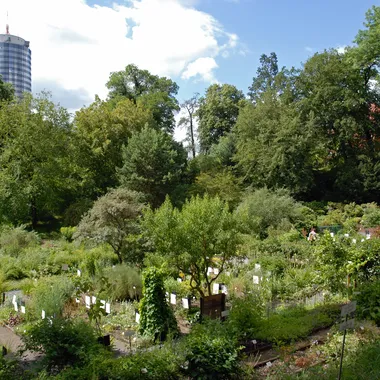
Botanical Garden of Jena University
The Botanical Garden at the University of Jena is one of the oldest of its kind in Germany. Covering an area of over 4.5 hectares, it is home to an impressive variety of plants from all over the world. From tropical greenhouses to idyllic open-air areas, the garden offers a relaxing break and exciting insights into the world of plants.
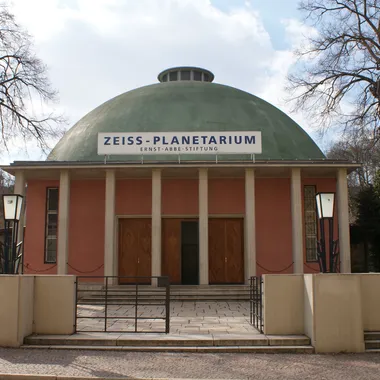
Zeiss Planetarium
The Zeiss Planetarium in Jena, one of the oldest planetariums in the world, takes its guests on an impressive journey through the universe. Fascinating star shows and scientific lectures are presented here using state-of-the-art technology.
From interactive family programs to spectacular visualizations of the starry sky, the planetarium is a highlight for astronomy enthusiasts and anyone who wants to learn more about the secrets of the cosmos.
Dornburg Palaces
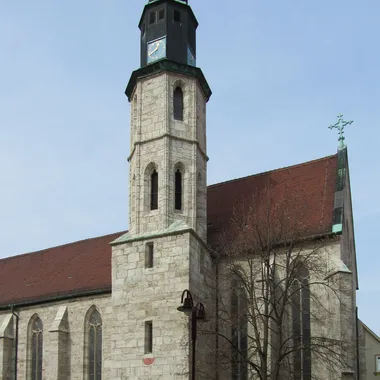
The Dornburg Castles are a fascinating ensemble of three castles in the small town of Dornburg-Camburg, idyllically situated on a shell limestone plateau high above the Saale river in Thuringia. The castles - the Rococo Castle, the Renaissance Castle and the Old Castle - together with the surrounding gardens and terraces form an impressive historical and scenic backdrop.
The Dornburg castles are not only of architectural and horticultural importance, but also of literary significance: Johann Wolfgang von Goethe spent time here several times and was inspired by the picturesque surroundings. His stay in Dornburg is documented in numerous letters and notes, which underline the cultural value of the place.
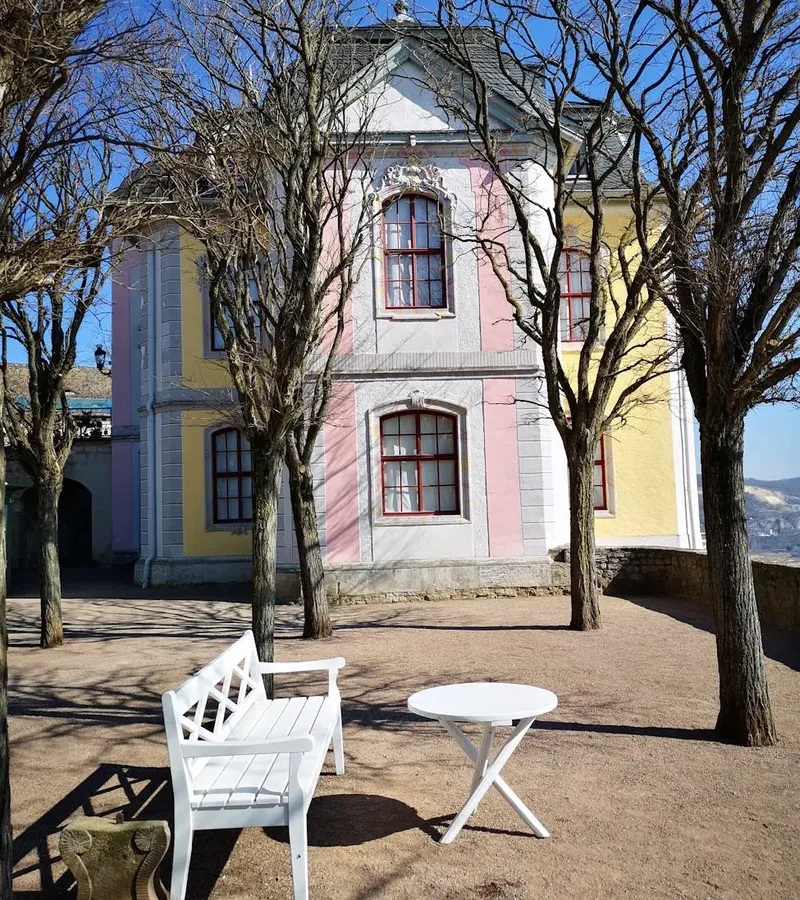
The rococo castle is the showpiece of the ensemble. With its elegant architecture and richly decorated interiors, it bears witness to the lifestyle and taste of the 18th century. The banqueting hall and the wonderful view of the Saale are particularly worth seeing.
The Renaissance castle dates back to the 16th century and impresses with its characteristic Renaissance elements.
The Old Castle is (as the name suggests) the oldest of the three buildings and has a varied history and originally housed the medieval castle complex. It was later converted into a castle and is now an important example of early architecture in the region.
The gardens of the Dornburg castles are another highlight of the estate. They were designed in different eras and include romantic terraces, baroque garden structures and extensive parks. Especially in spring and summer, the gardens are in full bloom and invite you to take a stroll. The panoramic view from the gardens over the Saale valley is simply breathtaking.
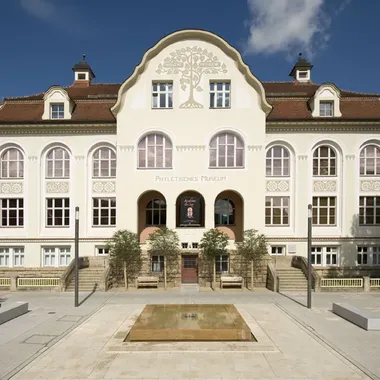
Phyletische Museum
The Phyletic Museum, founded by Ernst Haeckel, is dedicated to the evolution of life. The impressive collection includes fossils, animal specimens and models that vividly illustrate the developmental history of organisms.
German Optical Museum
The German Optical Museum reflects Jena's role as the cradle of the optical industry. From the beginnings of optics to the latest technologies, the history of precision optics is brought to life in exciting exhibitions.
Special highlights include historical microscopes, telescopes and cameras that make the importance of optics for science and everyday life tangible.
Lobdeburg Castle Ruins
The Lobdeburg castle ruins, 6 km from the city center, offer a magnificent view of the Saale valley. The remains of the medieval castle tell of the region's eventful history and are a popular destination for hikers and history buffs.
The idyllic surroundings and the atmosphere of the ruins make Lobdeburg Castle a place of peace and inspiration.
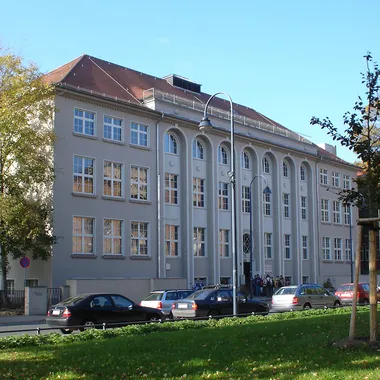
Jena City Museum
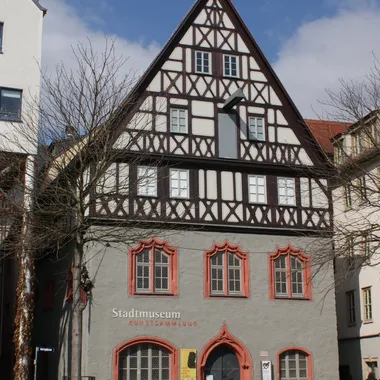
The Jena City Museum, housed in the historic "Göhre" building, takes visitors on a journey into the city's past. From early history to the time of the Reformation and industrialization, the museum tells the exciting story of Jena.
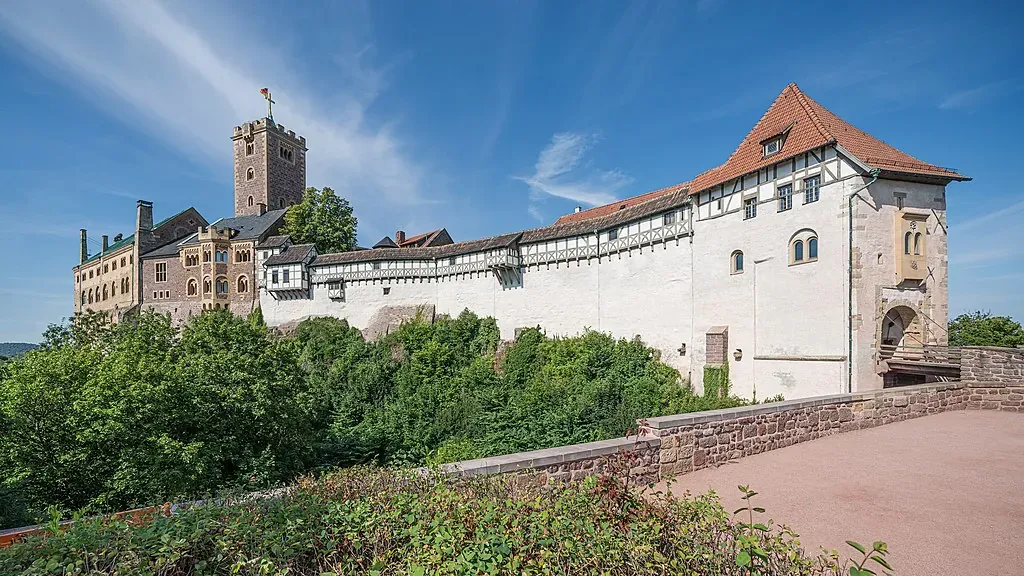
Eisenach, situated on the edge of the Thuringian Forest, played a major role in the Reformation
Eisenach looks back on over a thousand years of history and developed early on into an important political and cultural center of Thuringia. As early as the Middle Ages, the city was closely linked to the Landgraves of Thuringia, whose seat of power was Wartburg Castle. It was here that Martin Luther went into hiding after the Diet of Worms and translated the New Testament into German—a milestone in the Reformation and the history of the German language.
In the early modern period, Eisenach remained an important royal seat and center of music, shaped by the work of the Bach family. In the 19th century, the city also gained industrial significance, in part through vehicle manufacturing, which shaped Eisenach well into the 20th century. This multifaceted past makes Eisenach a place where medieval power politics, the Reformation, musical tradition, and industrialization can all be experienced within a small area.
Museums, theaters, music events, and memorial sites provide a solid cultural offering—albeit on a small scale.
Wartburg Castle
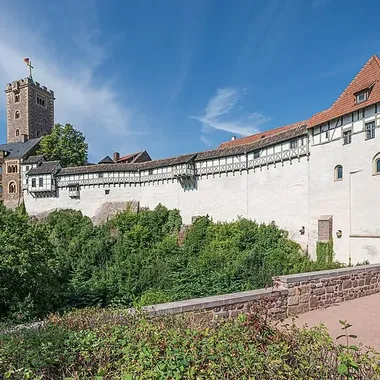
Wartburg Castle, majestically situated on a hill above Eisenach, is one of Germany's most famous landmarks. It was the scene of important historical events: Martin Luther translated the New Testament into German here during his exile, and it served as the residence of St. Elisabeth of Thuringia.
The interior of the castle impresses with its magnificent rooms, such as the Knights' Hall and the Elisabeth Bower, which reflect the splendor of the Middle Ages. The exhibition provides an insight into the eventful history of the castle and its inhabitants. The view of Eisenach and the Thuringian Forest from the Wartburg is breathtaking and makes the visit unforgettable.
Automobile World Eisenach
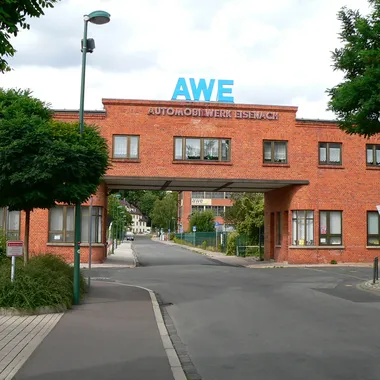
The Automobile World Eisenach tells the exciting story of automobile production in Eisenach, which dates back to 1898. The museum displays historic vehicles, including the legendary Wartburg models, and provides an insight into the development of the German automotive industry. A special attraction is the collection of prototypes that never went into series production.
Fraternity Monument
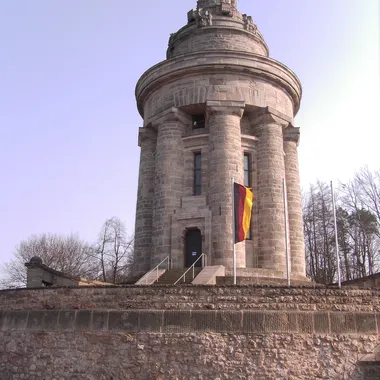
The fraternity monument, located high above Eisenach on the Göpelskuppe hill, commemorates the German unity and freedom movement of the 19th century. Erected in 1902, the monument honors the first student fraternities that campaigned for a united and free Germany.
With its striking rotunda and mighty dome, it is an imposing structure that can be seen from afar. The viewing platform offers a spectacular view of Eisenach and the surrounding countryside.
Bach House Eisenach
The Bachhaus Eisenach is a must for music lovers. It is one of the oldest museums dedicated to the life and work of Johann Sebastian Bach. In this lovingly restored half-timbered house, visitors can not only listen to Bach's music, but also marvel at historical instruments, some of which are played in live demonstrations. The multimedia exhibition offers fascinating insights into the life of the composer and his time.
Luther House
The Luther House, one of the oldest half-timbered houses in Eisenach, was Martin Luther's home during his school days. Today it houses an interactive exhibition that sheds light on the life and teachings of the reformer. Visitors can learn more about Luther's time in Eisenach, his translation of the Bible and his lasting influence on German and European cultural history. The house is part of the UNESCO World Heritage Luther Memorials in Eisleben and Wittenberg.
St. George's Church Eisenach
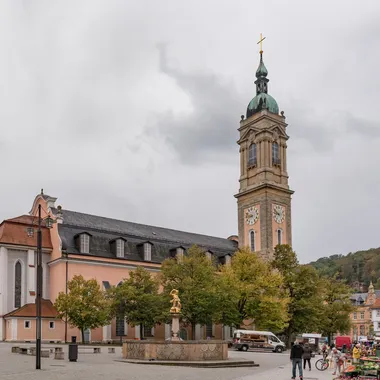
The Georgenkirche, located in the heart of Eisenach, is closely linked to the history of Martin Luther. The reformer preached here and Johann Sebastian Bach was baptized in this church. The Gothic architecture and impressive stained glass windows make the Georgenkirche an important place in the history of the Reformation and sacred art.
Narrow House
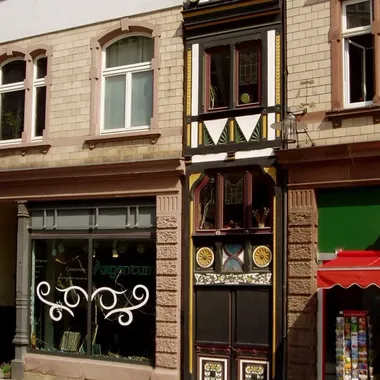
With a width of just 2.05 meters, it is one of the narrowest inhabited houses in Germany. The charming half-timbered house dates back to 1756 and is now a listed building.
The interior of the house can be visited during events or guided tours and provides an insight into life in a small space in earlier centuries. A short stop at the narrow house is ideal for a stroll through the old town - it is one of the most photographed motifs in Eisenach.
Gotha delights with baroque palace flair, historic museums and an impressive old town
The city of Gotha was once one of the richest and most important royal seats in Germany. As the center of the Duchy of Saxe-Gotha-Altenburg, it developed into a place of great cultural influence during the 17th and 18th centuries. The imposing Friedenstein Palace, one of the largest early Baroque palaces in Europe, stands as a testament to this to this day.
Also noteworthy is its connection to the British royal family: The House of Saxe-Coburg and Gotha produced numerous European monarchs. The British kings also descended from this line until George V adopted the name “Windsor” during World War I.
In the 20th century, Gotha suffered during the GDR era: many historic buildings fell into disrepair, while simple new structures were erected. Today, the city is being gradually restored—and offers a glimpse of its former splendor.
Gotha Zoo
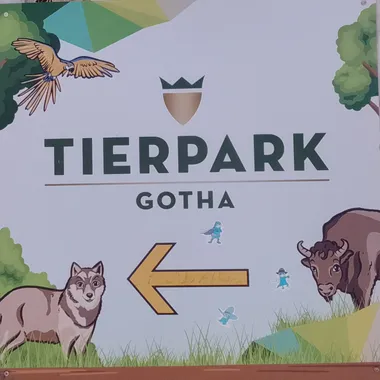
Gotha Zoo is idyllically situated on the edge of Gotha Castle Park and offers a varied mix of native and exotic animal species. The natural design and peaceful surroundings make the zoo particularly attractive for families and relaxed walks.
Friedenstein Palace
Friedenstein Palace is Gotha's landmark and one of the largest early Baroque palace ensembles in Germany. The extensive grounds with their magnificent halls, historical collections and well-tended palace gardens provide an impressive insight into life at the ducal court. The combination of architecture, art and history in particular makes the palace a cultural highlight of the city.
Gotha Municipal Baths
The Stadtbad Gotha combines historical architecture with modern leisure activities. The traditional baths offer both sports and recreational facilities and are a popular meeting place, especially on warm days. The mixture of listed ambience and contemporary facilities gives the Stadtbad a special atmosphere.
Ducal Museum
The Ducal Museum presents art and cultural treasures from several centuries in an impressive historical building. The collections range from paintings by old masters to Egyptian finds and handicraft objects. The elegant architecture and varied exhibitions make a visit to the museum particularly worthwhile.
Gotha Citizen Tower
The Bürgerturm is one of the city's most striking vantage points and offers a sweeping view over Gotha and the surrounding countryside. The historic tower is a popular destination for walks and combines a nature experience with a little insight into the town's history.
Thuringian Forest Railway
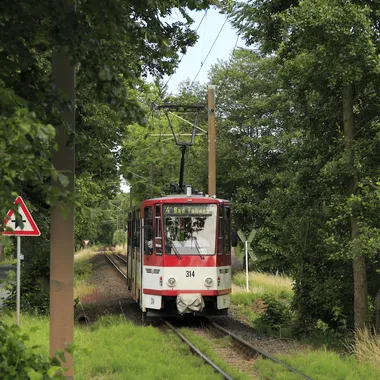
The Thuringian Forest Railway (part of local public transport) connects Gotha with the Thuringian Forest and leads through varied landscapes. The historic streetcar offers a special opportunity to explore the region. Visitors can experience technology and nature at the same time.
Gotha Waterworks
The Wasserkunst is one of the city's most famous historical buildings and is a reminder of Gotha's early water supply. The striking fountain with its characteristic tower combines technical history with architectural charm and is one of the most popular photo motifs in the old town.
Gotha Art Forum
The KunstForum Gotha is dedicated to contemporary art and cultural projects. Changing exhibitions present works by regional and international artists.
Casemates of Friedenstein Palace
The casemates under Friedenstein Castle are among the largest Baroque fortifications in Central Europe. The extensive tunnel system runs deep beneath the castle and gives an exciting impression of former defensive architecture. Guided tours allow visitors to explore the underground passages, vaults and historic facilities at close quarters.
Gotha Town Hall
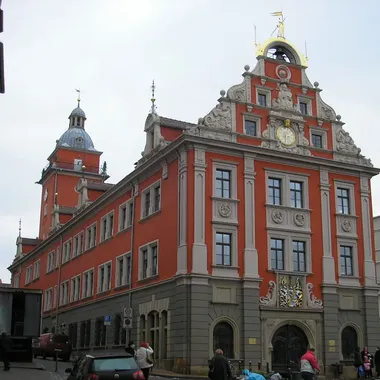
With its striking façade, the historic town hall dominates Gotha's main market square. The building reflects the town's long history and is still a central meeting point in the heart of the old town. Around the square, stores, cafés and restaurants invite you to linger.
Medieval town walls, half-timbered houses and the history of the Reformation characterize the image of Mühlhausen
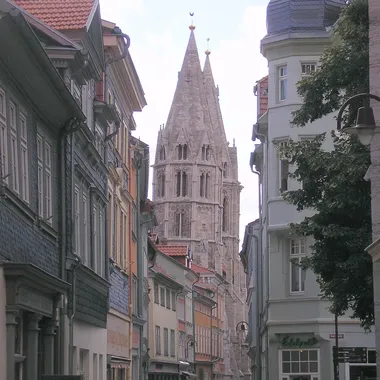
The city of Mühlhausen is one of the best-preserved medieval towns in central Germany. Once a free imperial city, its impressive streetscape still bears witness to its former prosperity and self-confidence: numerous half-timbered houses, narrow alleys, and an almost completely preserved city wall with towers characterize the historic center. Mühlhausen played a special role during the Reformation. It was here that the radical reformer Thomas Müntzer was active; he advocated for social justice and was a central figure in the German Peasants’ War. The city thus became an important scene of religious and social upheaval in the 16th century.
Muehlhausen City Wall
The Mühlhausen city wall is one of the best-preserved medieval fortifications in Germany. With its towers, gates and long sections of wall, it gives an impressive impression of the historic townscape of past centuries. Walks along the complex also offer beautiful views of the old town.
Muehlhausen City Wall
The city wall is one of the best-preserved medieval fortifications in Germany. The towers and battlements are still largely intact. Visitors can see the structure of a medieval town here.
Bach Church Divi Blasii
The Divi Blasii Church is one of the most important sacred buildings in Mühlhausen and is closely associated with the composer Johann Sebastian Bach, who worked here for a time as an organist. The impressive Gothic architecture, the artistic details in the interior and the historic organ make the church an important place for those interested in music and culture.
Peasants War Museum Kornmarktkirche Muehlhausen
The museum commemorates the German Peasants' War and Mühlhausen's role in these events. Exhibitions convey the social and political background to the uprising. Visitors are given an insight into an important phase of German history.
Muehlhausen Old Town
The old town of Mühlhausen delights visitors with its narrow alleyways, historic half-timbered houses and numerous churches. Many buildings date back to the Middle Ages and give the town center a particularly authentic atmosphere. Small squares, cozy cafés and traditional stores make a tour of the old town particularly varied.
Muehlhausen Town Hall
With its imposing façade, the historic town hall on the central market square forms the heart of the town. The building reflects Mühlhausen's long history as an important imperial city and is one of the architectural highlights of the old town. Stores and cafés around the square invite you to linger.
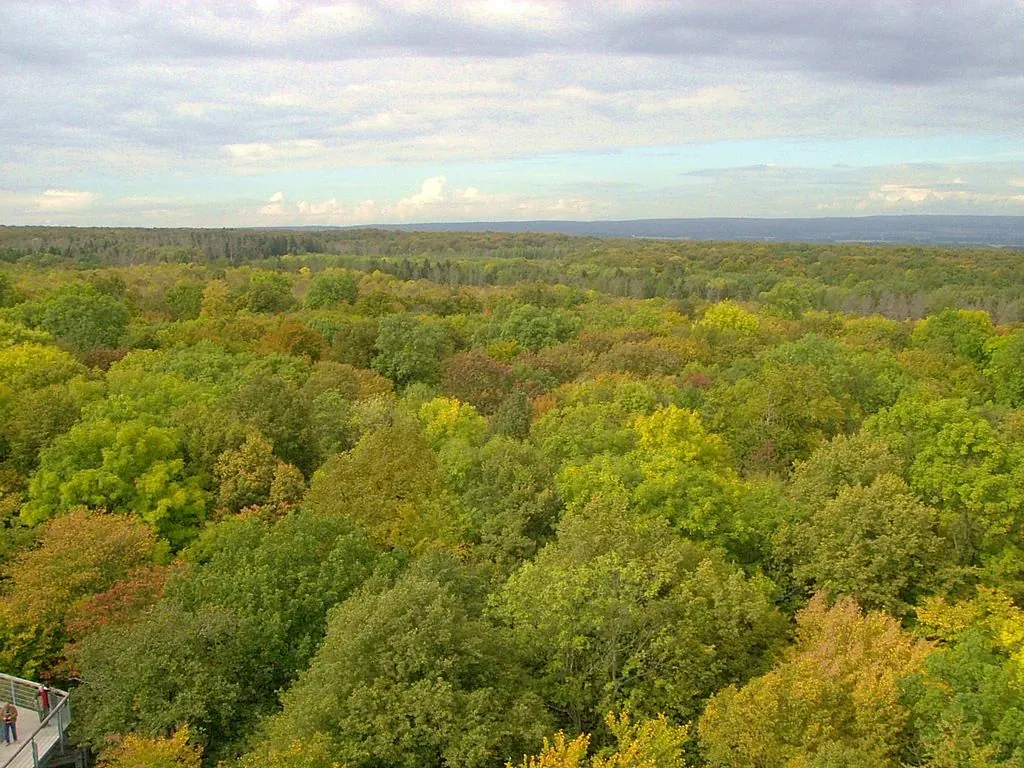
The Thuringian Forest is one of the most charming low mountain regions in Germany and is synonymous with dense forests, expansive views and relaxing nature
Located in the heart of Thuringia, it is ideal for hiking enthusiasts and nature lovers. The Rennsteig, a historic high-altitude hiking trail that winds along the ridge through the entire Thuringian Forest, is particularly well known. Another highlight is the Drachenschlucht near Eisenach—a narrow, impressive rock gorge with an almost fairy-tale-like atmosphere.
Kyffhaeuser Monument
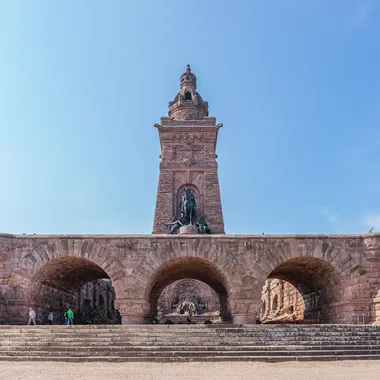
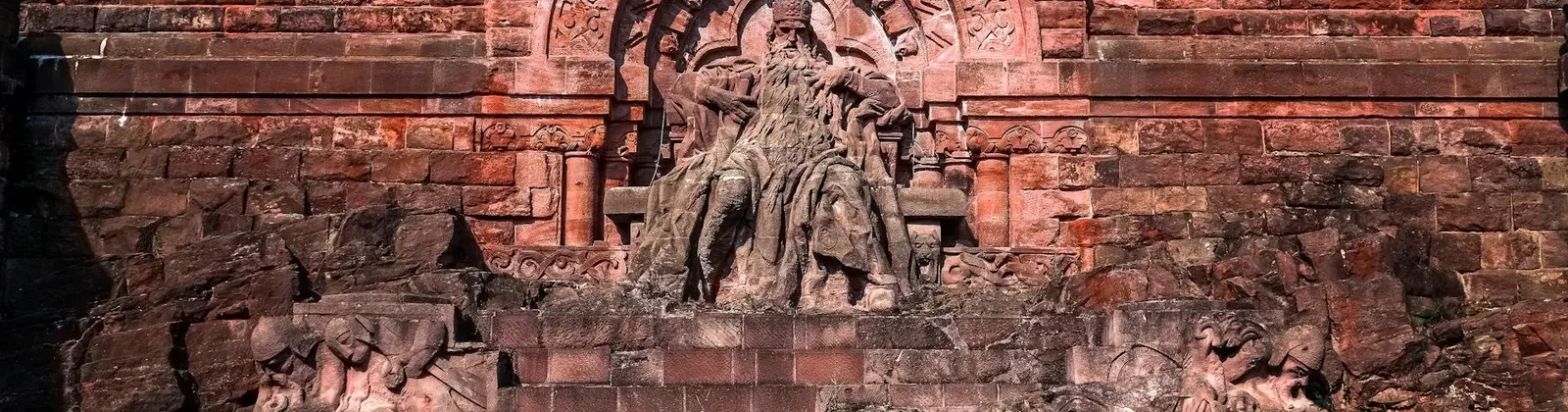
The Kyffhäuser monument is a monumental landmark on the Kyffhäuser mountain range on the border with Thuringia. It commemorates Kaiser Wilhelm I and the unification of the Reich in the 19th century. It is enthroned on the ruins of the medieval imperial castle of Kyffhausen and offers an impressive view of the region. Visitors can explore the statue of the emperor, the imposing castle tower and the deepest castle well in Germany. It is a fascinating place that combines history, myth and nature.
The monument is closely linked to the nationalist ideology of the late 19th century through its symbolic architecture and the motifs chosen:
Barbarossa Cave
Another highlight of the region is the Barbarossa Cave, which is also associated with the Barbarossa legend. This impressive stalactite cave is located in the Kyffhäuser Mountains and can be explored on guided tours. In the cave, visitors can learn more about the geological formation as well as the myths and legends associated with this mysterious underworld.
Bad Langensalza Canopy Walk
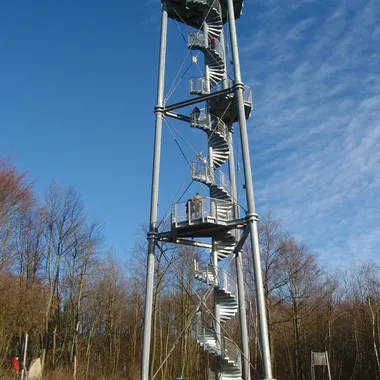
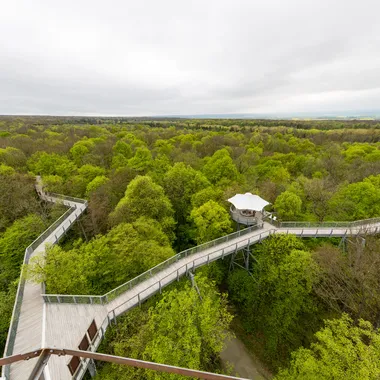
The treetop path in Bad Langensalza is a unique nature experience that takes visitors into the world of treetops. The 500-metre-long path leads high into the treetops of the forest area and offers breathtaking views of the surrounding nature and the urban area.
The path is barrier-free and allows you to experience the flora and fauna of the forest from a completely new perspective. Especially in autumn, when the leaves are ablaze with color, the treetop path offers a spectacular panoramic view. For the more adventurous, there is also a viewing tower that allows you to gaze even further afield.
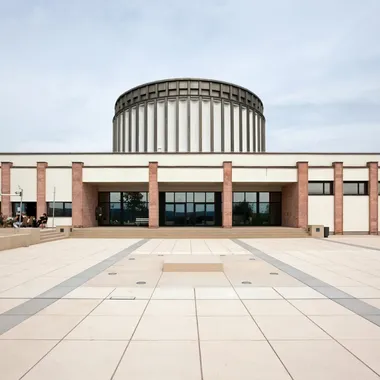
Panorama Museum Bad Frankenhausen
The Panorama Museum is located in Bad Frankenhausen, northwest of Jena, and is best known for the monumental panorama painting "Peasants' War Panorama". The 360-degree painting by Werner Tübke is one of the largest in Europe and is a detailed and dramatic depiction of the Battle of Frankenhausen in 1525, in which the peasants of the German Peasants' War fought against the princely army. The museum offers visitors not only the opportunity to experience this impressive work of art, but also an in-depth exploration of the history and events of the Peasants' War.
Hainich National Park
The Hainich National Park, just a few kilometers from Bad Langensalza, is the largest contiguous deciduous forest area in Germany and has been a UNESCO World Heritage Site since 2011. Visitors can experience the untouched nature of the Thuringian Forest here, with its unique flora and fauna.
The national park offers numerous hiking and cycling trails that lead through the dense forest and along clear streams. The Hainich treetop path, which is located in the immediate vicinity of the national park and also offers spectacular views of the green paradise, is particularly worth a visit. In the wild cat village of Hütscheroda, you can learn more about wild cats and nature conservation.
Japanese Garden Bad Langensalza
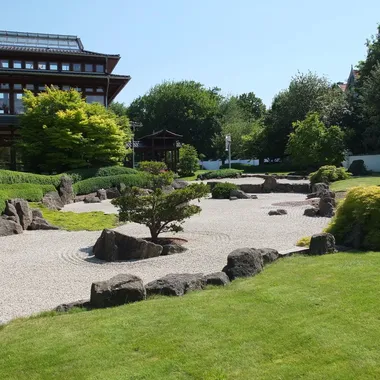
The Japanese Garden in Bad Langensalza is an oasis of peace and beauty. Spread over 2 hectares, this garden reflects classical Japanese garden design. With its harmoniously designed ponds, stones, carp and carefully selected plants, the garden is a place for contemplation and relaxation.
In the Japanese Garden, visitors can not only enjoy the breathtaking flora, but also experience a meditative atmosphere that invites you to linger and reflect. The garden is perfect for a quiet walk or a break from everyday life.
Bird of Prey Falconry on the Rennsteig
At the Greifenwarte Falknerei am Rennsteig, everything revolves around falconry, one of the oldest forms of hunting with animals. Here, visitors can learn how falconers work with various birds of prey such as falcons, eagles and buzzards. The farm attaches great importance to the species-appropriate keeping and protection of these birds, which impress with their imposing appearance and flying skills.
In the falconry, visitors can experience live how the birds fly at the falconer's command, land on his arm and demonstrate their incredible skills.
Rose Garden in Bad Langensalza
The rose garden in Bad Langensalza is a true floral paradise. More than 600 varieties of roses bloom here on an area of around 1.5 hectares, making the heart of every garden lover beat faster. The garden is laid out according to the principle of the classic English rose garden and offers a variety of colors and scents.
In addition to the magnificent rose beds, visitors can also admire architectural highlights such as the rose tower and the manicured lawns. Especially in summer, when the roses are in full bloom, the garden is an idyllic place for a stroll.
Kittelsthal Stalactite Cave
The Kittelsthal stalactite cave is located near Eisenach and is one of the lesser-known, yet fascinating stalactite caves in Thuringia. The cave is known for its impressive stalactite formations, which have been created over thousands of years by stalactite aging. Visitors can admire the fascinating stalactites and stalagmites on a guided tour through the cave and learn more about the geological processes that led to the formation of these natural wonders. The cave is a great destination for nature lovers and those interested in geology.
Schmalkalden is located in the south of Thuringia on the edge of the Thuringian Forest and boasts a particularly well-preserved half-timbered old town
Schmalkalden’s superbly preserved town center, with its richly decorated half-timbered houses, small squares, and winding alleys, still evokes the atmosphere of a late-medieval trading town. Historically, Schmalkalden gained significance primarily through the Reformation. It was here that the Schmalkaldic League was founded in 1531—an alliance of Protestant princes and cities formed to defend against the Catholic emperor. Martin Luther also stayed in the town on several occasions and wrote important works here.
Point Alpha Memorial
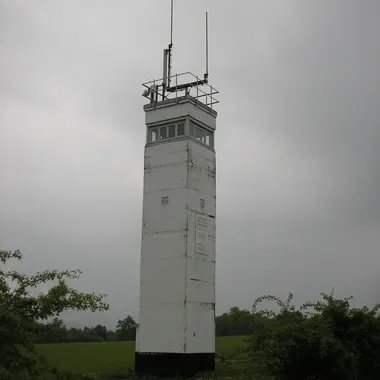
Point Alpha is a reminder of the period of German division and the Cold War. The former US observation base was located on a particularly sensitive section of the inner-German border, which was considered a potential flashpoint for military conflict. Today, exhibitions, border installations and historic buildings document the history of division, surveillance and reunification.
Wilhelmsburg Palace
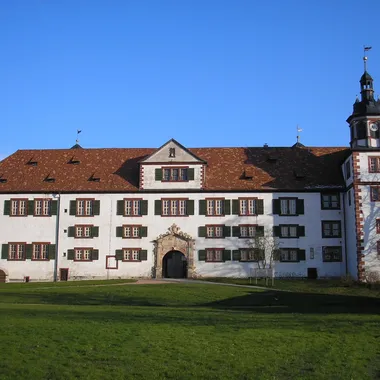
Wilhelmsburg Castle is one of the most important Renaissance castles in Germany. The impressive complex with its richly decorated halls, historic rooms and ornate murals conveys a vivid impression of the courtly culture of past centuries.
Luther House
The Luther House commemorates Martin Luther's stays in Schmalkalden during the time of the Reformation. The exhibition provides an insight into the religious and political changes of the 16th century and the importance of the town within the Schmalkaldic League. Historical rooms and documents bring history vividly to life.
Museum Neue Hütte - Blast Furnace and Tool Museum
Museum Neue Hütte provides an exciting insight into the traditional iron processing and industrial history of the region. Old blast furnaces, machines and tools that vividly document the development of metal processing can be viewed in the historic ironworks. The authentic industrial atmosphere in particular makes the visit an impressive experience for those interested in technology and history.
Finstertal Visitor Mine
The Finstertal visitor mine offers exciting insights into the mining history of the region. Historic tunnels, tools and working areas can be explored underground, illustrating the often tough everyday life of the miners. Guided tours provide interesting information about ore mining and the technical development of the mine.
Luther Trail
The Luther Trail connects numerous places in the history of the Reformation and also passes through Schmalkalden. The route invites you to discover historical sites and experience the landscape of the Thuringian Forest at the same time. Information boards along the trail provide background information on the Reformation and Martin Luther.
St. Georges Church
St. George's Church dominates Schmalkalden's city center with its striking appearance. Inside, the ornate decorations, historic furnishings and peaceful atmosphere of the church are impressive.
Half-Timbered Experience House
The Half-Timbered Experience House is dedicated to the traditional building methods and craftsmanship of the region. Visitors can find out how half-timbered houses were built, what materials were used and what significance this type of construction had for towns such as Schmalkalden. Interactive stations and historical examples make the exhibition particularly vivid.
Schmalkalden Town Hall
The town hall is one of the most famous half-timbered buildings in Schmalkalden and is a landmark of the old town. The elaborately designed façade and central location on the market square make the historic building a popular meeting place and photo motif.
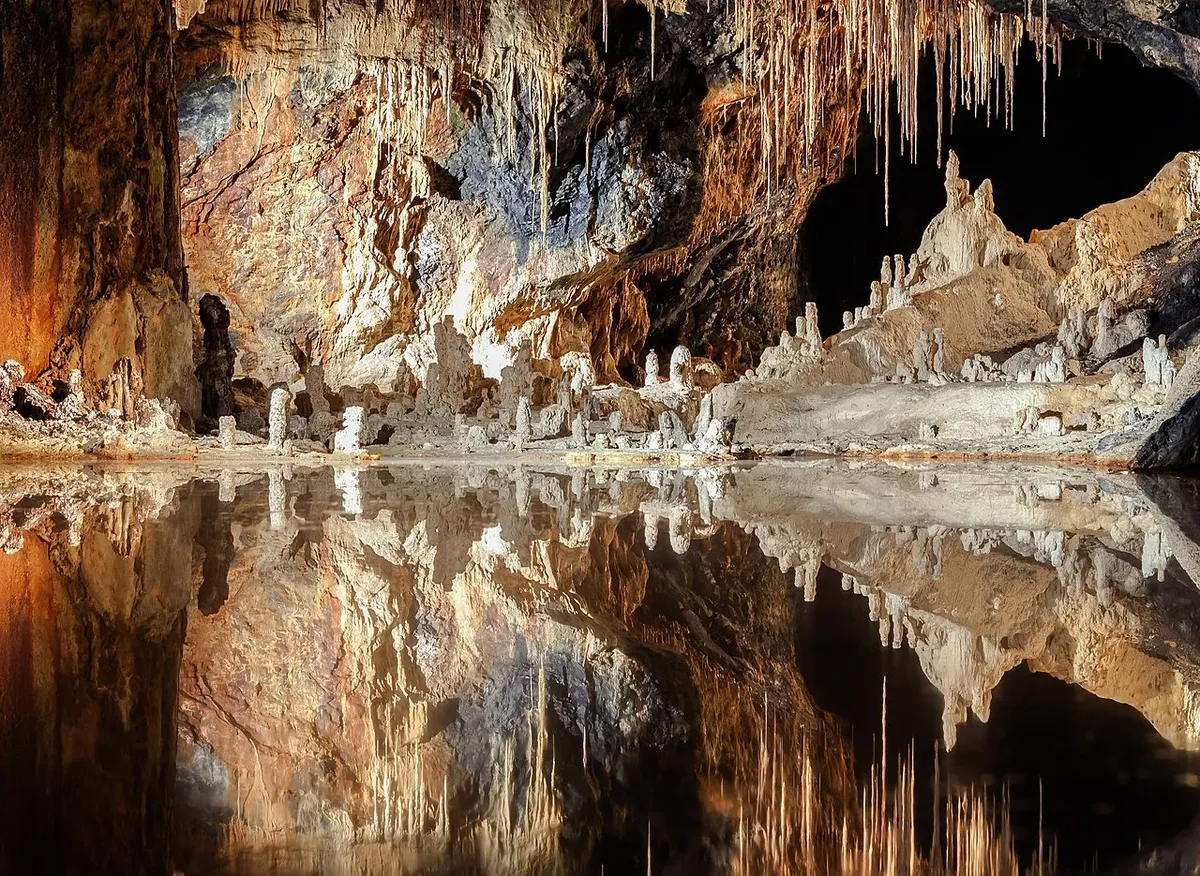
Saalfeld is a charming town in Thuringia that is rich in history and nature experiences
Saalfeld is located on the edge of the Thuringian Forest and is one of the oldest towns in the region. It is best known for its impressive stalactite caves, its well-preserved old town, and its location on the Saale River. The market square is a great starting point for exploring the old town. Not far from the banks of the Saale River lie Kitzerstein Castle and Saalfeld Castle Park.
Saalfeld Fairy Grottoes
The Saalfeld Fairy Grottoes, near the town of Saalfeld, are among the most famous stalactite caves in Germany, even though they are not natural caves. They were originally used as quartz sand mines in the 16th century and are now famous for their colorful and artistically shaped stalactites. The guided tour through the cave is an unforgettable experience, as visitors can admire the sometimes luminous, multi-colored mineral formations in various halls. You can learn more about stalactite caves and mining in the Grottoneum adventure museum. The nearby surroundings and the forest adventure trail also offer beautiful hikes through woods and meadows.
Bergfried Park and Villa
Villa Bergfried is a historic manor house in Saalfeld with an extensive public garden. The villa was built at the beginning of the 20th century and was the residence of the Mauxion family, who became wealthy through chocolate production. The building was constructed in the neoclassical style and is surrounded by extensive parkland.
Fairy World
Feenweltchen is a fairytale adventure and adventure park right next to the famous Saalfeld Fairy Grottoes. It is specially designed for families with children and transports visitors to an imaginative world full of fairies, elves and magical creatures.
Saalfeld City Museum
The former Franciscan monastery houses an interesting mixture of the city's history, the history of the monastery and the natural history museum. The building itself is also very inviting.
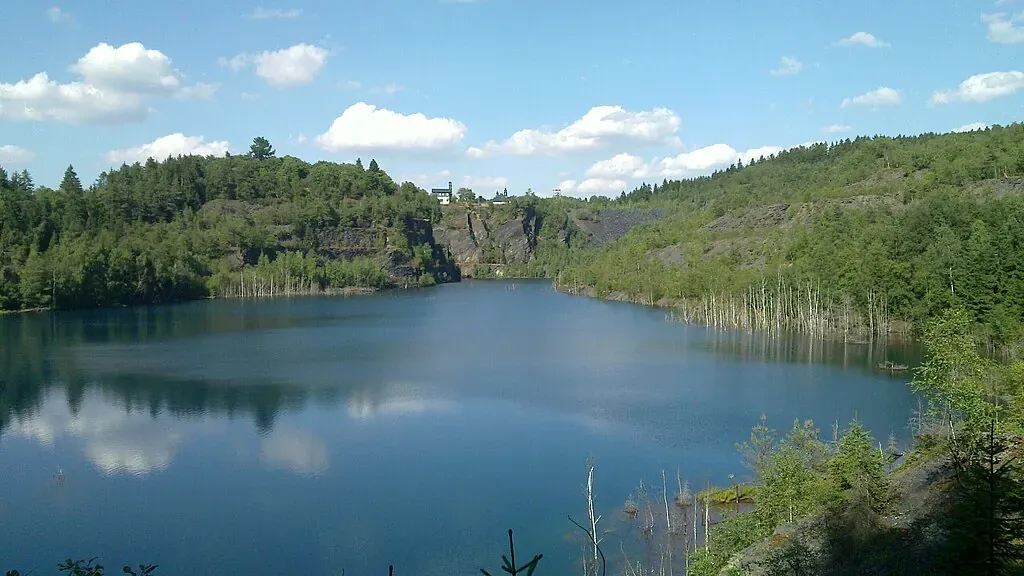
In the sparsely populated southern part of Thuringia, there are a few scattered highlights. The area is ideal for bike rides (along the Saale River) and hikes through the forests. The Slate Mountains also offer a few climbing opportunities.
Thuringian State Museum Heidecksburg
The Thuringian State Museum Heidecksburg is located in the impressive Heidecksburg Castle in the town of Rudolstadt, in the south of Thuringia. The castle, which was built in the 16th century, was once the residence of the Princes of Schwarzburg-Rudolstadt. The Thuringian State Museum Heidecksburg is an important museum that offers a broad overview of the art and cultural history of Thuringia. The museum's exhibitions cover various topics such as Thuringian regional history, folklore, archaeology and art and cultural history collections.
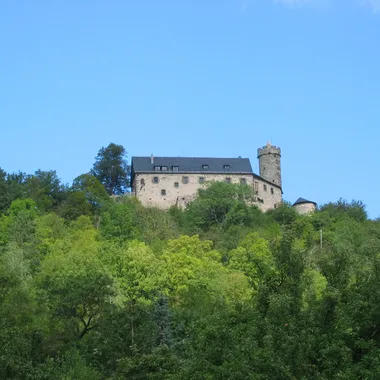
Greifenstein Castle
Greifenstein Castle is not far from Saalfeld and sometimes hosts eagle flying shows. You can stop for a bite to eat in the castle tavern. The castle is a 10-minute walk from the free parking lots.
Kamsdorf Visitor Mine
The former mine in Kamsdorf, a district of Unterwellenborn, is one of the most important mining areas in Thuringia. Iron ore, copper, silver and slate were mined here for over 1,300 years. Today, it is an impressive visitor mine that offers exciting insights into the history of mining. It is constantly cool underground, which is why you should wear warm clothes even in summer.
Lehesten Slate Park
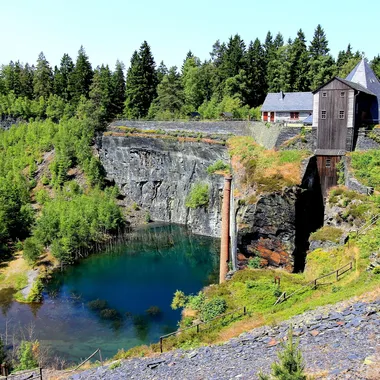
The Lehesten Slate Park, near the Saale-Orla district, is a fascinating destination for those interested in the history of slate mining and industrial history. The slate park is located in a former slate mining area and today offers the opportunity to learn more about traditional slate mining. Visitors can hike along the Lehesten Slate Trail and discover various geological features and historical sites of the quarrying industry. The park also includes a slate mine that can be visited. The Lehesten Slate Park is a unique place where the history of slate mining comes to life and visitors can gain an insight into the tough working environment of times gone by.
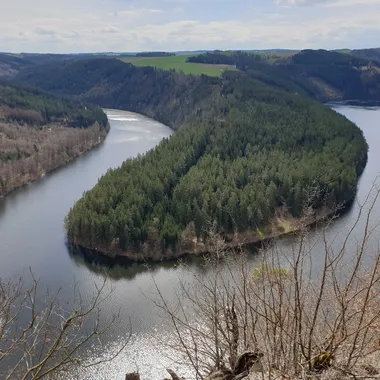
Hohenwarte Reservoir
The beautiful reservoir is ideal for hiking, boat trips and camping.
Start your journey in the state capital of Erfurt, where Domplatz welcomes you with the imposing Erfurt Cathedral. The Krämerbrücke, the longest bridge in Europe lined continuously with houses, invites you to stroll along its small shops and cafés. Not far away lies Weimar, a city closely associated with Goethe, Schiller, and the Bauhaus—a must-see for culture lovers.
Next, we head to northern Thuringia to visit the imposing Kyffhäuser Monument, dedicated to the legendary Emperor Barbarossa. From there, you’ll enjoy a fantastic view of the Kyffhäuser Mountains. It’s also worth stopping in Bad Frankenhausen to see Werner Tübke’s monumental Peasants’ War Panorama.
Nature lovers should consider a detour to the Thuringian Forest. The famous Rennsteig trail is perfect for long hikes, and in Oberhof you can get a taste of biathlon or go summer tobogganing. To the south lie the fairy-tale-like Saalfelder Feengrotten, a former mine featuring fascinating stalactite formations and an underground grotto lake—an experience for young and old alike.
To round off your tour, a visit to Eisenach is well worth it. Here you’ll find Wartburg Castle, one of Germany’s most famous castles and a UNESCO World Heritage Site. It is closely associated with Martin Luther, who translated the New Testament into German here. The city itself also has plenty to offer, including the Bach House and charming alleyways lined with restaurants serving regional cuisine.
Thuringia is centrally located in Germany and is an excellent base for day trips to neighboring states. Whether you're interested in culture, nature, or historic cities, the region offers a wide variety of destinations to suit every interest.
Thuringian cuisine is down-to-earth, hearty, and steeped in tradition. From classic sausages to sweet specialties, it reflects the region’s culture and local agricultural products.
Thanks to its central location, Thuringia is surrounded by several other German states and boasts a long tradition of craftsmanship and manufacturing. Culinary specialties and handcrafted goods make particularly good souvenirs.
You can find out what’s currently on offer in Thuringia on various regional and national platforms:
Nightlife in Thuringia is concentrated mainly in the cities of Erfurt, Jena, and Weimar. In Erfurt, the Old Town and the neighborhood around the Anger are particularly popular spots for bars, pubs, and clubs. Jena boasts a lively student and alternative scene, while Weimar offers more intimate bars and culturally oriented evenings.
You can find the latest party and event information on rausgegangen.de and on Resident Advisor Erfurt.
In Thuringia, the LGBTIQ+ community is primarily concentrated in cities such as Erfurt and Jena. There are a few bars, meeting places, and small queer events in these areas. Information on current events can be found on websites such as Gay-Party.de and Gay-Location.de.
Thuringia is a paradise for sports enthusiasts and offers plenty of opportunities for outdoor activities. Winter sports, hiking, and endurance sports are particularly popular here.
Oberhof is Thuringia’s premier winter sports destination, featuring a biathlon arena, ski jumps, and extensive cross-country trails. At Inselsberg, visitors can ski, toboggan, and enjoy sweeping views of the Thuringian Forest.
The Rennsteig, Germany’s most famous long-distance hiking trail, stretches over 170 kilometers through the Thuringian Forest and is perfect for long hikes. Popular among cyclists is the Ilmtal Cycle Route, which runs through the Ilm Valley and passes through historic cities such as Weimar.
The Motorsportarena Schleiz is Germany's oldest natural race track and offers exciting motorcycle and car races for motorsports fans.
Thuringia's most historic soccer clubs are FC Carl Zeiss Jena and Rot-Weiß Erfurt, which regularly put on exciting matches and draw large crowds of fans.
The Weimar Onion Market in October is Thuringia’s oldest folk festival and delights visitors with regional specialties, music, and arts and crafts. In July, the Rudolstadt Festival—Germany’s largest folk, roots, and world music festival—attracts numerous music lovers. The Weimar Bach Festival in March honors the musical legacy of Johann Sebastian Bach with concerts and events held in historic venues.
The DomStufen Festival in Erfurt takes place in July and August and features open-air opera and theater performances against the impressive backdrop of Erfurt Cathedral. The Thuringian Bach Weeks in April offer classical concerts in historic churches and castles. In August, rock and indie fans flock to the Highfield Festival at the Hohenfelden Reservoir, one of the region’s largest festivals.
Oberhof hosts the Biathlon World Cup in January, a major international competition. The Rennsteiglauf in May is one of Germany’s best-known cross-country runs and follows the famous Rennsteig trail. In February, the dog sled race in Frauenwald attracts winter sports enthusiasts and animal lovers alike as husky sleds race through snow-covered landscapes.
Overall, Thuringia is a peaceful and safe travel destination. The main risks involve nature and weather in the Thuringian Forest, traffic on winding country roads, and typical everyday annoyances in cities and at events.
The weather in the Thuringian Forest can change quickly. Fog, thunderstorms, sudden storms, and icy trails are particularly common on the Rennsteig and at higher elevations. In winter, roads and hiking trails can be slippery or temporarily difficult to navigate.
Ticks may be present in forests and meadows; it’s a good idea to check yourself after hikes. Deer and wild boars can suddenly appear on country roads, especially in the morning, evening, and at night.
Many places are easily accessible, but in rural areas, buses and trains sometimes run infrequently. If you’re traveling without a car, you should plan your return trip well in advance. Winding roads in forests and valleys require extra caution in rain, snow, or darkness.
In Erfurt, Jena, Weimar, or Eisenach, crowds and occasional pickpocketing may occur at train stations, Christmas markets, or large events. Keep your valuables safely stowed away and stay alert at night.
At memorial sites such as Buchenwald or at historical sites, respectful behavior is important. Inappropriate photos, loud behavior, or political provocations can not only be offensive but also lead to trouble with staff or the police.
Thuringia was already inhabited during the Neolithic period. In the Middle Ages, the region developed into an important center of German culture and education. Weimar and Erfurt, in particular, played a significant role as cultural and economic hubs. The Wartburg Castle in Eisenach became a pivotal site in German history, serving, among other things, as Martin Luther’s residence during his translation of the Bible.
Until the 20th century, Thuringia was divided into numerous small states, including the Duchy of Saxe-Weimar-Eisenach and the Principality of Schwarzburg-Rudolstadt. With the industrialization of the 19th century, cities such as Jena and Gera developed into major economic and industrial centers.
After World War I, Thuringia was established as a state in 1920. The city of Weimar served as the seat of the Weimar National Assembly and gave its name to Germany’s first democracy. During the Nazi era, Thuringia was a stronghold of the NSDAP and home to the Buchenwald concentration camp near Weimar.
After World War II, Thuringia became part of the GDR. Jena, in particular, developed into a major hub of the optical industry thanks to companies like Zeiss—a role it continues to play today. In 1952, the state of Thuringia was dissolved as part of administrative reforms and was not reestablished until 1990, following German reunification.
Thuringia's economy today is dominated by small and medium-sized enterprises, particularly in the fields of optics and photonics, biotechnology, and microelectronics.
Thuringia’s fertile soils and extensive forests also make it an important center for agriculture and forestry. In addition to grain farming and livestock raising, sustainable forestry plays a central role.
With universities in Jena, Erfurt, and Ilmenau, as well as numerous research institutes, Thuringia is also a major hub for science and research. While cities such as Jena, Erfurt, and Weimar have been experiencing an influx of new residents for years, many rural regions are struggling with population decline.
Thuringia has a well-developed public transportation network consisting of buses, trams, and regional trains. Major cities such as Erfurt, Jena, and Weimar are connected through the Central Thuringia Transport Association (VMT). Deutsche Bahn operates numerous regional trains that also serve smaller towns and rural areas. For groups, the Thuringia Ticket is a good option, as it is also valid in Saxony and Saxony-Anhalt.
With numerous bike paths—including the Ilmtal Bike Path and the Rennsteig Bike Path—Thuringia offers excellent conditions for cyclists. Scenic routes for recreational cyclists can be found especially along the Saale and Werra rivers.
There are currently no low-emission zones in Thuringia. The road network is well developed, particularly along the highways A4, A9, and A71 that run through the state.
Erfurt-Weimar Airport is Thuringia’s only international airport and primarily offers seasonal flights to vacation destinations. For more extensive international flight connections, passengers are advised to use the airports in Leipzig/Halle or Frankfurt am Main.